 Blaine Siding
 Windows Built for Custer's Weather, Not Just the Showroom
Custer sits in that stretch of Whatcom County where Pacific storm systems roll in off the Salish Sea, pick up moisture over Drayton Harbor and Semiahmoo Bay, and dump it on rural rooftops and window walls for months at a time. Add in the salt-laden air drifting inland from Blaine and Birch Bay, and you have a climate that is genuinely harder on windows than most manufacturer warranties assume. A window that performs fine in a dry inland climate can fail early here — fogging between panes, swelling sashes, corroding hardware — if it wasn't built and installed with this specific weather in mind.
This page covers what energy-efficient window replacement actually looks like for a Custer home: what the local climate demands, what a correct installation involves, how our process works, and why hiring a crew that already works this area matters more than picking the fanciest window on a spec sheet.
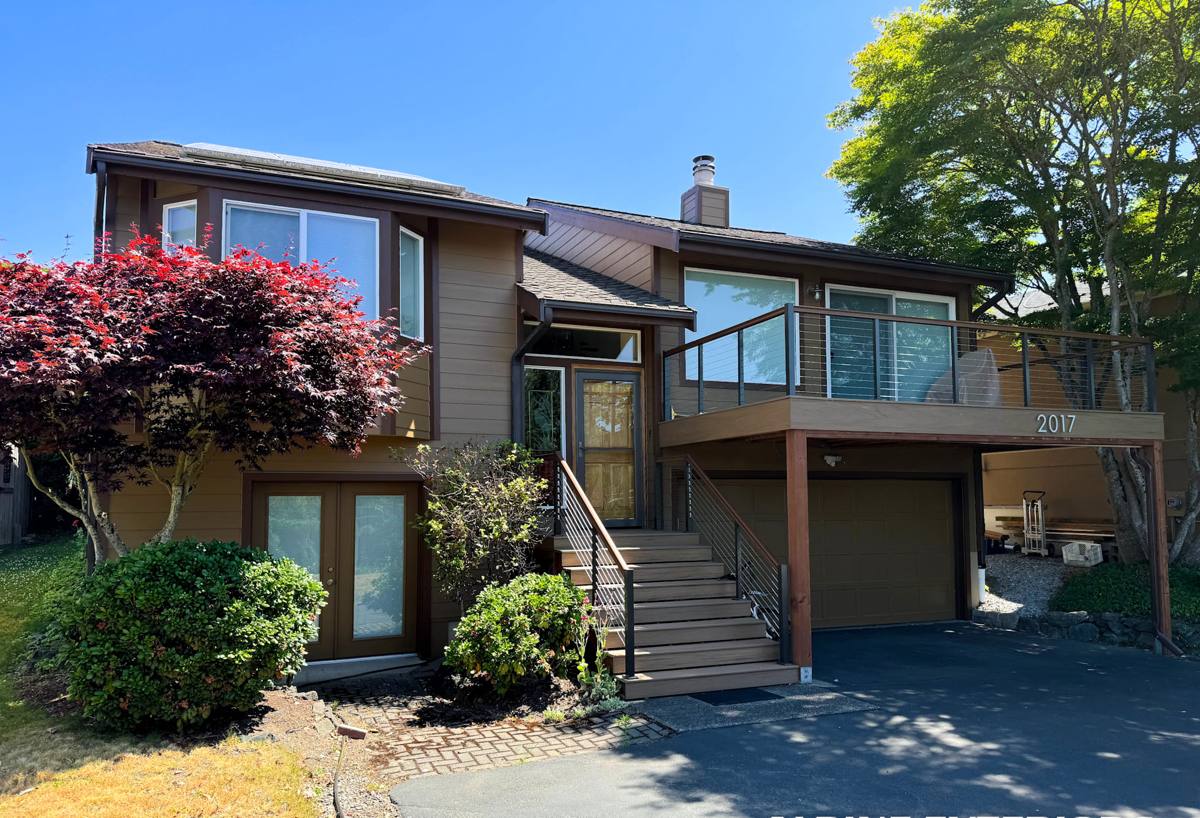
What Custer's Climate Actually Does to Windows
Salt Air and Metal Fatigue
Homes within several miles of the water in this part of Whatcom County deal with airborne salt that settles on window frames, hardware, and screens. Over years, that salt accelerates corrosion on lower-grade hinges, balances, and locks — especially on aluminum and unprotected steel components. It's a slow process, so most homeowners don't notice until a window won't latch properly or a crank mechanism seizes up.
Driving Rain and Wind-Driven Water
Rain here rarely falls straight down. Coastal wind pushes it sideways against west- and south-facing walls, which means water is constantly testing the seal around every window opening — not just sitting on the sill. A window that's watertight in a still-air test can still leak under real Custer wind conditions if the flashing and sealant details weren't done correctly.
The Long Moss Season
Moss and algae growth isn't just a roofing problem out here. On north-facing and shaded window trim, sustained damp conditions for much of the year feed moss and mildew growth on wood sills and trim boards. Once moss gets a foothold in a seam or a hairline gap, it holds moisture against the material year-round, which speeds up rot in wood-trimmed windows and can stain vinyl and fiber-cement trim.
None of this means Custer homes need exotic materials — it means the glass, frame, and installation details all have to be matched to sustained moisture exposure, not just cold-weather insulation.
What "Energy-Efficient" Actually Means Here
Energy efficiency in a Whatcom County window isn't just about keeping heat in during winter. It's also about controlling condensation, resisting wind infiltration, and holding up structurally against repeated wet-dry cycling. A window package suited to Custer typically balances a few things:
- Insulated glass with a low-E coating tuned for a marine climate — good solar control without making interiors feel dark through our gray-sky months
- Warm-edge spacer systems that resist condensation on the interior pane during cold, damp mornings
- Frame materials and hardware rated for coastal or high-moisture exposure, not just a generic residential grade
- Multi-point locking hardware that keeps the sash compressed evenly against the weatherstripping, which matters more here than in calmer climates
Double-pane low-E glass is the standard baseline for most Custer replacements and performs well for the vast majority of homes. Triple-pane glass adds meaningful value on north- or west-facing walls exposed to sustained wind and rain, or in rooms where owners have noticed drafts or cold spots, but it's not automatically the right call for every opening — we'll tell you honestly where it's worth the upgrade and where it isn't.
Comparing Window Options for a Custer Home
| Option | Best suited for | Trade-offs to know |
|---|---|---|
| Vinyl frame, double-pane low-E | Most Custer homes; good all-around performance and value | Frame color choices are more limited than fiber-cement or wood-clad |
| Vinyl frame, triple-pane low-E | Exposed west/north walls, rooms with noticeable drafts | Higher upfront cost; heavier sash requires quality hardware to stay easy to operate |
| Fiberglass frame | Homes wanting minimal frame expansion/contraction and strong moisture resistance | Higher material cost than vinyl |
| Wood or wood-clad frame | Homes prioritizing a traditional interior look | Requires more maintenance in a climate with this much sustained moisture and moss pressure |
| Aluminum frame | Rarely our recommendation for this climate | Prone to condensation and, near the water, faster corrosion without upgraded coatings |
We install what fits the specific wall, exposure, and budget — not a single "house brand" we push on every job. If a homeowner wants wood-clad windows for a specific look, we'll explain the added maintenance honestly rather than talk them out of what they want.
Signs Your Windows Are Already Losing the Fight
Whatcom County's moisture cycle tends to hide window problems until they're fairly advanced. Common signs we see on Custer homes include:
- Fogging or a permanent haze between panes — the seal has failed and the insulating gas is gone
- Sashes that stick, drag, or won't latch fully, especially after a stretch of wet weather
- Soft or discolored wood at the sill or lower frame corners
- Visible moss or dark staining building up in frame seams or on wood trim
- A noticeable draft or cold spot near the window on windy days
- Condensation forming on the inside of the glass regularly, not just on the coldest mornings
Any one of these on its own isn't necessarily an emergency, but a window showing two or three of them is usually past the point where caulk and weatherstripping will fix it.
What a Correct Installation Actually Involves
The window unit itself is maybe half the equation. The other half is installation detail, and it's where most early failures actually start — not in the glass. For a Custer home, that means:
Flashing and Water Management
Proper flashing integration with the existing wall assembly — house wrap, building paper, or whatever water-resistive barrier is already there — so wind-driven rain has a defined path out, not a path in. This is the single biggest factor in whether a window leaks under real coastal wind conditions.
Sealant Selection and Placement
Not every gap gets caulked, and not every caulk is the same. Some joints need to stay open as drainage paths; sealing them shut traps water instead of releasing it. We use sealants rated for sustained UV and moisture exposure, applied only where they're supposed to go.
Insulation and Air Sealing Around the Frame
The gap between the new window frame and the rough opening gets properly insulated and air-sealed — not stuffed with excess foam that can bow the frame, and not left with gaps that undercut the window's rated efficiency.
Level, Plumb, and Square
A window that's out of square will bind, won't seal evenly against its weatherstripping, and will wear out its hardware faster. This is basic craftsmanship, but it's the step that gets rushed on lower-quality installs.
Our Process for a Custer Window Project
- On-site assessment — we look at each window's exposure (sun, wind, rain direction), current condition, and how the wall assembly is built before recommending anything
- Honest product recommendation — matched to that specific wall's exposure and your budget, not a one-size package
- Written estimate — clear on materials, labor, and timeline, no surprise add-ons once work starts
- Removal and inspection — when we pull the old window, we check the rough opening and sheathing for hidden moisture damage before installing anything new
- Installation — flashing, air sealing, and insulation done to the standard described above, on every window, not just the visible ones
- Final check and cleanup — operation, seal, and hardware tested on every unit before we consider the job done
What Affects the Cost
| Factor | Why it matters |
|---|---|
| Number and size of openings | Larger and custom-sized windows cost more in both materials and labor |
| Frame material | Vinyl is generally the most budget-friendly; fiberglass and wood-clad cost more |
| Double vs. triple pane | Triple-pane adds cost per unit; usually worth targeting at the most exposed walls rather than the whole house |
| Condition of the rough opening | Hidden rot or water damage found during removal adds repair time before the new window goes in |
| Trim and interior finish work | Matching existing interior trim or upgrading exterior trim adds labor |
We won't quote a whole-house number without seeing the openings — a rural Custer property with a mix of exposures often gets a mixed recommendation (triple-pane on the weather side, double-pane elsewhere) rather than the same window on every wall.
Why a Crew That Already Works Custer Matters
Whatcom County covers a lot of different microclimates — inland, coastal, elevated, sheltered — and Custer's mix of open farmland and proximity to the water creates wind and moisture exposure that's different from, say, a sheltered lot closer to Bellingham. A crew that regularly works this specific area already knows which walls take the worst of the wind-driven rain, how the local moss and moisture cycle behaves through the year, and which installation details actually hold up here versus what a general spec sheet assumes.
That local knowledge shows up in small decisions — where to add extra flashing detail, which frame material to steer a homeowner away from on a west-facing wall, when triple-pane is worth it and when it isn't — that a crew unfamiliar with this stretch of coastline might miss entirely.
Ready for a Straight Answer on Your Windows?
If your Custer home has windows that are fogging, sticking, drafty, or just old enough that you're wondering whether it's time, we're happy to take a look and give you a straightforward, no-pressure read on what's actually going on — and what it would take to fix it right for this climate. Use the form below to request a free estimate.