 Blaine Siding
 Decking That Has to Work in Lynden's Climate, Not Just Look Good on Day One
Lynden sits inland from Blaine in Whatcom County, close enough to the coast to get salt-tinged air on windy days and far enough into the valley to hold onto damp, still conditions through much of the fall and winter. That combination is hard on outdoor living spaces. A deck here spends a good chunk of the year wet, shaded by low winter sun angles, and slow to dry between rain events. Wood decking in this environment needs constant attention — sanding, staining, sealing — or it starts graying, splintering, and growing moss within a couple of seasons. Composite decking was built for exactly this problem: a capped, engineered board that doesn't absorb water the way wood fibers do, doesn't need annual refinishing, and holds up to the freeze-thaw swings and moss pressure that define a Whatcom County winter.
We install composite decking specifically with Lynden's conditions in mind — not a generic warm-climate installation, but one accounting for the standing moisture, the slower drying times, and the moss and algae that will find any surface that stays damp too long.
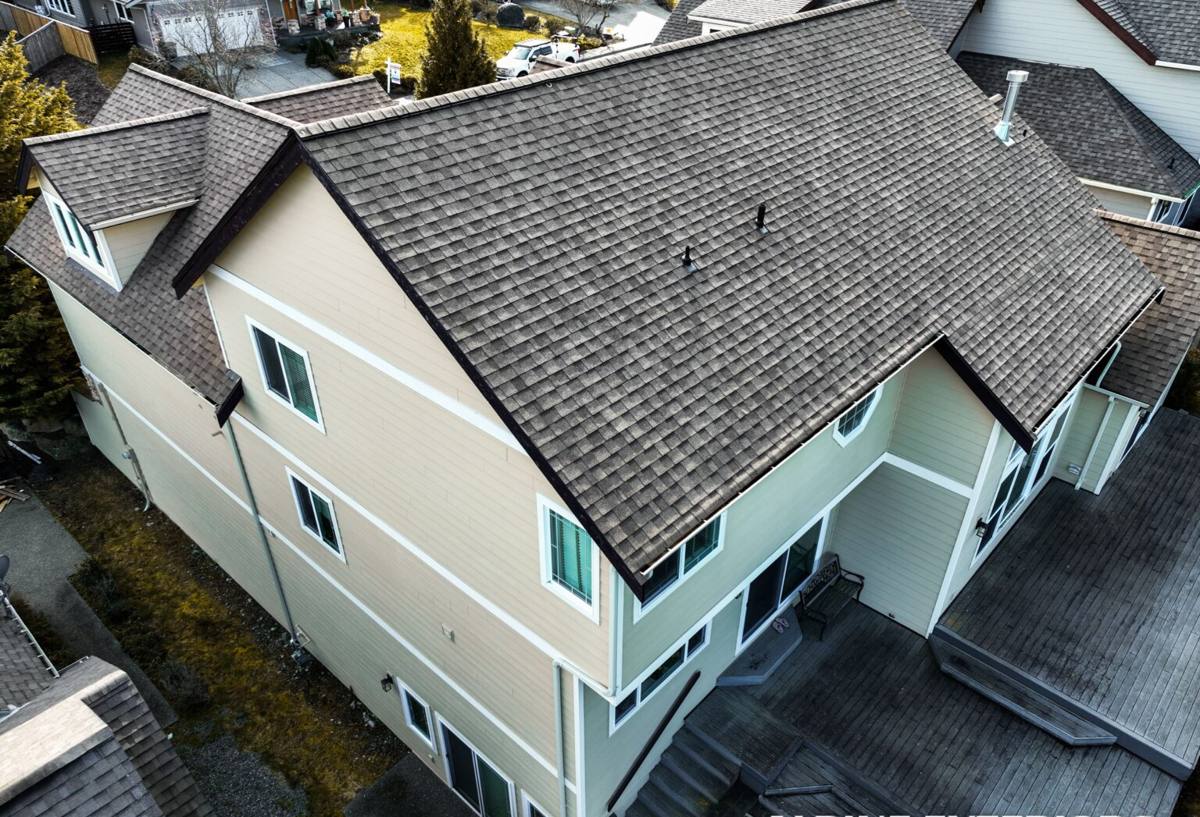
What the Local Climate Actually Does to a Deck
Moisture That Doesn't Leave
Between the marine air coming off the Strait of Georgia and the valley's own fog and drizzle pattern, a Lynden deck can stay damp for days at a stretch, especially in shaded corners or under overhangs. Any decking material that absorbs moisture — or any installation that traps it against the substructure — is going to rot, cup, or grow mold faster here than in a drier region.
The Long Moss Season
Moss and algae need shade, moisture, and time — and this area supplies all three from roughly October through April. On a real wood deck, moss takes hold in the wood grain itself and is nearly impossible to fully remove without damaging the surface. On composite boards, moss and algae sit on top of a capped surface and rinse or scrub off without staining or pitting the material underneath.
Salt-Influenced Air
Lynden isn't beachfront, but the regional air carries enough salt content on windy days to accelerate corrosion on unprotected metal fasteners and hardware over the years. We spec stainless or coated fasteners and connectors for exactly this reason, regardless of how far a given property sits from the water.
Why Composite Makes Sense for This Specific Area
- No annual sanding, staining, or sealing — a real advantage when the weather window for outdoor maintenance work is already short
- Capped boards resist moisture absorption, so freeze-thaw cycles don't split or crack the surface the way they can with wood
- Moss and algae wipe or rinse off a capped surface instead of embedding in the grain
- Consistent color and structural performance without the seasonal graying that untreated or under-maintained wood shows within a year or two
- Better long-term footing — algae-slicked wood decking is a real slip hazard on a wet Whatcom County morning
None of that means composite is maintenance-free — it still needs periodic cleaning and the substructure underneath still needs to be built and vented correctly. But the day-to-day and season-to-season burden on the homeowner drops considerably compared to wood.
Where Wood Still Has a Place
Some homeowners want the look and feel of real wood, or are working within a tighter budget where wood's lower upfront cost makes sense for a shorter-term deck. That's a legitimate choice — we just make sure it's an informed one. Wood in this climate requires a real maintenance commitment: annual cleaning, periodic sealing, and faster replacement of ground-contact framing members. We'll lay out that tradeoff honestly rather than push a product because it's easier for us to install.
What a Correct Composite Deck Build Involves
The Substructure Matters as Much as the Boards
Composite decking is only as good as what's underneath it. In a damp climate like this, the framing needs proper ledger flashing where the deck attaches to the house, joist tape or capping on wood joists to keep moisture out of the framing lumber, and hardware rated for exterior and coastal-influenced exposure. A beautiful composite deck built on an under-flashed, unprotected substructure will still develop rot problems below the surface — they're just hidden longer.
Drainage and Airflow Underneath
Low, ground-level decks in this region need real attention to airflow and drainage underneath. Blocked or poorly ventilated crawl space under a deck holds moisture, which speeds up moss growth on the underside of boards and accelerates any corrosion on fasteners. We grade and gap for drainage and leave adequate ventilation rather than building tight to the ground.
Board Spacing and Fastening
Composite boards expand and contract with temperature more than people expect. Gapping and fastening have to account for that movement, especially across the wider temperature swings between a cold, damp Lynden winter and a warm summer afternoon. Done wrong, boards buckle, gaps close up unevenly, or fasteners back out over time.
Edge and Fascia Detailing
Cut edges of composite boards, stair stringers, and fascia trim are where water intrusion problems usually start if they're not properly capped or detailed. We finish exposed edges correctly rather than leaving raw cut ends exposed to weather.
Comparing Decking Options for a Lynden Property
| Factor | Composite | Pressure-Treated Wood | Cedar |
|---|---|---|---|
| Moisture resistance | High — capped, low absorption | Moderate — depends on sealing upkeep | Moderate — natural rot resistance, still needs sealing |
| Moss/algae resistance | High — rinses off surface | Low — embeds in grain | Low to moderate |
| Annual maintenance | Cleaning only | Sealing/staining every 1-2 years | Sealing/staining every 1-2 years |
| Upfront cost | Higher | Lowest | Moderate to high |
| Typical lifespan (this climate) | 25-30+ years | 10-15 years with upkeep | 15-20 years with upkeep |
| Fastener/hardware sensitivity | Standard exterior-rated hardware | Requires coated/stainless fasteners | Requires coated/stainless fasteners |
Lifespan figures assume normal residential use and reasonable maintenance; actual results vary with site conditions, shade, and drainage.
Our Process on a Lynden Composite Deck Project
1. On-Site Assessment
We look at the existing structure (if there is one), the site's drainage, shade exposure, and how the deck ties into the house — flashing, siding intersections, and roof runoff that might drain toward the deck area.
2. Substructure Repair or Build
Any rotted or undersized framing gets addressed before a single composite board goes down. This is the step that gets skipped by crews in a hurry, and it's the step that determines whether the deck lasts 25 years or 8.
3. Flashing and Moisture Protection
Ledger flashing, joist protection, and proper grading underneath — all sized for this region's rainfall and drainage needs, not a generic install spec.
4. Composite Board Installation
Correct fastening pattern, expansion gapping, and edge detailing for the specific board profile and brand being used.
5. Final Walkthrough
We walk the finished deck with the homeowner, cover basic care (what to clean, how often, what not to use on the surface), and answer questions before we consider the job done.
Maintenance Checklist for a Composite Deck in This Climate
- Rinse or sweep off debris and standing leaves regularly through fall — trapped organic matter feeds moss growth even on capped boards
- Clean visible moss or algae with a soft-bristle brush and a manufacturer-approved deck cleaner, not a pressure washer on high setting, which can damage the cap layer
- Check fastener heads and railing hardware yearly for corrosion, especially on properties with more direct wind exposure
- Keep gutters and downspouts near the deck clear so roof runoff isn't dumping extra water onto the deck surface or substructure
- Inspect underneath the deck once a year for blocked drainage or vegetation growth restricting airflow
Why Hire a Crew That Already Works in This Area
Building decks around Blaine and Lynden means building for this specific climate every week, not occasionally. That shows up in details a generic contractor might miss: how much slope to build into the substructure for local rainfall, which fastener grades hold up against the regional air, and how to detail flashing at the house connection so the long wet season doesn't find its way into the framing. It also means we're not learning on your project — we've already worked through the site-specific decisions that come up in Whatcom County conditions.
If you're weighing composite decking for a Lynden property, we're glad to walk your site, talk through board options and realistic costs, and give you a straight answer on what your specific yard and house setup need. Reach out for a free, no-pressure estimate using the form below.