 Blaine Siding
 Building a Composite Deck for Dakota Creek's Marine Climate
Dakota Creek sits close enough to the water that homes here deal with a specific combination of weather most inland decking never has to survive: salt-laden air drifting in off Drayton Harbor and Boundary Bay, long stretches of driving rain typical of Whatcom County winters, and a moss and algae season that can run eight months or longer under tree cover and low winter sun. A composite deck built for this property has to account for all three at once, not just look good on install day.
This page covers what that actually means in practice: how we choose boards and hardware for this specific microclimate, what a correct build looks like underneath the surface where nobody looks, and why a crew that already works in and around Blaine builds differently than one passing through.
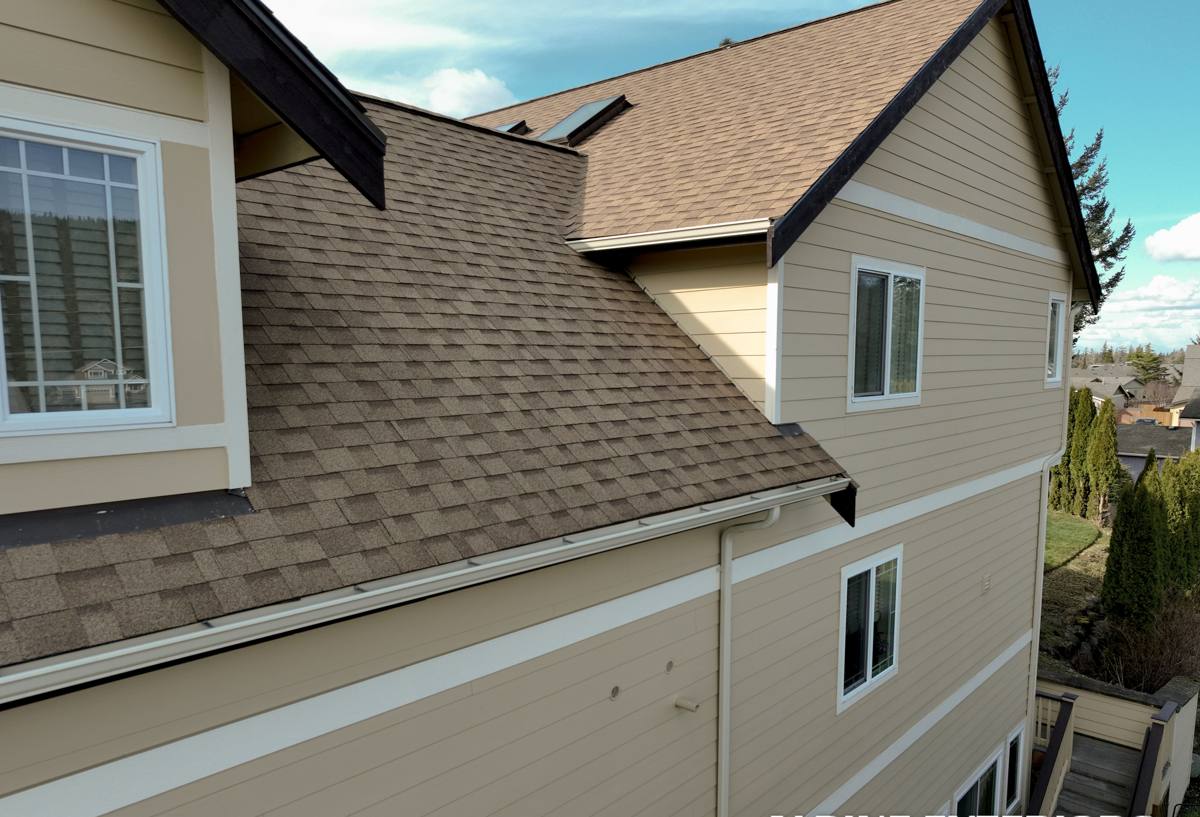
Why Moss and Algae Are the Real Threat Here
Most decking marketing talks about sun fading. In Blaine, that's rarely the problem worth worrying about. The bigger issue is organic growth — moss, algae, and mildew film — because the region simply doesn't get enough sustained dry heat to bake a deck surface clean the way it would further inland or further south.
Shade, Slow-Drying Surfaces, and Standing Moisture
Decks near Dakota Creek often sit close to mature trees, fencing, or the creek corridor itself, all of which hold humidity and limit direct sun. A board that stays damp for days after a storm is a board that grows moss. The fix isn't a different color of composite — it's grading, drainage, and board spacing that let a deck actually dry out between rain events, plus keeping planting and debris clear of the surface so airflow isn't blocked.
Board Texture and Cap Type Matter More Than People Think
Not all composite boards handle a wet, shaded climate the same way. Fully-capped boards with a tight, low-texture surface shed water and resist moss anchoring far better than uncapped or lightly-embossed boards, where the open wood-grain texture gives algae something to grip. We steer homeowners here toward capped composite with a moderate, not deeply grooved, surface texture — grooves look nice on a spec sheet but collect grit and moisture that feeds growth in a marine climate.
Salt Air and the Hardware You Never See
Composite boards themselves don't rust or corrode, but every deck is held together by metal — screws, brackets, ledger bolts, joist hangers — and that's where salt air does its damage. A deck a mile or two from the water will chew through mild-steel hardware years faster than the same deck built inland.
Fasteners and Screws
We use stainless steel or marine-grade coated fasteners rated for coastal exposure, not the standard zinc-coated screws that are fine in a dry inland yard but start showing rust bleed through composite boards within a couple of seasons here. That rust bleed is one of the most common complaints we hear about decks installed by out-of-area crews unfamiliar with this air.
Structural Connectors and Ledger Bolts
Anywhere metal touches wood-framed structure — joist hangers, post bases, ledger lag bolts — we spec hot-dip galvanized or stainless hardware, and we isolate dissimilar metals where needed so they don't accelerate corrosion against each other. It's not a visible upgrade, but it's the difference between hardware that's solid at year fifteen and hardware that's failing at year six.
Driving Rain and What Happens Underneath the Deck
Composite decking is genuinely low-maintenance on the surface, but the framing underneath is still almost always pressure-treated lumber, and that structure is what actually determines how long the deck lasts. Whatcom County's driving, wind-blown rain finds its way into gaps that would stay dry in a calmer climate, so the substructure needs to be built assuming water will get in and planned around getting it back out.
Ledger Flashing and Wall Connections
Where the deck ties into the house, proper flashing — installed correctly, not just caulked and hoped for — keeps wind-driven rain from tracking behind the siding and into the wall assembly. This is one of the most common failure points we find on older decks in this area: a ledger board attached without adequate flashing, quietly rotting the rim joist and sheathing behind it for years before anyone notices.
Joist Protection and Drainage Slope
We tape the top of every joist before boards go down, which keeps standing water out of screw penetrations and end grain — the two places treated lumber rots fastest. The whole frame is built with a slight slope away from the house so water sheds instead of pooling, and we keep enough clearance underneath for airflow rather than boxing the structure in tight to the ground, which is exactly the kind of damp, still air pocket that grows moss on the underside of boards too.
Choosing the Right Composite Board for This Property
There's no single "best" composite board — the right choice depends on how shaded the site is, how close it sits to the water, and what kind of maintenance the household actually wants to keep up with. Here's how the main factors stack up for a property like this:
| Factor | What to look for near Dakota Creek | Why it matters here |
|---|---|---|
| Cap type | Fully capped on all four sides | Blocks moisture absorption into the core, which resists swelling and mold in a wet climate |
| Surface texture | Moderate texture, not deep wood-grain grooves | Deep texture traps grit and moisture that feeds algae and moss |
| Color | Mid-tone over very dark or very light | Very dark surfaces show pollen and organic film fast; very light surfaces show mildew staining fast |
| Board profile | Grooved-edge for hidden fasteners where drainage allows | Cleaner surface and fewer exposed screw heads for salt air to attack, but needs good drainage below |
| Warranty | Manufacturer warranty that explicitly covers coastal/marine installs | Some composite warranties exclude or limit coverage within a set distance of saltwater — worth checking before you buy |
We walk every homeowner through these trade-offs against their actual site — how much shade the deck gets, which direction it faces, how close it is to the creek or the harbor — rather than defaulting to whatever board has the best margin.
What a Correct Composite Deck Installation Involves
A composite deck is only as good as the framing and prep work underneath it, most of which is invisible once the project is finished. A correct build in this area includes:
- A structural check of ledger attachment, footings, and existing framing before any demo begins
- Proper flashing at every point the deck ties into the house
- Pressure-treated or coated framing lumber, joist-taped on top before boards are installed
- Stainless or marine-grade coated fasteners and connectors throughout, not standard zinc hardware
- A slight drainage slope built into the frame so water sheds away from the house
- Adequate ground clearance and airflow underneath to prevent trapped moisture
- Composite board selection matched to the site's actual sun and shade exposure
- Square, properly gapped board spacing that allows for seasonal expansion and drainage between boards
- A final walkthrough covering care, cleaning, and what to watch for going into the wet season
Permits, Setbacks, and Building Near the Creek
Because Dakota Creek is an actual waterway, some properties near it may fall under shoreline or critical-area setback rules in addition to standard building permit requirements — the specifics depend on exactly how close the structure is to the creek and what the parcel is zoned. We don't guess on this; before design work starts, we confirm what Whatcom County or the City of Blaine requires for the specific lot, so the deck gets permitted correctly the first time instead of running into a stop-work order or a resale headache down the road. If your property backs onto the creek corridor, this is worth raising in the first conversation, not after the deck is built.
Why a Crew That Already Works Dakota Creek Matters
None of the details above are exotic — they're just specific to this stretch of Whatcom County, and they're the kind of thing a crew only gets right consistently once they've built and later repaired decks in this exact environment. A contractor who mostly works drier, inland jobs will often spec standard hardware, skip the marine-grade upgrade, or underestimate how much shade and moisture a given lot actually holds. We've seen the results of that on older decks in this area: rusted-through screw heads, soft ledger boards, and moss so established it's staining the boards themselves.
Working locally also means we're not guessing at permit requirements, drainage patterns, or how a particular lot near the creek behaves through a wet Blaine winter — we've already seen it.
Living With a Composite Deck Through a Long Moss Season
Composite decking cuts maintenance dramatically compared to wood, but "low-maintenance" doesn't mean "no maintenance" in a climate like this. A simple seasonal routine keeps a deck looking and performing the way it should:
- Sweep off leaves, needles, and pollen regularly — trapped organic debris is what feeds moss and algae growth
- Rinse the deck a few times a year with plain water and a soft-bristle brush; avoid pressure washers on composite, which can damage the cap surface
- Use a cleaner made for composite decking if moss or algae does take hold — bleach and harsh chemicals can discolor the cap
- Keep gutters and downspouts near the deck clear so runoff isn't dumping extra water onto the surface
- Trim back overhanging branches and nearby plantings to let in more light and air
- Check railings and stair connections once a year for looseness — hardware is the first thing to show wear in salt air, well before the boards do
Staying ahead of these small things is what keeps a well-built composite deck looking good for decades instead of just the first few years.
If you're planning a new deck or replacing an aging one near Dakota Creek, we're glad to take a look and talk through what your specific site actually needs. Reach out using the form below for a free, no-pressure estimate.