 Blaine Siding
 Windows Built for the Cherry Point Exposure
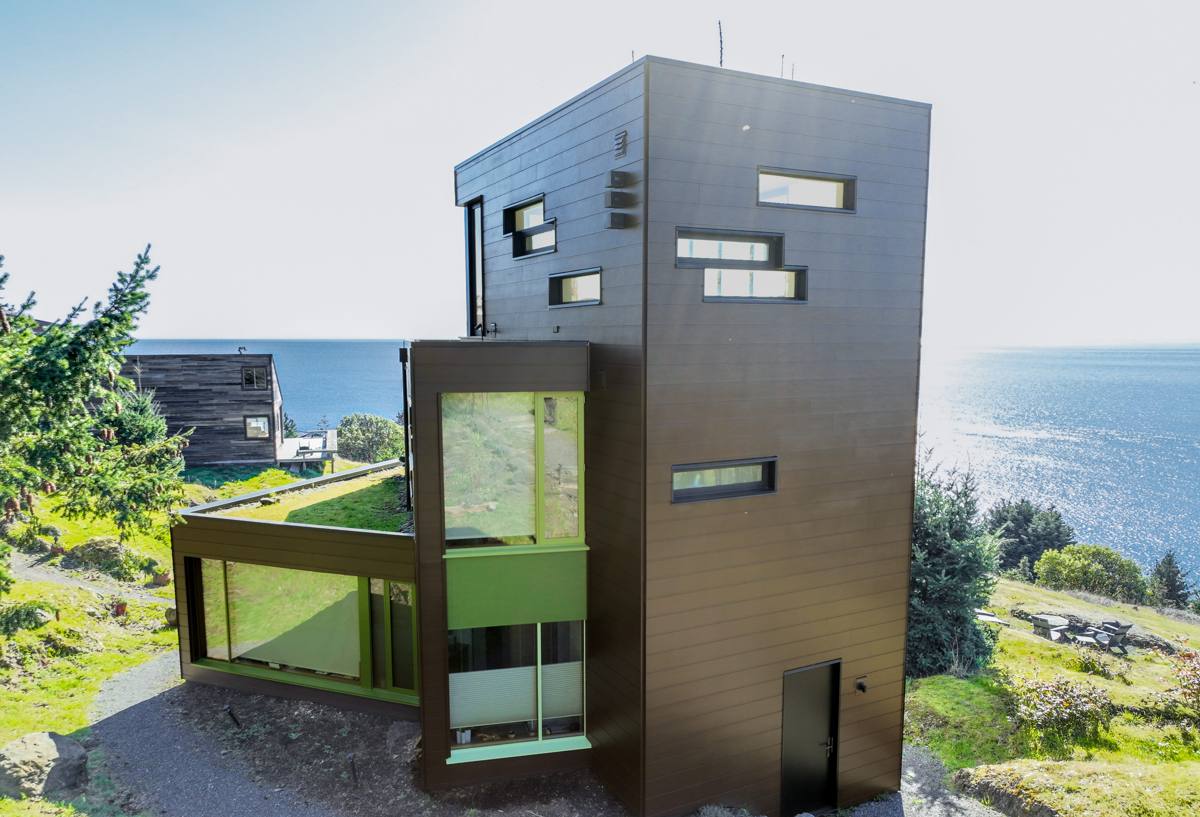
Cherry Point sits right up against the Strait of Georgia, and that shoreline exposure changes what a window has to survive year after year. Salt-laden air corrodes hardware and pits metal finishes faster than it does even a few miles inland. Wind-driven rain off the water pushes against window assemblies with a force that a standard install in a sheltered neighborhood never has to deal with. And Whatcom County's long, damp moss season keeps sills, tracks, and exterior trim wet for months at a stretch, which is exactly the condition that rots wood and breaks down poor seals. A window that's fine in a typical Blaine subdivision can fail early out here if it wasn't chosen and installed with this specific exposure in mind.
This page is about one job: replacing windows on homes in and around Cherry Point. Not a general overview of window brands, but what actually matters for a house taking direct weather off the water.
Signs Your Cherry Point Home Needs Window Replacement
Homeowners out here usually notice problems in a specific order. Knowing what to look for helps you decide whether you're looking at a repair or a replacement.
- Fogging or a permanent haze between panes — the seal has failed and the insulated glass unit can't be repaired, only replaced
- Soft or discolored wood at the sill or bottom corners of the frame — a sign moisture has been getting past the weatherstripping for a while
- Visible corrosion or pitting on hinges, cranks, or locks — common on older aluminum and steel hardware exposed to salt air
- Windows that are hard to open, close, or lock — frames swelling and shrinking with moisture cycles will eventually warp out of square
- Drafts you can feel even with the window latched — weatherstripping and seals degrade faster under constant wind pressure
- Green or black growth building up in the tracks or corners faster than you can keep it cleaned off
Any one of these on its own might be a minor fix. Several showing up on the same window, or on multiple windows facing the water, usually means the glass unit or the whole frame has reached the end of its useful life.
What a Correct Window Replacement Job Actually Involves
Window replacement is easy to do adequately and hard to do right. The difference shows up in five to ten years, not on install day. Here's what we actually do, in order.
Removal and Inspection
We don't just pull the sash and drop in a new unit. Every opening gets inspected down to the framing once the old window is out. On a Cherry Point home, this step matters more than usual — it's where we find rot or moisture damage that's been hidden behind trim, sometimes for years. If the sheathing or framing is compromised, we deal with it before anything new goes in. A new window over damaged framing just hides the problem for another few years.
Flashing and Water Management
This is the step that determines whether a window leaks in five years. Proper flashing directs any water that gets past the exterior cladding down and out, away from the wall assembly, instead of letting it pool at the sill or work its way into the framing. Given how much wind-driven rain this stretch of coastline gets, we treat flashing detail as non-negotiable, not an optional upgrade.
Insulation and Air Sealing
The gap between the window frame and the rough opening gets sealed and insulated properly — not just caulked on the outside and left hollow behind. Poor sealing here is a major source of drafts and energy loss, and it's invisible once trim goes back on, which is exactly why it's worth asking your contractor how they handle it.
Finish Work
Trim, caulking, and hardware get finished to match the rest of the exterior. On homes near the water we pay particular attention to hardware finish and fastener choice, since standard fasteners corrode faster in this environment than most homeowners expect.
Choosing the Right Window for Salt Air and Driving Rain
Frame material is the biggest decision in a window replacement, and it matters more here than in a lot of the county because of the corrosion and moisture exposure. There's no single right answer for every home — it depends on your budget, your home's style, and how much upkeep you want to take on.
| Frame Material | Corrosion / Moisture Resistance | Maintenance | Typical Lifespan |
|---|---|---|---|
| Vinyl | Good — won't rust or rot, handles salt air well | Low — occasional cleaning | 20-30 years |
| Fiberglass | Very good — highly stable in temperature swings and moisture | Low | 30-40 years |
| Wood-clad | Depends heavily on cladding integrity and installation quality | Higher — cladding and seals need periodic inspection | 20-30 years if well maintained |
| Aluminum | Fair — prone to pitting and corrosion in salt air over time | Moderate to high | 15-25 years in this exposure |
For homes with direct water exposure, we generally steer customers toward vinyl or fiberglass. That's not a knock on wood-clad or aluminum windows as products — it's about matching material behavior to this specific climate. Wood-clad windows can look excellent and perform well, but they ask more of the installer and the homeowner in a marine environment, since any breach in the cladding or seal gives moisture a path into the wood underneath. Aluminum conducts heat and cold efficiently, which isn't ideal for energy performance, and its hardware and frame are more exposed to the corrosion that salt air causes. We'll walk through the real trade-offs for your specific home rather than pushing one material across the board.
Our Process, Start to Finish
- Free on-site estimate — we look at your existing windows, note framing condition where visible, and talk through material and style options for your home and budget
- Measurement and ordering — precise measurements matter more on older homes where openings are rarely perfectly square
- Scheduling around weather — we plan installs to minimize how long any opening sits exposed, which matters a lot given how much rain this area gets
- Removal, inspection, and any needed framing repair before the new window goes in
- Installation with proper flashing, insulation, and air sealing
- Finish work — trim, caulking, hardware, and a final check that everything opens, closes, and locks the way it should
- Walkthrough with you before we consider the job done
What to Ask Before Hiring Anyone for This Job
- Do you carry current licensing and insurance, and can you provide proof?
- Who actually inspects the framing once the old window is removed, and what happens if they find damage?
- What's your approach to flashing and water management around the opening?
- What warranty covers the installation itself, separate from the manufacturer's product warranty?
- Have you worked on homes in this specific area, and do you understand the exposure they face?
- Can you give a straight answer on timeline, including how weather might affect scheduling?
Why Local Experience in Cherry Point Matters
A contractor who mostly works inland doesn't always plan for what this shoreline throws at a house. We've seen how quickly hardware corrodes here, how fast moss and algae build up in shaded, damp corners, and where water tends to find its way into a poorly flashed opening during a hard blow off the strait. That experience shapes decisions on every job — material recommendations, flashing detail, hardware finish, even how we schedule around weather. It's the difference between a window that's technically installed and one that's installed for this specific place.
Living With Your New Windows Through Moss Season
New windows reduce a lot of the maintenance headaches older ones create, but they're not maintenance-free in this climate. A little upkeep keeps them performing the way they should for the long run.
- Clear debris, moss, and standing moisture from sills and tracks periodically, especially during the wetter months
- Rinse salt residue off exterior glass and frames a few times a year, particularly on sides facing the water
- Check exterior caulking annually for any cracking or separation and have it addressed before it becomes a leak path
- Operate hardware occasionally through the off-season so cranks, locks, and hinges don't seize up
None of this is complicated, but skipping it is how even a well-installed window ends up with avoidable problems a few years down the line.
Get a Straight, No-Pressure Estimate
If you're dealing with drafty, foggy, or hard-to-operate windows on a Cherry Point home, we're happy to take a look and give you an honest read on whether you're looking at repair or replacement, and what it would cost. Use the form below to request a free estimate — no pressure, no obligation.