 Blaine Siding
 Cherry Point Is a Different Kind of Exposure
Cherry Point sits right up against the Strait of Georgia in northern Whatcom County, and that shoreline location changes what a siding system has to survive. Homes here don't just deal with rain — they deal with wind-driven rain coming off open water, near-constant marine humidity, and a fine layer of salt air that settles on every exterior surface, painted or not. Add in the tree cover common to this part of the county, and you get long stretches where siding simply doesn't dry out between weather events. That combination is harder on exterior materials than a straightforward "it rains a lot here" description suggests.
We treat Cherry Point siding replacement as its own category of job, not a generic Blaine-area service. The tear-off, the water-management details, and the product choice all get evaluated against what a shoreline property in this part of Whatcom County actually experiences over a year, not just what a spec sheet says a product can handle in ideal conditions.
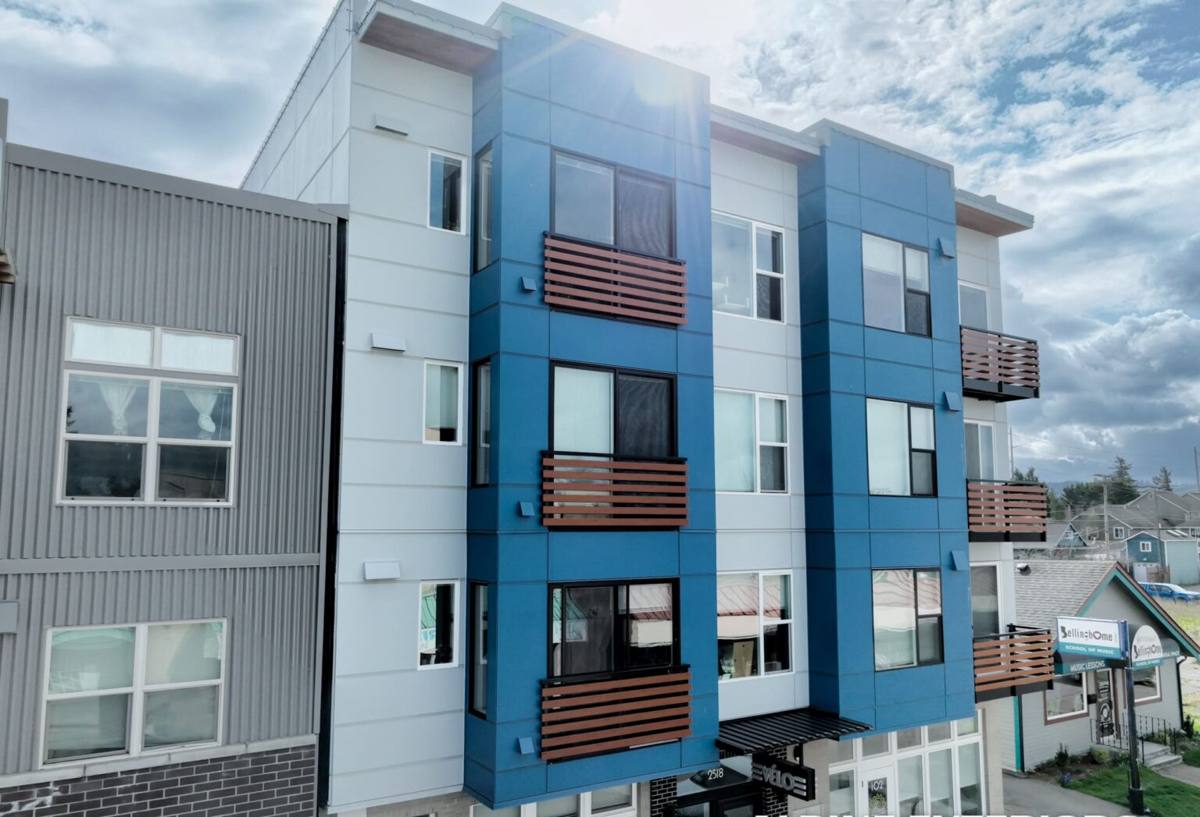
What Salt Air, Driving Rain, and Moss Actually Do to Siding
Salt Air
Airborne salt is corrosive to metal fasteners, flashing, and trim components, and it accelerates the breakdown of lower-grade paint finishes. On a home a mile or two inland this is a minor factor. On a home exposed to open water at Cherry Point, it's a constant, low-grade attack on anything not built to resist it.
Driving Rain
Wind-driven rain doesn't behave like rain falling straight down. It gets pushed sideways into laps, seams, and penetrations — around windows, at corner boards, behind trim — and it tests every flashing detail and every gap in a water-resistive barrier. A siding job that looks fine in dry weather can still leak here if the water-management layer underneath wasn't built for wind-driven conditions.
Moss and Prolonged Dampness
Whatcom County's moss season isn't a cosmetic issue — it's a sign that a surface is staying wet longer than it should. Moss and algae hold moisture against siding, and on shaded, north-facing, or tree-covered walls (common around Cherry Point) that trapped moisture is what eventually causes rot in wood-based products, delamination in lower-grade composites, or paint failure on anything with a weak factory finish.
What a Correct Siding Replacement Involves Here
A siding replacement is not just swapping old panels for new ones. Done correctly on a Cherry Point property, it involves several layers working together:
- Full tear-off to bare sheathing, so hidden rot, soft spots, or prior water damage can actually be found and fixed — not covered over
- Sheathing repair or replacement wherever moisture has already done damage
- A continuous water-resistive barrier installed with proper shingle-lap sequencing, since wind-driven rain will find any reversed lap
- Correct flashing at every window, door, and roof-to-wall intersection, with special attention to walls facing open water or prevailing weather
- Rain-screen or drainage-gap detailing where conditions call for it, so any moisture that does get behind the siding can drain and dry instead of sitting against the wall
- Corrosion-resistant fastening hardware appropriate for a marine-influenced environment
- A factory-applied, climate-engineered finish on the siding itself, rather than relying on field-applied paint to do all the work
Skip any one of these and the new siding will fail sooner than it should — often in ways that don't show up for a few years, which is exactly why cutting corners on a tear-off is such an expensive mistake to make.
Why We Install Only James Hardie Fiber Cement
We install James Hardie fiber cement siding exclusively, and Cherry Point is a good example of why. Hardie's HZ product lines are engineered specifically for climate exposure — including moisture and freeze-thaw cycling — rather than built as a one-size-fits-all product. It's non-combustible, which matters given wildfire smoke and ember exposure are a regional concern across the Pacific Northwest even in wetter coastal areas. Its ColorPlus factory finish is baked on under controlled conditions and backed by its own finish warranty, which holds up better against salt air and UV than field-applied paint that has to cure in variable outdoor conditions.
We don't install vinyl, LP SmartSide, primed spruce, cedar, or other fiber cement brands like Cemplank or Allura. Each of those has legitimate uses elsewhere, but in a high-moisture, salt-exposed, moss-prone environment like Cherry Point, we've standardized on the one product line we can stand behind for the long haul — and put our labor warranty behind — without hedging.
Our Process for a Cherry Point Home
- On-site assessment. We walk the exterior, check for soft sheathing, look at how the home is oriented to prevailing wind and rain, and note shaded or moss-prone areas that need extra drainage detail.
- Scope and product plan. We specify the correct Hardie plank, panel, or shingle profile, the right HZ configuration for this exposure, and the flashing and water-barrier plan for problem areas identified in the assessment.
- Tear-off and sheathing repair. Old siding comes off completely; any damaged sheathing is replaced before anything new goes up.
- Water management installation. Water-resistive barrier, flashing, and drainage detailing go in first, correctly lapped and sealed at every penetration.
- Siding installation to manufacturer spec. Fastener spacing, clearances, and joint treatment follow James Hardie's installation requirements — not shortcuts that void the warranty.
- Final inspection and cleanup. We check caulking, trim, and touch-up work, then walk the job with the homeowner before calling it done.
Cost Factors for This Type of Project
Every siding replacement quote depends on the specifics of the home, but a few factors weigh more heavily at Cherry Point than they might elsewhere in Whatcom County:
| Factor | Why It Matters Here | Effect on the Job |
|---|---|---|
| Extent of hidden moisture damage | Long dampness cycles and moss cover can hide rot until tear-off | May add sheathing repair once walls are opened up |
| Wall exposure to wind-driven rain | Water-facing walls need more rigorous flashing and lap detail | Can shift labor time toward water-management steps |
| Existing drainage/rain-screen condition | Older homes often lack any drainage gap behind siding | May add furring or drainage mat installation |
| Fastener and trim material upgrades | Salt air corrodes standard hardware faster | Corrosion-resistant hardware costs more but lasts |
| Home size and architectural detail | Corners, dormers, and trim add labor regardless of location | Standard factor in any siding estimate |
We break these out in writing so a homeowner can see exactly what they're paying for, rather than getting a single lump number with no explanation.
Living With Siding in a Moss-Prone, Salt-Air Environment
Even the right siding system benefits from basic upkeep in this climate. A few habits go a long way toward protecting the investment:
- Keep gutters clear so overflow doesn't run down and sit against siding walls
- Trim back trees and shrubs that shade siding and keep it from drying out
- Rinse visible moss or algae buildup on shaded walls before it spreads, rather than letting it sit for a full season
- Check caulking at trim and penetrations every year or two, since sealant is the first thing to age in salt air
- Have an annual walk-around after the wet season to catch any early signs of trouble while they're still minor
None of this replaces a correctly installed system — but it does extend the life of one.
Signs a Cherry Point Home Needs Siding Replacement Now
Some warning signs are easy to miss until they've become expensive. Watch for:
- Soft or spongy spots when you press on the siding, especially near the bottom courses
- Persistent moss or dark staining that returns quickly after cleaning
- Paint or finish that's peeling, chalking, or bubbling rather than just fading
- Visible gaps, warping, or buckling in panels or lap joints
- Interior signs like musty smells or discoloration on walls that back up to exterior siding
Any of these, especially on walls exposed to open water or heavy shade, is worth having looked at before it turns into a sheathing or framing repair.
Why Local Experience at Cherry Point Matters
A siding crew that mainly works drier, inland neighborhoods can still do competent general work — but they may not default to the flashing details, drainage gaps, and fastener choices that a shoreline property in Whatcom County actually needs. We work this stretch of coastline regularly, which means the water-management decisions on your job aren't a first attempt — they're informed by what we've already seen hold up, and what doesn't, on homes facing the same wind, rain, and moss conditions yours does.
If you're weighing a siding replacement for a Cherry Point property, we're happy to walk the exterior with you and give you a straightforward, no-pressure estimate — including what we find, what we'd recommend, and why.