 Blaine Siding
 Roof Repair That Accounts for Where Cherry Point Actually Sits
Cherry Point isn't a typical inland neighborhood. Sitting along the shoreline west of Blaine, homes here take weather straight off the Strait of Georgia — wind-driven rain, salt-laden air, and long stretches of shade and dampness under the tree cover that lines the rural lots and bluffs in this part of Whatcom County. A roof repair that would hold up fine in a dry, sheltered subdivision further inland can fail early out here if it's not done with this specific exposure in mind. That's the difference between a repair that lasts a few years and one that lasts the rest of the roof's service life.
This page is about roof repair specifically — patching, replacing damaged sections, fixing leaks and flashing failures — not full roof replacement. If your roof is sound overall but has a problem area, repair is almost always the right call. We'll cover what that actually involves, what Cherry Point's climate does to roofs, and how to tell when a repair is enough versus when you're looking at something bigger.
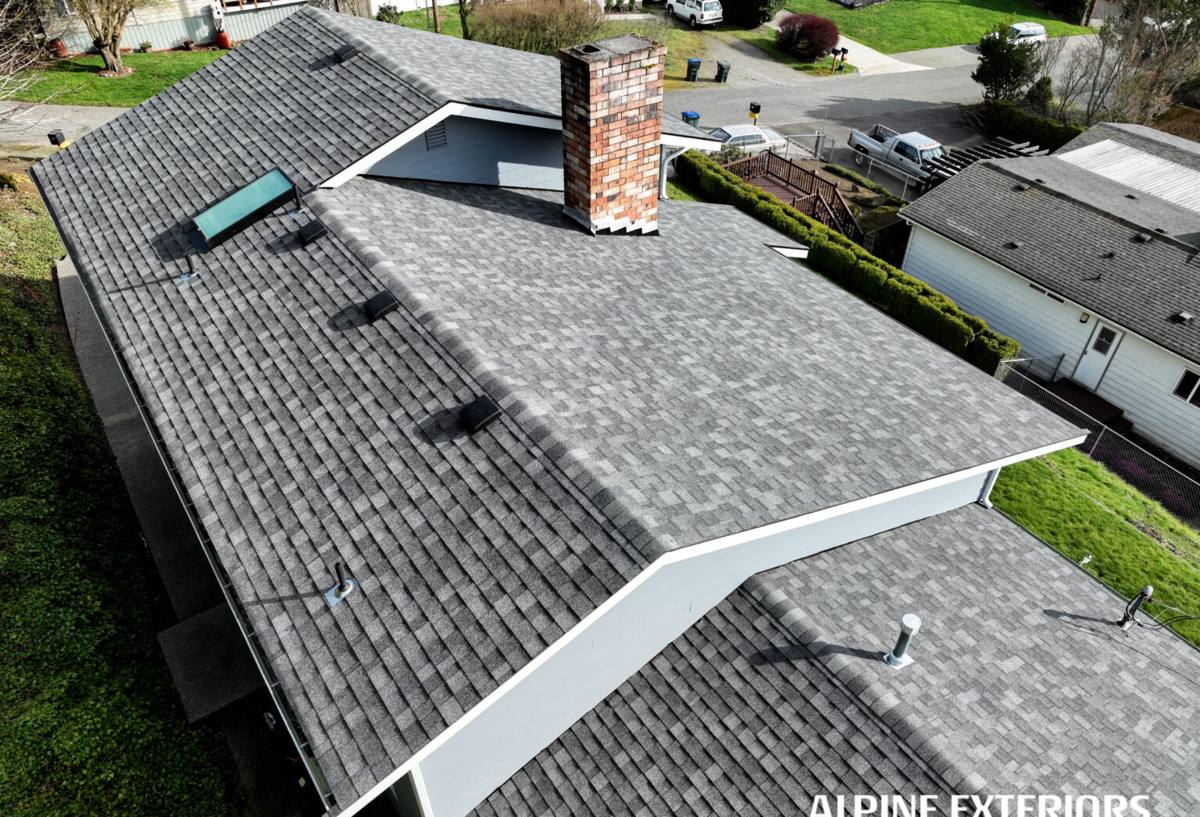
What Salt Air, Driving Rain, and Moss Actually Do to a Roof
Salt Air
Airborne salt from the Strait doesn't just affect boats and cars. It settles on roofing metal — flashing, drip edge, vent caps, and fasteners — and accelerates corrosion, especially on lower-grade galvanized components. Once flashing starts to pit or rust, it stops sealing properly at the seams, and that's where the majority of Cherry Point leak calls we see start: not in the middle of a roof field, but at the edges, valleys, and penetrations where metal meets shingle or membrane.
Driving Rain
Rain that comes in sideways behaves differently than rain that falls straight down. Wind off the water pushes water up under shingle laps, around chimney flashing, and through any gap that a calmer climate would never expose. Repairs done to a "normal" standard — the minimum lap, the minimum fastener count — tend to under-perform here. A repair built for Cherry Point needs to assume the wind will test every seam.
Moss and Organic Growth
The combination of shade, moisture, and mild temperatures around Blaine makes this one of the more moss-prone areas in the state. Moss doesn't just look bad — its root structure works into shingle granules and butt joints, holds moisture against the roof deck, and lifts shingle edges over time. Left unmanaged, a moss mat can turn a small, repairable leak into deck rot underneath it before anyone notices from the ground.
Signs a Repair Is Overdue
Most roof damage in this area doesn't announce itself with a dramatic leak. It shows up as small signals first. Homeowners who catch these early almost always end up with a cheaper, simpler repair.
- Dark streaking or thick moss growth concentrated on the shaded or north-facing slopes
- Granules collecting in gutters or at downspout outlets, especially after a windstorm
- Rusted or discolored streaking below metal flashing, vents, or valleys
- Soft spots, sagging, or a slightly springy feel underfoot on a roof walk (professional only)
- Water stains on ceilings or in the attic near chimneys, skylights, or exterior wall lines
- Curling, cracked, or missing shingles after a wind event
- Daylight visible around pipe boots or vent collars from inside the attic
What a Correct Roof Repair Involves
Inspection Before Anything Else
A repair that's only based on where the ceiling stain is showing up often misses the real source, since water travels along rafters and sheathing before it drips through drywall. A proper repair starts with tracing the leak to its actual entry point — usually flashing, a penetration, or a wind-lifted shingle — and checking the surrounding area, not just the visible damage.
Flashing and Penetration Work
Given how much of Cherry Point's roof damage traces back to flashing, this is where repair quality matters most. That means replacing corroded metal rather than resealing over it, using fasteners and materials suited to a marine-influenced environment, and rebuilding the water path — not just caulking a gap and hoping it holds through the next windstorm.
Moss and Debris Removal, Done Carefully
Moss has to come off before a repair can be evaluated properly, but it has to come off the right way. Pressure washing strips granules and shortens shingle life; the correct method is a gentle removal followed by treatment to slow regrowth, done without walking the roof more than necessary in wet, slippery conditions.
Matching Materials and Sealing Method
A patch that doesn't match the existing shingle color, profile, or age tends to fail at its own edges before the surrounding roof does, because it moves and weathers differently. We match material where possible and use sealing methods rated for the temperature and moisture conditions the repair will actually face, not just what's fastest to apply.
Deck Inspection Where Water Has Been Sitting
Any area that's had sustained moisture — under a moss mat, below failed flashing, around a chimney — gets checked at the deck level, not just the surface. Repairing shingles over a soft or rotted deck section is a short-term fix that costs more to redo later.
Repair or Replace? An Honest Comparison
Not every roof problem calls for the same fix. Here's how we think through it, and how we'd explain it to you before recommending either option.
| Factor | Points Toward Repair | Points Toward Replacement |
|---|---|---|
| Age of roof | Under 15–20 years, or well-maintained | Near or past expected material lifespan |
| Extent of damage | Isolated to one area, valley, or penetration | Spread across multiple slopes or the whole field |
| Deck condition | Solid, no rot found during inspection | Soft, rotted, or repeatedly wet decking |
| Shingle condition elsewhere | Still flexible, granules intact | Brittle, curling, or granule loss roof-wide |
| History of leaks | First occurrence or single recurring spot | Multiple leak locations over recent years |
If a roof checks mostly the middle or right column, we'll say so plainly. There's no benefit to us patching a roof that needs replacing — it just means you pay for the patch and the replacement.
How Our Repair Process Works
- On-site inspection — roof surface, attic (when accessible), flashing, and penetrations, with photos so you can see what we see.
- Straight assessment — what's actually wrong, what's causing it, and whether repair or something larger is the honest recommendation.
- Written estimate — scope, materials, and price before any work starts, no surprise add-ons mid-job.
- The repair itself — flashing, decking, shingle, or moss work as needed, done to hold up against Cherry Point's specific wind and moisture exposure.
- Site cleanup and walk-through — debris and old materials removed, and we show you the completed work before we consider it done.
What Affects the Cost of a Roof Repair
We won't quote a number without seeing the roof, but these are the variables that typically move the price up or down. Broad ranges only — every roof is different.
| Cost Factor | Effect |
|---|---|
| Size and number of repair areas | Small, single-area repairs are far less than multi-area work |
| Deck damage found underneath | Rotted sheathing adds material and labor beyond surface repair |
| Roof pitch and access | Steep or hard-to-access roofs take longer and require more safety setup |
| Flashing material and complexity | Multiple valleys, chimneys, or skylights increase flashing labor |
| Moss severity | Heavy, long-neglected moss adds removal time before repair can begin |
| Material match availability | Older or discontinued shingle lines can be harder and slower to match |
Most straightforward, single-area repairs land in the low hundreds to low thousands of dollars; anything involving deck replacement or extensive flashing work runs higher. We'll give you the real number after we've actually looked at it.
Why Local Experience in This Specific Area Matters
A roofer who mostly works drier, inland neighborhoods can still do competent work, but they're not necessarily thinking about salt-air corrosion rates or how moss behaves under the tree cover common around Cherry Point. Working this stretch of Whatcom County regularly means knowing which flashing details fail first out here, which slopes hold moss longest, and how much wind-driven rain a repair actually has to withstand — not guessing at it. That experience shows up in fewer callbacks and repairs that are still doing their job years later.
It also matters for something less technical: knowing when a repair is genuinely enough. It would be easy for any contractor to talk a homeowner into a bigger job than necessary. We'd rather do the honest, right-sized repair and earn the next call when something else comes up — that's how a local reputation actually gets built.
Maintaining a Roof After Repair
A repair holds longer with a little upkeep, especially in this climate. A few habits make a real difference:
- Keep gutters and downspouts clear so water isn't backing up under the roof edge
- Have moss treated or removed on a regular schedule rather than waiting until it's thick
- Trim back overhanging branches to reduce shade, debris, and moisture retention on the roof
- Do a quick visual check after major windstorms for lifted or missing shingles
- Address small leaks immediately rather than waiting for a ceiling stain to appear
If you're dealing with a leak, visible moss, or damage after a storm, it's worth getting a second set of eyes on it before it turns into deck rot or a full replacement. We offer free, no-pressure estimates for roof repair work in Cherry Point and throughout the Blaine area — use the form below to get one scheduled.