 Blaine Siding
 Building New in Cherry Point? The Windows Deserve As Much Attention as the Framing
If you're putting up a new home or outbuilding out on Cherry Point, the window package is one of the few parts of the build that has to get everything right in one pass. There's no siding to pull off later and fix a bad flashing detail without real cost. Cherry Point sits exposed to the Strait of Georgia, and that means the standard "install per the box instructions" approach that works fine in a sheltered inland subdivision isn't good enough out here. We install new-construction windows for builders and owner-builders around Blaine and the rest of Whatcom County, and Cherry Point jobs get treated differently from day one because the site conditions demand it.
This page is about that one job — new-construction window installation, on new builds, in this specific stretch of coastline — not a general window replacement pitch.
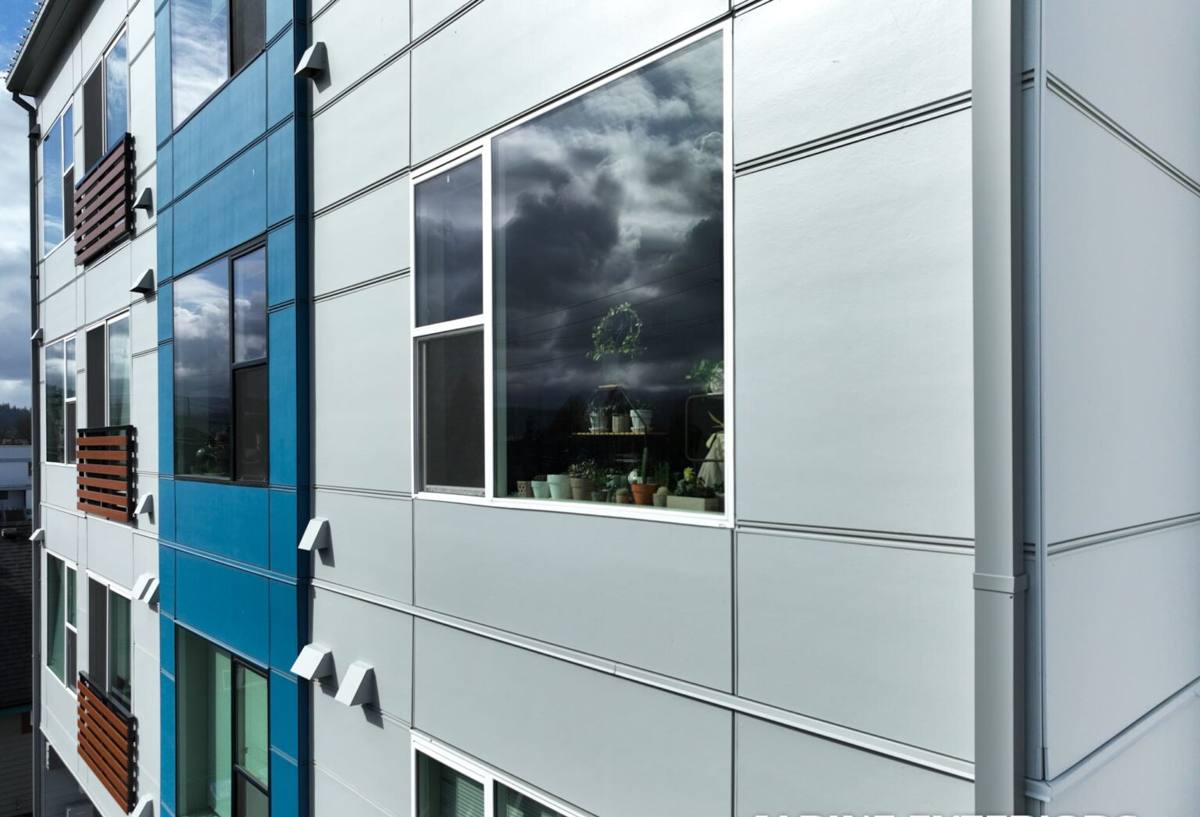
What Cherry Point's Coastal Climate Asks of a New Window
Salt Air and Slow Metal Fatigue
Airborne salt off the Strait settles on everything nearby, and it doesn't take a beachfront lot for it to matter — prevailing wind carries it well inland from the water. Over years, that salt film accelerates corrosion on fasteners, hinges, balance hardware, and unprotected aluminum. New construction is the one point in a home's life where you get to choose hardware and cladding that shrug this off before it's ever exposed to weather, instead of retrofitting corrosion-resistant parts onto an already-built house later.
Wind-Driven Rain
Storms coming off open water don't just drop rain straight down — they push it sideways, into every horizontal seam and reveal on a wall. A window that would stay dry in a calm inland rain can take on water at the sill or jamb out here if the flashing margins are undersized or the sealant joints are shortcuts. New-construction framing lets us build in wider flashing laps and proper sill pans before the wall is ever closed up, which is the correct time to solve this problem.
A Long, Damp Moss Season
Whatcom County's moss season runs long — many months of the year where surfaces stay damp far more than they dry. That constant moisture load is hard on anything organic (wood trim, unsealed sills) and on any drainage plane that wasn't detailed to shed water instead of trap it. A new-construction window opening that drains cleanly to the exterior from day one avoids the slow rot and staining that shows up years later on openings that didn't.
New Construction Isn't the Same Job as a Replacement
We do both types of work, and we treat them as genuinely different jobs because they are. In a replacement, we're working around existing siding, existing trim, and a wall that's already closed up — we do the best possible job within those constraints. In new construction, the wall is open. We have full access to the rough opening, the sheathing, and the weather-resistive barrier (WRB) before anything is buttoned up.
That access is the whole advantage of building new, and it's wasted if the window crew doesn't use it. Correct sill pan flashing, proper shingle-lap integration with the WRB, and hardware selected for the site's exposure all have to happen at this stage — none of it can be added back in cleanly once the siding is on. That's the case for hiring a crew that installs windows on new builds regularly, not one that mostly does replacements and treats new construction the same way.
What a Correct New-Construction Window Installation Involves
There's a sequence to this, and skipping steps or doing them out of order is exactly how coastal builds end up with hidden water damage a few years down the road. On a Cherry Point job, our sequence generally looks like this:
- Verify rough openings against the window schedule and manufacturer's sizing tolerances before any unit shows up on site — undersized or oversized openings cause problems that compound at every later step.
- Inspect and, where needed, correct the sheathing and WRB at each opening so it laps correctly and has no gaps for wind-driven rain to exploit.
- Install a sloped sill pan flashing at every opening, so any water that does get past the window has a built-in path back to the exterior instead of into the wall cavity.
- Set the window plumb, level, and square, and fasten it per the manufacturer's nailing fin or installation-clip schedule — not a generic pattern.
- Integrate jamb and head flashing in the correct shingle-lap order with the WRB, so water always sheds outward and down, never into a seam.
- Seal and back-seal per manufacturer spec, using sealants rated for this climate rather than whatever's cheapest at the yard.
- Insulate the gap between frame and rough opening with a low-expansion foam or backer rod appropriate to the window type — overfilled or underfilled gaps both cause issues.
- Final check for operation, weep hole clearance, and hardware function before the crew moves to the next opening.
None of these steps are exotic. What matters is that all of them happen, in order, on every opening — which is where rushed crews on tight builder schedules tend to cut corners.
Choosing Frame Materials and Glass for a Cherry Point Build
New construction is the one time you get to pick the window system from scratch instead of matching what's already there. For a coastal Whatcom County lot, that choice should weigh salt exposure and moisture as heavily as price and looks.
| Frame Material | Salt Air Resistance | Maintenance | Typical Fit |
|---|---|---|---|
| Vinyl | Good — won't corrode or pit | Low; occasional cleaning | Budget-conscious builds, most rooms |
| Fiberglass | Very good — dimensionally stable, resists salt and moisture cycling | Low | Exposed elevations, higher-end builds |
| Aluminum-clad wood | Fair to good if hardware and cladding are marine-rated; interior wood needs protection from moisture | Moderate — cladding is low-maintenance, wood interior isn't | Architectural or interior-focused designs |
| Bare aluminum | Poor near open water without special coatings — prone to pitting and corrosion over time | Higher — coatings need upkeep | We generally steer builders away from this on exposed Cherry Point elevations |
On glass, dual-pane units with a low-E coating and argon fill are the practical standard for this climate — they cut heat loss and reduce condensation risk on cold, damp mornings, which are common here for a good part of the year. We also point out hardware grade specifically: stainless or coated fasteners and balances hold up far longer than standard-grade hardware once salt air is part of the equation, and it's a small cost difference to specify correctly at the new-construction stage.
How We Work With Your Builder
Most of our Cherry Point new-construction work comes in through the general contractor or an owner-builder managing their own trades. Either way, the process is the same: we review the window schedule against the plans before ordering anything, flag any opening sizes or window types that are a poor match for the exposure on that elevation, and coordinate install timing with the framing and WRB schedule so we're not fighting a closed-up wall or a rushed weather window.
We show up on the day the openings are ready, not before and not after the WRB has already been compromised by another trade working around it. On multi-week builds we stay in communication with the site super so window install lines up with siding start — leaving an opening flashed but unsided for too long in this climate isn't a good idea.
Energy Code and Performance Numbers Worth Understanding
Washington's state energy code sets minimum performance requirements for new-construction glazing, and in this climate zone that generally pushes builders toward U-factors meaningfully lower than what older or lower-end window lines offer. We help builders and owners pick units that clear code comfortably rather than skating right at the minimum, because a window that barely passes on paper is more likely to show condensation and comfort complaints once it's dealing with real Whatcom County winters. If your plans already specify a window performance package, we install to that spec; if they don't, we'll walk you through options that make sense for the budget and the exposure.
Mistakes We Watch For on Coastal New Builds
Most window failures we get called out to fix later trace back to the original install, not the window itself. On Cherry Point builds specifically, the recurring issues are:
- Sill pans skipped or installed flat instead of sloped to drain
- WRB lapped in the wrong order at the head flashing, letting water track behind it instead of over it
- Standard-grade fasteners used on an exposed elevation, leading to early corrosion and staining
- Openings sealed with the wrong sealant type for the substrate or temperature at time of install
- Windows fastened before the rough opening was verified square, leaving units that never operate quite right
Every one of these is avoidable with a crew that's paying attention and has done this specific kind of build in this specific kind of location before.
After Move-In: Keeping New Windows Performing
A correctly installed new-construction window is largely maintenance-free, but a coastal setting still rewards a bit of upkeep:
- Rinse accumulated salt film off frames and glass a few times a year, especially on wind-exposed elevations
- Keep weep holes clear of debris, moss, and dirt so sills can drain as designed
- Check exterior sealant joints annually for cracking or separation, particularly after the first full winter
- Trim back vegetation that holds moisture against the wall near any window opening
- Operate hardware periodically through the year so balances and locks don't seize from disuse
None of this is a heavy lift, and it's a fraction of the work involved in fixing a poorly installed window down the road.
Get a Straight Answer for Your Cherry Point Build
If you're framing a new home or addition out on Cherry Point, or you're a builder lining up trades for one, we're glad to walk the plans, talk through window selection for your specific elevation exposure, and give you a straightforward, no-pressure estimate — use the form below to get started.