 Blaine Siding
 Building Decks for Cherry Point's Coastal Conditions
Cherry Point sits right on the water in northern Whatcom County, and that location shapes everything about how a deck should be built here. Homes in this part of Blaine deal with salt-laden air coming straight off the Strait of Georgia, long stretches of driving rain through fall and winter, and a moss season that can run half the year if surfaces aren't managed correctly. A deck built to a generic spec — the kind you'd see in a catalog plan or a big-box framing package — will show its age fast out here. One built for this exact environment won't.
We've worked on homes throughout the Cherry Point area and the greater Blaine market long enough to know which materials, fasteners, and construction details hold up and which ones quietly fail two or three years in, usually right when a homeowner has stopped thinking about them. This page covers what a custom deck needs to survive and perform well specifically in Cherry Point, and how we build to that standard.
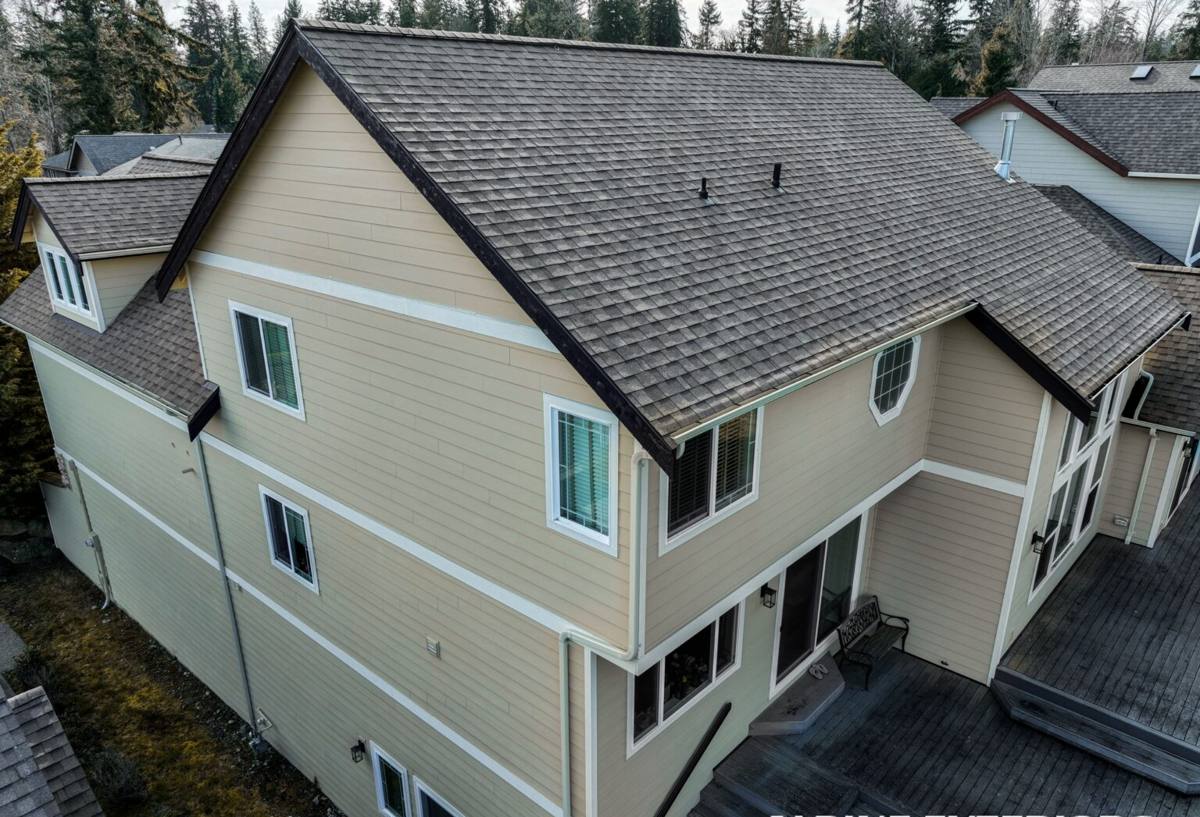
What This Climate Actually Does to a Deck
It helps to understand the specific mechanisms at work, because they drive every material and construction decision below.
Salt Air
Airborne salt from the Strait accelerates corrosion on any exposed metal — fasteners, brackets, hidden connectors, railing hardware. Standard galvanized coatings that would be fine twenty miles inland can start rusting within a few seasons this close to the water. Once a fastener corrodes, it weakens the connection it's holding, and that's a structural issue, not just a cosmetic one.
Driving Rain
Rain here doesn't just fall straight down — wind off the water pushes it sideways into ledger connections, under poorly flashed rim joists, and into any gap where end grain is exposed. Wood that stays wet longer decays faster, and framing that isn't detailed to shed water actively traps it instead.
Moss and Algae
Shaded decks, north-facing decks, and anything under tree cover in this area grow moss readily given the moisture and mild temperatures. Beyond looking bad, moss holds water against the deck surface and becomes genuinely slick and dangerous underfoot, especially on stairs.
Quick Reference: Climate Stress vs. What We Build For
| Climate Factor | What It Damages | How We Address It |
|---|---|---|
| Salt air | Fasteners, brackets, railing hardware | Stainless or coated fasteners rated for coastal/marine exposure |
| Driving rain | Ledger connections, end grain, rim joists | Proper flashing, ledger waterproofing, sealed cut ends |
| Moss and shade | Deck surface traction, board longevity | Gapped board spacing, surface texture choice, airflow under the structure |
| Freeze-thaw swings | Footings, fastener backout | Frost-depth footings, correct fastener type per decking material |
Choosing the Right Decking Material for Cherry Point
There's no single "best" decking material — there's a best material for this location, this exposure, and this budget. We walk every homeowner through the real trade-offs rather than pushing whichever product has the best margin.
Composite Decking
Composite boards resist rot and don't need staining or sealing, which matters a lot in a climate where wood maintenance schedules get missed once the rain sets in for the season. The trade-off is upfront cost and, on lower-grade composites, a tendency to develop surface algae in shaded, damp spots if the board isn't a capped, moisture-resistant product. We only install composite lines with a solid track record in wet coastal climates — not every composite on the market is built for this.
Pressure-Treated Wood
Still a solid, budget-conscious choice when it's detailed correctly — proper fastener selection, regular sealing, and good airflow underneath. It requires more ongoing maintenance than composite, and skipping that maintenance in a salt-air, high-rain environment shortens its life noticeably. It's a good option for homeowners who don't mind the upkeep and want a lower entry cost.
Cedar and Other Natural Wood
Cedar has natural rot resistance and a look many homeowners want, but it's the most maintenance-intensive option in this climate and the least forgiving of skipped upkeep. We're honest with clients about this one: it can be beautiful here, but only with a real annual maintenance commitment.
What a Correct Deck Build Involves Here
The visible decking is maybe a third of what determines how a deck performs. The rest is in the structure and details underneath.
- Footings set to frost depth and sized correctly for the deck's load and soil conditions on the property
- Ledger board flashing that actually sheds water away from the house rim joist, not just a bead of caulk
- Corrosion-resistant fasteners and hardware rated for coastal exposure throughout — not just at the visible connections
- Joist tape or equivalent protection on framing members to slow moisture absorption at the top of each board
- Proper board spacing and airflow underneath to reduce moss growth and let the structure dry out between rain events
- Stair and railing hardware matched to the decking material and rated for the exposure
- Grading and drainage checked around footings so water isn't pooling against the structure
Skip any one of these and the deck might look fine for a couple of years. The failures in this climate tend to show up underneath first — soft framing, rusted brackets, a ledger connection that's been wicking moisture into the house rim joist — long before the surface gives any obvious warning.
Design Considerations Specific to Cherry Point Properties
Waterfront and near-waterfront lots in this area often come with specific site conditions worth planning around before a design is finalized.
Wind Exposure
Open exposure to the Strait means more wind load on railings and any overhead structure like a pergola. We size and anchor these components for the actual exposure of the site, not a generic inland assumption.
View Orientation vs. Weather Exposure
The best view angle and the most weather-protected orientation aren't always the same direction. We talk through this trade-off with homeowners early — sometimes a partial windscreen, glass railing panel, or covered section lets you keep the view without taking the full brunt of driving rain on the deck surface.
Slope and Access
Waterside lots in this area often have grade changes between the house and the yard or shoreline. Multi-level decks with properly engineered stairs are common here, and each level transition needs its own structural attention rather than being treated as an afterthought.
Our Process for a Cherry Point Deck Project
1. On-Site Assessment
We look at sun and shade patterns, wind exposure, existing drainage, and how the deck will connect to the house before any design work starts. Site-specific conditions drive material and structural recommendations, not the other way around.
2. Design and Material Selection
We walk through decking material, railing style, and layout options with honest pros and cons for each, matched to your budget and how you'll actually use the space.
3. Permitting
Deck permitting requirements vary by jurisdiction and by structure size and height. We handle the permit process so the finished deck is built to code and won't create problems at resale.
4. Construction
Footings, framing, flashing, and decking installed in sequence with the coastal-specific details covered above — not treated as optional upgrades.
5. Final Walkthrough
We go over the finished deck with you, including what maintenance the specific material you chose will need going forward so there are no surprises a year or two down the road.
Why Local Experience Matters for This Job
A contractor who mostly builds decks well inland doesn't necessarily know that a standard galvanized fastener won't hold up long-term this close to the water, or that a north-facing deck under tree cover in this part of Whatcom County needs different board spacing than the same deck would need on a dry, sunny lot. Those aren't things you learn from a manufacturer's spec sheet — they're things you learn from building and later inspecting decks in this specific environment over years.
We've seen what happens to decks built to a generic standard in Cherry Point's conditions, and we build to avoid those failures from the start rather than fixing them later. That's the difference a crew with real local experience brings to the table.
Maintenance: What to Expect After the Build
Whatever material you choose, plan on some seasonal attention given the local climate:
- Clear leaves and debris from board gaps before fall rains set in, so water and organic matter don't sit and feed moss growth
- Rinse or lightly scrub shaded areas periodically during the wetter months to keep moss from getting established
- Inspect railing hardware and fasteners annually for early signs of corrosion, especially on the sides most exposed to wind off the water
- Re-seal or re-stain wood decking on the schedule appropriate to that product — composite doesn't need this, wood does
- Check that under-deck airflow paths stay clear of plantings or debris that block ventilation
None of this is difficult, but it matters more here than it would in a drier inland climate, and we make sure every homeowner knows exactly what their specific deck needs before we leave the job.
If you're planning a new deck or replacing one that hasn't held up to Cherry Point's weather, we're happy to take a look and walk you through your options. Fill out the form below for a free, no-pressure estimate.