 Blaine Siding
 Roofing in California Creek: A Different Set of Demands
California Creek sits close enough to the water that homes here deal with a combination of weather stresses that inland Whatcom County properties simply don't see. Salt-laden air drifts in off the strait and Drayton Harbor, near-constant winter rain saturates roofing materials for months at a stretch, and shaded, tree-lined lots hold onto moisture long after a storm has passed. Add in the moss season that stretches from fall through spring, and you've got a roofing environment that punishes shortcuts and rewards the right materials installed the right way.
A roof that's rated for a dry inland climate isn't necessarily the right roof for a property near California Creek. Fastener corrosion resistance, underlayment quality, ventilation design, and moss-resistant treatments all matter more here than they would twenty miles inland. When we quote a new roof for a California Creek home, we're building around these specific conditions, not just swapping old shingles for new ones.
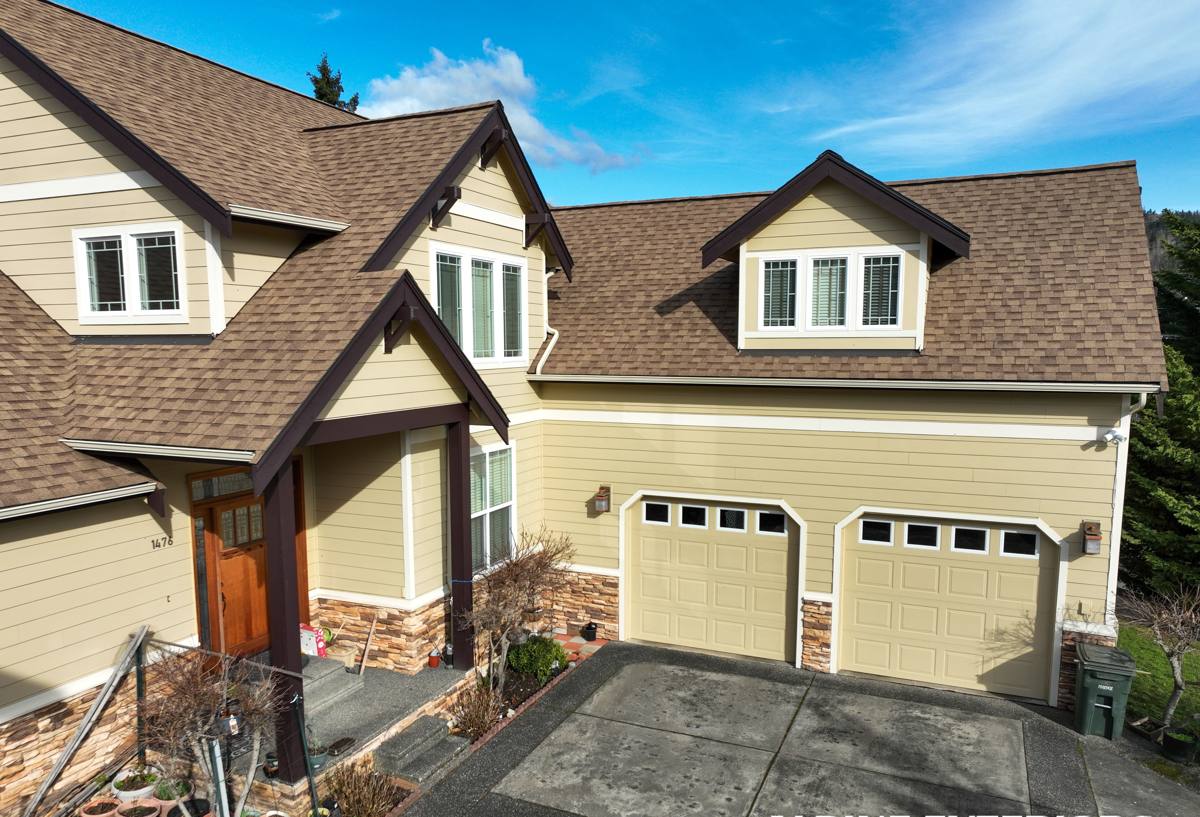
What Blaine's Coastal Climate Does to a Roof
Salt Air and Corrosion
Airborne salt accelerates corrosion on exposed metal — flashing, fasteners, vents, and gutter hardware all take the hit over time. Standard electro-galvanized fasteners can start showing rust streaks well before the shingles themselves are due for replacement. Homes in California Creek benefit from stainless steel or hot-dip galvanized fasteners and corrosion-resistant flashing, even though it costs a bit more up front than the standard hardware used further inland.
Driving Rain and Water Intrusion
Whatcom County gets its share of wind-driven rain off the water, and driving rain doesn't behave like a straight-down downpour. It gets pushed sideways under shingle tabs, around chimney flashing, and into any gap in the underlayment. A roof built for this area needs a properly lapped, high-quality synthetic underlayment and ice-and-water shield detailing at every valley, eave, and penetration — not just the minimum code requirement.
Moss, Shade, and Moisture Retention
Many California Creek lots have mature tree cover, which is great for privacy and shade but keeps roof surfaces damp and shielded from drying sun for long stretches. That's exactly the environment moss thrives in. Moss doesn't just look bad — it lifts shingle edges, holds moisture against the roof deck, and shortens the life of the roofing material underneath it. A roof designed for this area accounts for moss resistance from day one rather than treating it as an afterthought.
What a Correctly Installed Roof Includes Here
A new roof is more than the shingles you see from the street. For a California Creek home, the assembly underneath matters just as much — arguably more — than the surface material.
- Full tear-off to the deck, with the sheathing inspected and any soft, rotted, or delaminated wood replaced before anything new goes down
- High-quality synthetic underlayment across the full roof, with self-adhered ice-and-water membrane at eaves, valleys, and all penetrations
- Corrosion-resistant flashing and fasteners suited to a coastal, salt-air environment
- Balanced intake and exhaust ventilation so moisture doesn't get trapped in the attic space
- Moss-resistant shingle products or treatments where the property's tree cover and shade pattern call for it
- Properly sealed penetrations for vents, skylights, and chimneys — the most common source of leaks on an otherwise sound roof
- Gutter and drip edge detailing that actually moves water off the roof instead of letting it pool at the fascia
Skip any one of these steps and you can end up with a roof that looks fine for a year or two but fails early where it can't be seen — under the shingles, at the flashing laps, or in a trapped-moisture attic.
Choosing Materials for This Location
There isn't a single "right" roofing material for every California Creek home — it depends on the roof's pitch, sun exposure, tree cover, and the look you want. What we do rule out or approach carefully are products that don't hold up well to sustained damp conditions or salt exposure without extra maintenance. Here's how the common options stack up for this specific climate:
| Material | Coastal/Moss Performance | Maintenance Consideration |
|---|---|---|
| Architectural asphalt shingle | Good, especially with algae/moss-resistant granules | Periodic moss and debris removal on shaded roofs |
| Standing seam metal | Excellent water shedding; needs corrosion-resistant fasteners and coatings near the water | Low; occasional fastener and sealant checks |
| Cedar shake | Attractive but holds moisture in shaded, damp settings unless well-ventilated | Higher; regular treatment and inspection needed |
| Synthetic/composite shingle | Very good moisture and moss resistance | Low to moderate |
For heavily shaded California Creek lots, we lean toward asphalt or synthetic products with built-in algae and moss resistance, or standing seam metal where the roof design and budget support it. Cedar shake can still work well on a roof that gets good sun exposure and airflow, but we'll be honest with you if a shaded lot is going to fight against that material rather than work with it.
Our Process for a New Roof Installation
1. On-Site Assessment
We start with a walk of the property and a look at the existing roof, attic ventilation, and any trouble spots — sagging areas, moss buildup, soft decking, or flashing that's already showing corrosion. This tells us what the roof actually needs, not just what the shingles look like from the driveway.
2. Material and Scope Recommendation
Based on the assessment, we recommend materials and a scope of work suited to the home's exposure, tree cover, and pitch. We'll walk through the trade-offs plainly — cost, maintenance, and expected performance in this specific setting.
3. Tear-Off and Deck Inspection
Full removal of the old roofing down to the deck, with every square foot of sheathing checked. Any deck damage gets addressed before new roofing goes on — this step gets skipped by corner-cutting crews and it's the single biggest cause of early roof failure.
4. Underlayment, Flashing, and Ventilation
This is where a coastal roof earns its lifespan. Proper underlayment coverage, ice-and-water shield at vulnerable areas, corrosion-resistant flashing, and balanced ventilation all go in before the finish material is installed.
5. Final Installation and Walkthrough
Shingles, metal panels, or shakes go on to manufacturer specification, followed by a full site cleanup and a walkthrough so you understand what was done and what to expect going forward.
Why Local Experience with This Area Matters
A crew that's worked roofs throughout the Blaine area already knows how California Creek's microclimate differs from a drier, more open lot a few miles inland. That means not guessing at ventilation needs, not being surprised by how fast moss returns on a shaded north-facing slope, and not specifying hardware that looks fine on paper but corrodes early this close to the water. Whatcom County's building requirements and typical wind and rain exposure also factor into how a roof should be detailed — experience with the area means fewer surprises during installation and fewer callbacks after.
We also know that every property here is a little different. A roof on a high, sun-exposed lot doesn't need the same moss-resistance strategy as one tucked under mature trees closer to the water. Treating every California Creek roof identically is how homeowners end up with a product mismatched to their actual site conditions.
Signs Your California Creek Roof May Need Replacement
- Visible moss growth returning within months of cleaning, especially on shaded slopes
- Granule loss showing up in gutters or at the base of downspouts
- Curling, cracked, or missing shingles, particularly on the side facing prevailing wind and rain
- Rust staining around flashing, vents, or fasteners
- Daylight visible through the roof deck from inside the attic
- Soft or spongy spots when walking the roof, indicating deck damage beneath
- Rising energy bills tied to poor attic ventilation or insulation gaps at the roofline
Catching these signs early can mean the difference between a planned roof replacement and an emergency repair during a winter storm.
Cost Factors for a California Creek Roof
Every roof is priced based on its own specifics, but a few factors tend to move the number more in this area than elsewhere:
| Factor | Why It Matters Here |
|---|---|
| Roof size and pitch | Larger and steeper roofs require more material and labor time |
| Deck condition | Moisture-related rot from long damp seasons can require sheathing replacement |
| Material choice | Moss-resistant and corrosion-resistant products carry a modest premium over base-grade materials |
| Tree cover and access | Heavily shaded or tight-access lots can add labor time for cleanup and material staging |
| Ventilation upgrades | Older homes often need added intake or exhaust venting to meet current best practice |
We'd rather give you an honest range after seeing the roof in person than a number that doesn't hold up once tear-off reveals the actual deck condition. Every estimate we provide reflects what we find on your specific property, not a generic quote.
If your roof is showing signs of wear, holding onto moss, or is simply due for replacement, we're happy to take a look and walk you through what a new roof would involve for your California Creek home. Reach out for a free, no-pressure estimate using the form below.