 Blaine Siding
 Siding Built for California Creek's Weather, Not Just Any Weather
California Creek sits close enough to the water that homes here take a different kind of beating than siding fifty miles inland. Salt-laden air moves in off the strait, driving rain comes sideways for days at a time in the fall and winter, and the shaded, damp stretches along the creek corridor grow moss on anything that holds moisture. Siding that would hold up fine in a drier part of Whatcom County can fail years early out here if it isn't matched to the actual conditions. That's the starting point for every California Creek project we take on: this is a marine-influenced microclimate, and the siding has to be chosen and installed accordingly.
This page is about one thing — fiber cement siding installation for California Creek homes — not a general overview of every siding option on the market. If you're comparing products, our other pages cover that. Here we're talking about what actually matters once you've decided fiber cement is the right call for a home in this specific area.
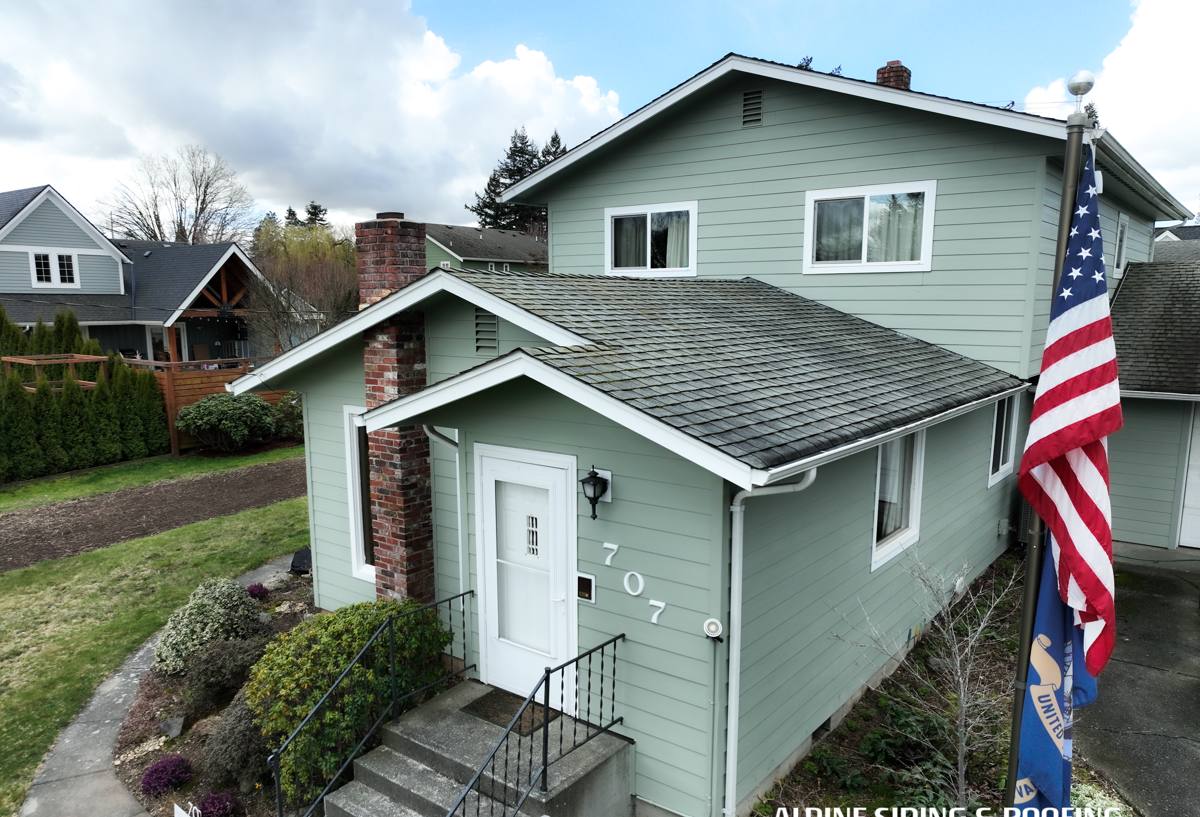
Why Fiber Cement Holds Up Where Other Materials Struggle
Salt air is corrosive and it's relentless. It doesn't just sit on the surface of a house — it works into seams, fasteners, and any exposed edge of a less durable material over time. Wood siding absorbs moisture and, combined with the moss and shade common near the creek, can start showing rot within a handful of years if it isn't maintained aggressively. Vinyl can warp and fade faster under repeated wet-dry cycling and doesn't offer much resistance to the kind of driving rain that gets forced into laps and joints by coastal wind.
Fiber cement is cement, sand, and cellulose fiber pressed and cured into a dense, stable board. It doesn't rot, it doesn't feed moss the way wood does, and it holds its shape through the wet winters and the drier summer stretches without the expansion and contraction problems that plague other materials. That stability is exactly what a house near California Creek needs — a siding product that isn't fighting the climate every season.
What Salt Air, Rain, and Moss Actually Do to a House
- Salt air: accelerates corrosion of fasteners, flashing, and any exposed metal trim if lower-grade materials are used
- Driving rain: finds any gap in flashing, caulking, or lap coverage and pushes water behind the siding rather than letting it run off
- Moss and shade: hold moisture against the siding surface longer, which is hard on materials that absorb water and easy on ones that don't
- Wind-driven debris: off the water can wear at softer, painted wood surfaces faster than a factory-cured cement composite
Why We Only Install James Hardie
Not all fiber cement is built the same. We standardized on James Hardie products years ago and we don't install other fiber cement brands, vinyl, LP SmartSide, or bare wood siding — that's a deliberate professional standard, not a sales pitch. Hardie's ColorPlus factory-applied finish is baked on under controlled conditions, which gives it more consistent adhesion and color retention than field-applied paint, especially important in a climate where the finish is fighting salt exposure and near-constant moisture. Hardie also engineers specific product lines for different climate zones, which matters directly for a location like California Creek.
HZ5 vs. HZ10: Which Line Fits This Location
James Hardie's HardieZone system rates products for the moisture and temperature conditions of a region. Most of Western Washington, including Blaine and the California Creek area, falls into the HZ5 zone, engineered for wetter, more temperate coastal conditions. HZ10 products are formulated for hotter, drier climates and aren't the right match here. Using the correct HZ-rated product isn't a minor spec detail — it affects how the board manages moisture over its lifespan, and it's one of the first things we confirm on every quote.
What a Correct Installation Actually Involves
Fiber cement siding fails early almost exclusively because of installation mistakes, not because of the material itself. In a location dealing with driving rain and salt air, the margin for error is smaller than it would be somewhere drier. Three things matter most.
Flashing and Water Management
Every window, door, and horizontal transition needs proper flashing so water is directed out and away from the wall assembly, not trapped behind the siding. On a house exposed to sideways rain off the water, a missed or undersized flashing detail is often where moisture problems start, sometimes years before they show up as a visible stain or soft spot.
Fastening and Clearances
Hardie specifies exact fastener types, spacing, and penetration depth, along with minimum clearances from grade, roof lines, and decks. Skipping these to save time is one of the most common shortcuts we see on past installations we've been called in to correct, and it's almost always what leads to moisture intrusion at the bottom courses first.
Caulking and Sealant Practices
Panel joints, trim intersections, and penetrations need the right sealant applied correctly, not just a bead run down every seam. Over-caulking can trap moisture just as easily as under-caulking lets it in, and getting this balance right is part of what separates a correctly installed Hardie job from one that looks fine for a year or two and then doesn't.
How We Approach a California Creek Project
Every job follows the same sequence, adjusted for what we find on the specific house.
- On-site assessment: we look at existing siding condition, moisture damage, moss patterns, and how exposed the house is to prevailing wind and rain direction.
- Product and color selection: confirming the correct HZ5-rated Hardie boards and ColorPlus color, factoring in how the finish will read against the surrounding tree cover and light near the creek.
- Removal and substrate check: pulling old siding to inspect sheathing and framing underneath for hidden rot before anything new goes up — this step catches most of the problems a homeowner never knew existed.
- Weather barrier and flashing: installing or verifying the house wrap and flashing details at every penetration before a single board is hung.
- Installation to spec: correct fastening, clearances, and panel spacing following Hardie's published installation requirements for this climate zone.
- Finish work and cleanup: trim, caulking, touch-up, and a final walk-through so you know exactly what was done and why.
Problems We Commonly Find on Older Installations Nearby
When we're called out to inspect an older home in the California Creek area, a handful of issues show up repeatedly:
| Issue | Underlying Cause | Why It Matters Here |
|---|---|---|
| Moss buildup at lower courses | Poor drainage or lack of ventilation gap behind siding | Shaded, damp areas near the creek accelerate this faster than open, sunny lots |
| Soft or stained trim near windows | Missing or improperly lapped flashing | Driving rain finds these gaps quickly in this exposure |
| Fastener corrosion or streaking | Wrong fastener grade for a coastal-influenced environment | Salt air accelerates corrosion on lower-grade hardware |
| Cracked or peeling paint on wood siding | Wood expansion/contraction plus UV and moisture cycling | Repeated wet-dry cycles are harder on wood here than inland |
What Maintenance Looks Like After Installation
Fiber cement is low-maintenance, not no-maintenance, and that's especially true this close to the water. A correctly installed Hardie system still benefits from periodic attention:
- Rinse the siding once or twice a year to clear salt residue and organic buildup before moss gets a foothold
- Check caulking at trim and penetrations every couple of years — sealant is the one component that wears out before the siding does
- Keep gutters and downspouts clear so water isn't sheeting down the wall face during heavy rain
- Trim back vegetation that keeps sections of the wall shaded and damp longer than necessary
- Watch for any soft spots at the bottom courses, which is where a flashing or clearance problem would show up first
Cost Factors for a California Creek Project
Every house is different, but a few factors consistently drive cost more than others in this specific setting:
| Factor | Why It Affects Cost |
|---|---|
| Extent of hidden rot found during tear-off | Sheathing or framing repairs add labor and material beyond the siding itself |
| House exposure to wind and rain direction | More exposed elevations may need additional flashing or detailing work |
| Trim and architectural detail complexity | More corners, transitions, and window/door openings increase labor time |
| Access and site conditions | Slopes, tree cover, or tight lot lines near the creek can affect staging and scaffolding |
| Product line and ColorPlus color selection | Board profile and finish choice affect material cost |
Why Local Experience in This Specific Area Matters
A crew that's worked houses along California Creek and elsewhere in Blaine already knows how the wind typically hits a given elevation, where moss tends to establish first, and what past installation shortcuts tend to look like when they've failed. That's not something a contractor coming from outside Whatcom County picks up on the first job. It shows up in small decisions — where extra flashing attention gets paid, which elevations get double-checked for clearance, how a color reads against the tree line here versus somewhere more open — that add up to a siding job that's actually built for where it's going, not just installed to a generic spec sheet.
Questions Worth Asking Any Siding Contractor Before You Hire
- Do you install to the manufacturer's published specifications for this climate zone, and can you explain what that means?
- Will you inspect the sheathing and framing before installing new siding, not just cover over what's there?
- What's your approach to flashing at windows, doors, and horizontal transitions?
- Do you carry manufacturer certification or specific training on the product you're installing?
- What does your warranty cover, and is it transferable if you sell the home?
If your California Creek home needs new siding or you want a straight answer on whether your current siding is holding up the way it should, we're happy to take a look. Reach out for a free, no-pressure estimate using the form below.