 Blaine Siding
 Windows Take a Beating in Blaine Harbor
Homes near Blaine Harbor sit in one of the more demanding window environments in Whatcom County. The marina and the open water of Semiahmoo Bay put salt-laden air directly against siding, trim, and window hardware almost year-round. Add the driving, wind-pushed rain that comes off the Strait during fall and winter storms, plus a moss and mildew season that can stretch from October well into spring, and you have three separate stresses working on the same window unit at once. None of them are dramatic on their own. Together, over ten or fifteen years, they're what quietly wears out frames, seals, and hardware faster than the same window would fail a few miles inland.
We work on homes in and around Blaine Harbor regularly, so this isn't a generic write-up of window replacement — it's specifically about what that combination of salt, wind-driven rain, and moisture does to windows here, and what a replacement job needs to account for to actually hold up.
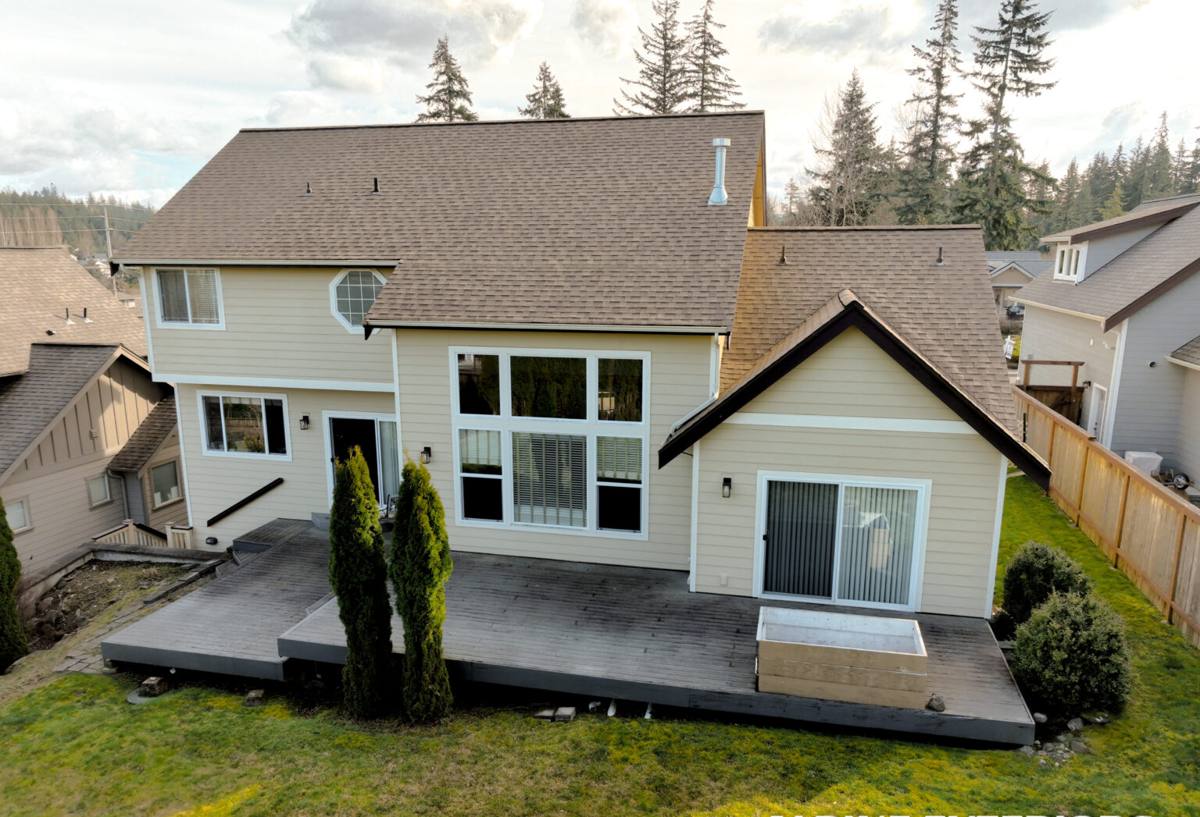
What Salt Air and Driving Rain Actually Do to a Window
Hardware and Metal Components
Salt air is corrosive to unprotected or lower-grade metal. Window locks, hinges, balance systems, and screen frames that aren't rated for coastal exposure can start pitting, sticking, or seizing years before a comparable window would fail in a drier inland setting. This is one of the most common early complaints we hear from Blaine Harbor homeowners — a window that still looks fine but won't lock smoothly or lift easily anymore.
Seals, Sashes, and Water Intrusion
Wind-driven rain doesn't fall straight down — it gets pushed sideways and upward into gaps that a window designed for calmer conditions might tolerate. Over time this stresses weatherstripping and perimeter sealant, and it's especially hard on older aluminum-frame or original wood windows that were never flashed with a modern drainage plane in mind. Once water finds a path behind the frame, it doesn't dry out quickly in this climate — it sits, and that's where rot and mold start.
Moss, Mildew, and Frame Materials
The long wet season here means anything organic-friendly — bare wood trim, unsealed sill areas, shaded frame surfaces — stays damp long enough to grow moss and mildew. That's less a structural threat to the window itself and more a maintenance and appearance issue, but it's also often the first visible sign that moisture is sitting somewhere it shouldn't.
Signs a Blaine Harbor Home Needs Window Replacement
- Locks, cranks, or balances that stick, bind, or feel gritty when operated
- Visible corrosion or pitting on window hardware
- Fogging or a permanent haze between double-pane glass (a failed seal)
- Soft or discolored wood at the sill or bottom corners of the frame
- Moss or persistent green staining on trim or sill surfaces
- Noticeable draft or cold spot at the window even when it's fully closed
- Condensation forming on the inside of the glass regularly in cooler months
- Difficulty opening or closing a window that used to move freely
Any one of these on its own might just mean a repair or a re-seal. Several of them together, especially on windows that are original to an older harbor-area home, usually mean it's more cost-effective to replace than to keep patching.
What a Correct Window Replacement Job Involves Here
Swapping the glass unit is the easy part. What actually determines whether a replacement window holds up in this environment is everything around it — the flashing, the sealing, and how the new unit ties into the existing wall assembly.
Flashing and Drainage
Every opening gets flashed so that any water that does get behind the exterior cladding has a clear path back out, rather than pooling against the window frame or the framing behind it. This matters more in wind-driven rain conditions than in calmer climates, because water is more likely to be pushed into places gravity alone wouldn't take it.
Sealing the Perimeter
We seal the interior and exterior perimeter of each window with materials suited to sustained moisture exposure, not just a bead of caulk that looks finished on install day. Corners and the bottom sill — the areas that take the most water — get particular attention.
Hardware Selection
For homes this close to salt water, we lean toward hardware and fasteners rated for coastal or marine-adjacent exposure rather than standard-grade components. It costs a little more up front and it's the difference between locks that still work smoothly in year eight versus year two.
Fit and Insulation
A properly sized replacement window gets shimmed level and plumb, then insulated around the frame gap with a material that stays flexible and doesn't compress or settle over time, so there's no hidden air or water path once the trim goes back on.
Choosing Frame and Glass for a Harbor Environment
There's no single "best" window material — the right call depends on the home's exposure, existing trim style, and budget. Here's how the common options actually perform under Blaine Harbor conditions:
| Frame Material | Salt Air / Moisture Behavior | Maintenance | Notes |
|---|---|---|---|
| Vinyl | Won't corrode or rot; handles salt air well | Low — occasional cleaning | Most cost-effective option; good performance-to-price ratio for harbor exposure |
| Fiberglass | Excellent — very stable, resists warping and corrosion | Low | Higher upfront cost; strong long-term choice for direct water exposure |
| Aluminum | Prone to corrosion and pitting near salt water unless heavily coated | Moderate to high | We generally steer harbor-area clients away from bare or lower-grade aluminum for this reason |
| Wood / Wood-clad | Attractive but vulnerable to moisture if seals fail | High — needs regular inspection and refinishing | Workable choice for homeowners who want the look and are committed to upkeep |
On glass, we typically recommend a Low-E coated, argon-filled double-pane unit for this area. The Low-E coating helps manage heat loss during the cold, damp months, and the sealed argon fill reduces the interior condensation that shows up on cooler mornings near the water. For homes with heavy road or harbor noise exposure, a laminated glass option in at least one pane can also cut down on sound transmission.
What Drives the Cost of a Window Project
| Factor | Why It Matters |
|---|---|
| Frame material | Vinyl is typically the most economical; fiberglass and wood-clad cost more but may fit certain homes better |
| Number and size of openings | Larger or specialty-shaped windows (bay, picture, custom) cost more per unit |
| Condition behind the existing window | Rot or water damage found once the old window is removed adds repair scope |
| Full-frame vs. insert replacement | Full-frame replacement (tearing out to the studs) costs more but is often necessary when the existing frame or flashing has failed |
| Hardware grade | Coastal-rated hardware costs modestly more than standard-grade but pays off in longevity here |
We give straightforward, itemized pricing during the estimate rather than a single lump number, so you can see what's driving the cost and where there's flexibility.
Full-Frame vs. Insert Replacement
Insert (or "pocket") replacement reuses the existing frame and is faster and less invasive — a reasonable option when the existing frame is still structurally sound and properly flashed. Full-frame replacement removes the window down to the rough opening, which costs more and takes longer, but it's the right call whenever there's evidence of water intrusion, rot, or flashing that was never done correctly to begin with. Given how common wind-driven rain exposure is in this area, we always check the condition around the opening before recommending which approach fits — reusing a frame that's already compromised just moves the problem down the road.
Our Process
- On-site inspection of existing windows, framing, and any visible water or corrosion damage
- Honest recommendation on insert vs. full-frame replacement based on what we actually find
- Written, itemized estimate covering materials, labor, and any necessary repair work
- Scheduled installation with flashing, sealing, and hardware suited to harbor exposure
- Final walkthrough to confirm every window opens, closes, locks, and seals correctly
What to Ask Any Contractor Before Hiring Them for This Work
- Do you flash and seal openings to a standard suited for wind-driven rain, or just caulk the trim?
- What hardware grade do you install on homes this close to salt water?
- Will you inspect the framing behind the old window before quoting a final price?
- Do you recommend insert or full-frame replacement, and why for this specific house?
- What warranty covers the installation labor, separate from the manufacturer's product warranty?
A contractor who's worked in Blaine Harbor before should be able to answer all five without hesitating. If the answer to the first question is basically "we caulk it," that's worth pausing on — it's the single biggest predictor of whether a window holds up here past the first few wet seasons.
Why Local Experience Matters for This Job
Window replacement done to a generic standard can look completely fine on install day and still fail early in a harbor environment, because the failure points — hardware corrosion, seal breakdown under wind-driven rain, moisture sitting behind poorly flashed trim — aren't things you notice until a wet season or two in. Working on homes throughout Blaine and Whatcom County means we've seen what actually goes wrong here, not just what the manufacturer's spec sheet says should work in ideal conditions. That shapes the flashing details, the hardware we spec, and the sealing approach we use on every job, not just the ones directly on the water.
If your windows in Blaine Harbor are showing corrosion, sticking, fogging, or drafts, we're happy to take a look and give you a straightforward, no-pressure estimate — use the form below to get started.