 Blaine Siding
 Storm Damage Roofing in Blaine Harbor: A Different Kind of Wear
Blaine Harbor sits right where Semiahmoo Bay meets the open water near the Canadian border, and that location shapes everything about how a roof ages here. Homes along the harbor take on weather that inland Whatcom County properties simply don't see in the same combination: salt-laden air rolling off the water, wind-driven rain that comes in sideways during winter storms, and a moss season that starts early and doesn't let up until late spring. A roof that would coast along fine in a drier, inland climate can develop real problems here within a few storm seasons if it isn't built and maintained with this specific exposure in mind.
Storm damage repair in this area isn't just about patching whatever broke during the last windstorm. It's about understanding why that particular spot failed — was it a fastener that corroded from salt exposure, a moss mat that held moisture against the decking, or a flashing detail that wasn't sealed for the amount of wind-driven rain this stretch of coastline actually gets? Get that diagnosis wrong and you'll be back up on the roof after the next storm.
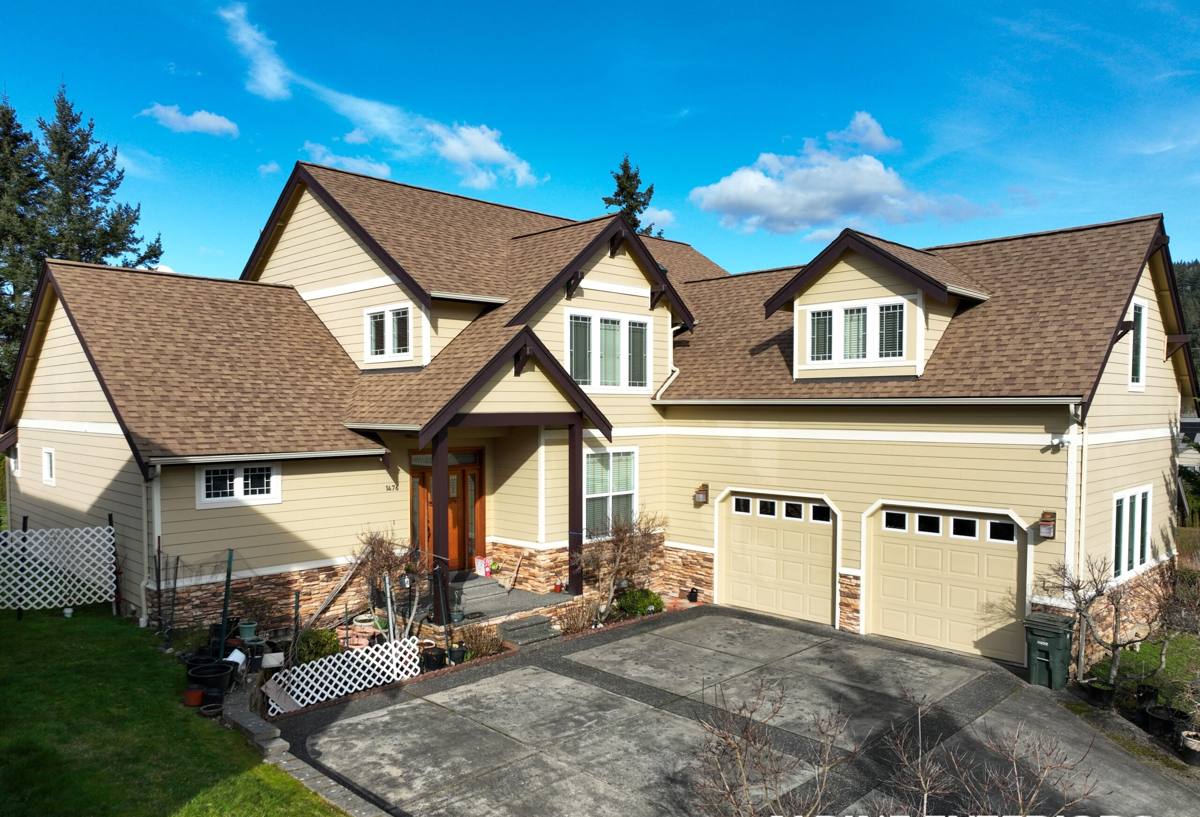
What the Marine Climate Does to a Blaine Harbor Roof Over Time
Salt Air and Metal Components
Salt in the air accelerates corrosion on anything metal — flashing, fasteners, gutter hardware, and exposed nail heads. Standard fasteners that hold up fine a few miles inland can start rusting and weakening years earlier this close to the water. Once a fastener corrodes, it loses its grip, and that's often the first domino in a wind-related shingle or panel failure.
Driving Rain and Wind Exposure
Blaine Harbor's open exposure to the water means storms arrive with real wind behind the rain. That combination pushes water sideways and upward under roof edges, ridge caps, and flashing in ways that vertical rain never would. Roofing details that are perfectly adequate in sheltered inland neighborhoods can be undersized for what this stretch of coastline delivers in a January storm.
Moss and Trapped Moisture
Whatcom County's damp, mild winters are close to ideal moss-growing conditions, and moss does more than look bad. It holds moisture against shingles and decking long after a storm has passed, softening the roofing material and, over time, the wood underneath. A storm-damaged roof with an existing moss problem tends to fail faster and more extensively than a clean roof would from the same event.
Common Storm Damage We Find on Blaine Harbor Roofs
- Wind-lifted or missing shingles — usually starting at ridges, edges, and any spot where a previous repair wasn't sealed correctly
- Torn or displaced flashing around chimneys, skylights, and roof-to-wall transitions, letting wind-driven rain track into the attic space
- Corroded fasteners and metal edging that have weakened from years of salt exposure, not just the most recent storm
- Moss-softened decking discovered once damaged shingles are pulled back — a problem the storm exposed rather than caused
- Gutter and downspout separation from wind loading, which then redirects water somewhere the roof wasn't built to handle it
- Granule loss and impact bruising from wind-blown debris, which isn't always visible from the ground but shortens the roof's remaining life
What a Correct Storm Damage Repair Actually Involves
A rushed storm repair often addresses the obvious hole and leaves the underlying cause untouched. A correct repair works through the problem in order:
- Full roof assessment, not just the damaged section. Storm damage rarely stays confined to one spot — wind that lifted shingles in one area usually stressed fasteners and flashing nearby too.
- Check the decking underneath. If moss or long-term moisture had already softened the plywood before the storm hit, that section needs to be replaced, not just re-covered.
- Match materials and fastening to the exposure. A repair on a harbor-facing roof should use corrosion-resistant fasteners and flashing details built for wind-driven rain, not whatever's fastest.
- Reseal and re-integrate with the existing roof system. New shingles and flashing need to tie into the surrounding material correctly so water sheds the way the whole system was designed to shed it.
- Document everything. Photos and a written scope of the damage and repair, useful both for your records and for any insurance claim tied to the storm.
Our Process for Blaine Harbor Storm Repairs
When a homeowner in Blaine Harbor calls us after a storm, we start with a straightforward roof inspection — walking the roof where it's safe to do so, checking the attic from inside for water intrusion signs, and photographing anything storm-related. We'll tell you plainly what we find: what's storm damage, what's pre-existing wear the storm exposed, and what can reasonably wait versus what needs attention now to prevent worse damage.
From there we put together a written scope and a clear estimate before any work starts. If you're filing an insurance claim, we'll provide the documentation and can walk your adjuster through what we found — we're not in the business of inflating a claim, just making sure the actual damage gets a fair and accurate accounting. Repairs are scheduled around the weather; we don't tarp a roof and let it sit longer than necessary, because every additional rain event on an open roof is more risk.
Repair or Replace? Cost Factors to Weigh
Not every storm-damaged roof needs full replacement, but pretending an aging, moss-compromised roof just needs a patch isn't honest either. Here's how we help homeowners think through the decision:
| Factor | Favors Repair | Favors Replacement |
|---|---|---|
| Roof age | Under roughly half its expected lifespan | Nearing or past expected lifespan already |
| Extent of damage | Localized to one section or slope | Spread across multiple areas or slopes |
| Decking condition | Solid, dry decking under the damaged area | Soft, moss-softened, or water-stained decking found |
| Storm history | First significant damage in years | Repeated storm damage or repairs on the same roof |
| Materials match | Matching shingles or panels still available | Discontinued material, patch would visibly mismatch |
Cost ranges vary widely depending on scope, roof pitch, and material, so we avoid quoting numbers before we've actually seen the roof — but we'll always give you a repair estimate and a replacement estimate side by side when both are genuinely reasonable options, so the decision is yours with full information.
Materials We Choose for Coastal Storm Repairs
For repairs on harbor-exposed roofs, we lean toward corrosion-resistant fasteners and flashing rather than standard-grade hardware, since the cost difference is small relative to how much sooner standard fasteners fail this close to salt water. On shingle roofs, we pay close attention to sealing at edges and penetrations, since that's where wind-driven rain finds its way in first. We're selective about which underlayment and flashing products we use in this specific setting — not because other products are bad in general, but because our standard is matching the product to the actual moisture and wind load this location sees, not just what's fastest to install.
Insurance Claims and Storm Damage
Most homeowners' policies cover sudden storm damage — wind, impact, and the water intrusion that follows — though coverage details and deductibles vary by policy. What we can offer is honest documentation: clear photos, a written description of what we found and why we believe it's storm-related versus pre-existing wear, and a fair repair scope. We won't tell an adjuster something isn't storm damage when it is, and we won't claim something is storm damage when it's really years of moss and moisture catching up with an older roof. That honesty tends to make claims go smoother, not slower.
Signs Blaine Harbor Homeowners Can Check After a Storm
You don't need to get on the roof yourself to spot warning signs. From the ground or attic, look for:
- Shingles or granules collecting in gutters or on the ground after high wind
- Visible gaps, lifted edges, or missing sections along the roofline
- New water stains on ceilings or in the attic, especially near chimneys or vents
- Daylight visible through the roof decking when viewed from inside the attic
- Sagging or discolored gutters, or downspouts pulled loose from the fascia
- A musty smell in upper rooms or the attic after a storm, which can indicate trapped moisture
If you notice any of these after a storm, it's worth having it looked at soon — even a small opening in a roof system gets worse fast in a climate that stays damp for months at a time.
Why a Crew That Works Blaine Harbor Already Matters
Storm damage repair isn't generic work. A crew that already services roofs along Blaine's waterfront knows what fastener corrosion looks like at year three versus year eight in this air, knows which flashing details actually hold up against wind off the bay, and knows how aggressively moss needs to be managed on a harbor-facing slope compared to a roof a few miles inland. That local pattern recognition is the difference between a repair that holds through the next storm season and one that reopens the same problem in a year.
If your Blaine Harbor roof has taken storm damage — or you just want an honest look before the next system rolls through — we're glad to come take a look. Reach out for a free, no-pressure estimate using the form below; we'll tell you plainly what we see and what your real options are.