 Blaine Siding
 Building Decks for Blaine Harbor's Coastal Conditions
Homes along Blaine Harbor sit in one of the more demanding stretches of Whatcom County to build outdoors in. The water brings salt-laden air that settles on every exposed surface, driving rain comes in sideways off Semiahmoo Bay and Drayton Harbor for months at a time, and the shaded, damp winters that follow create a long moss season that can turn an untreated deck surface slick and green before spring. A deck built with standard inland specifications will show its age here faster than the same deck would twenty miles east. Fasteners corrode sooner, wood checks and cups sooner, and moss and algae find a foothold in every joint that doesn't drain.
That doesn't mean a harbor-area deck has to be high-maintenance or short-lived. It means the framing, fasteners, decking material, and drainage details all need to be chosen with salt air and standing moisture in mind from the start — not patched in after the first winter reveals a problem. This page walks through what that actually looks like for a deck built to serve a Blaine Harbor home for the long haul.
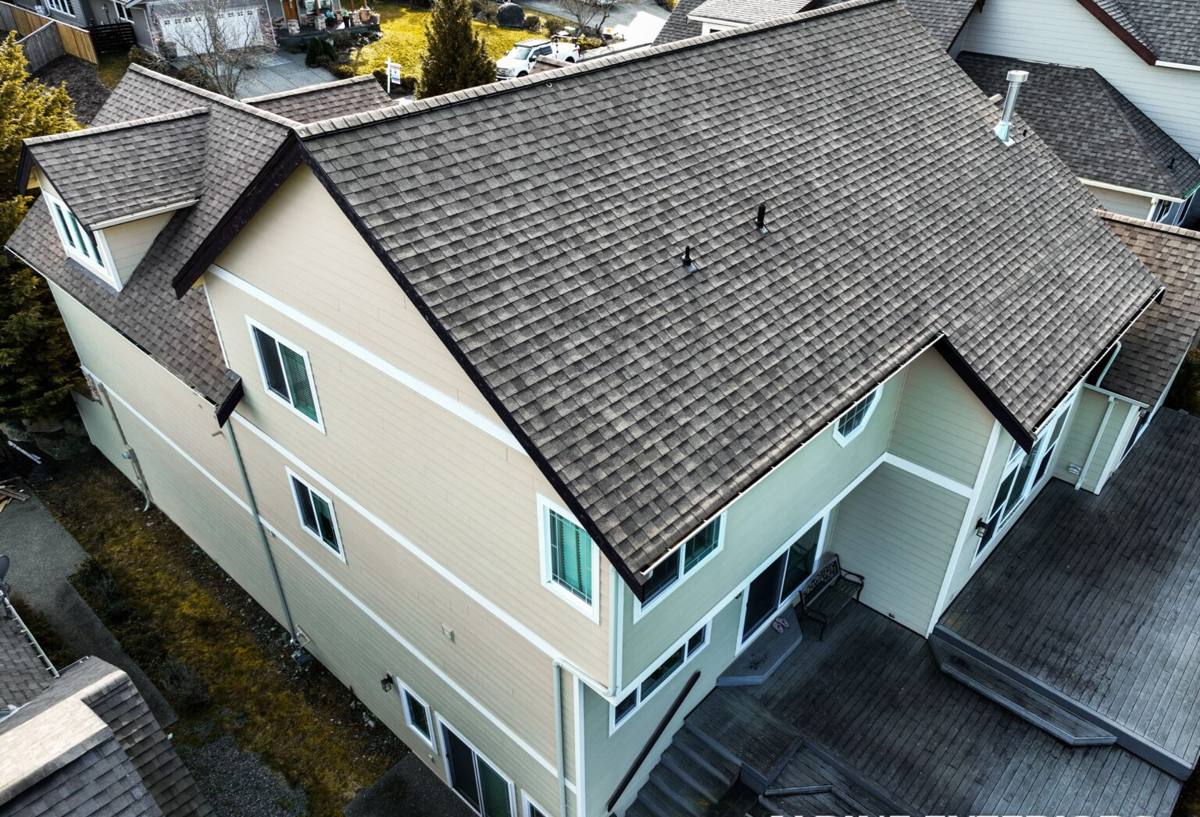
What Salt Air and Driving Rain Actually Do to a Deck
It helps to understand the specific failure points before talking about how to avoid them.
Corrosion, Not Just Rust
Airborne salt accelerates corrosion on any exposed metal — nails, screws, joist hangers, bolts, and railing hardware. Standard galvanized coatings that hold up fine inland can start breaking down noticeably faster within a few blocks of open water. Once a fastener's coating is compromised, corrosion works from the inside out, and by the time you see rust staining on the deck surface, the fastener underneath may already be weakened.
Moisture That Doesn't Fully Dry Out
Driving rain doesn't just fall on a deck, it drives into every gap, seam, and end-grain cut it can find. In a climate where dry stretches are short, wood that gets wet in November may not fully dry until well into spring. That prolonged dampness is exactly what rot fungi and moss need to establish themselves, especially in shaded areas of a deck or anywhere water is slow to drain.
Moss and Algae on Walking Surfaces
Whatcom County's long wet season gives moss and algae months to colonize any deck surface that stays damp and shaded. Beyond the cosmetic issue, a moss-covered deck board is a genuine slip hazard, and moss holds moisture against the wood or composite surface even longer, compounding the rot and staining problem.
Framing and Fasteners: The Part You Don't See
The visible decking gets most of the attention, but the framing underneath is what determines whether a deck is still solid in fifteen years. In a harbor-exposed setting, we build the substructure differently than we would further inland.
- Stainless steel or heavy-duty coated fasteners in place of standard galvanized hardware, especially for ledger bolts, joist hangers, and any connector within easy reach of salt spray
- Ledger flashing detailed to shed water away from the house band board, not just seal it — a leaking ledger connection is one of the most common sources of structural rot on older decks in this area
- Joist tape or a moisture-resistant cap on framing lumber to keep standing water from sitting on top of joists under the decking
- Footings set to the required frost and bearing depth for the site, with concrete work sized for the soil conditions rather than a one-size-fits-all pour
- Gaps and spacing planned for drainage and airflow underneath the deck, not just for the look of the decking pattern
None of this is visible once the deck is finished, which is exactly why it's worth asking a contractor directly how they handle it rather than assuming every builder treats it the same way.
Choosing a Decking Material for Salt Air Exposure
There's no single "correct" decking material for a harbor-area home — the right choice depends on how much upkeep you want to do and how the deck will be used. What matters is understanding the honest trade-offs for each option in this specific climate, not just how a material performs in a showroom.
| Material | Salt Air / Moisture Behavior | Moss & Algae Resistance | Maintenance | Typical Lifespan |
|---|---|---|---|---|
| Pressure-treated wood | Prone to cupping and checking if not sealed regularly | Low — needs periodic cleaning/treatment | Annual cleaning and re-sealing | 10-15 years with upkeep |
| Cedar | Naturally rot-resistant but still absorbs moisture at end cuts and fasteners | Moderate — still needs cleaning | Regular sealing to hold color and resist moisture | 15-20 years with upkeep |
| Composite decking | Does not absorb water or salt into the board itself | Better, but surface film can still grow in shaded, damp spots | Periodic washing, no sealing/staining | 25+ years, varies by product warranty |
| PVC/capped polymer | Fully sealed surface, minimal moisture absorption | Best of the group, but still benefits from occasional washing | Lowest — mostly washing | 25+ years, varies by product warranty |
Wood generally costs less up front and can be replaced in sections, which some homeowners prefer for a deck they plan to maintain themselves. Composite and PVC cost more initially but trade ongoing sealing and staining for periodic washing — a real consideration in a climate where a deck spends a good part of the year damp. We'll walk through the honest maintenance commitment of each option for your specific site rather than steering you toward whatever is easiest for us to install.
Why We Don't Push One Product as "The" Answer
Every decking manufacturer markets their product as low-maintenance and weather-proof. In practice, every material has a moisture-behavior trade-off, an installation sensitivity, and a warranty structure that only holds up if it's installed to spec. Our job is to size the choice to your budget, how the deck will be used, and how much upkeep you actually want to do — not to sell whichever product carries the best margin.
Railings, Stairs, and Hardware Near the Water
Railings and stair hardware take even more direct exposure than the deck surface itself, since they're rarely shaded and catch wind-driven spray first. We spec railing hardware and stair stringer connectors the same way we spec framing fasteners — corrosion-resistant materials sized for a marine-influenced environment, not standard inland hardware. Baluster spacing and rail height are still built to current code, but the hardware holding it all together is chosen for longevity, not just for passing inspection on day one.
How We Build a Deck for a Blaine Harbor Home
The process is straightforward, but a few steps get extra attention here that wouldn't matter as much on an inland build.
1. On-Site Assessment
We look at the home's exposure to wind and salt spray, existing drainage patterns around the foundation, sun and shade throughout the day, and how the deck will connect to the house. Shaded, low-airflow areas get flagged early since they're the spots most likely to hold moisture and grow moss later.
2. Material and Layout Discussion
We go over decking material trade-offs, framing and fastener specs, and layout options based on how you'll use the space — dining, grilling, water access, or just a place to sit. This is also where we talk through realistic maintenance expectations so there are no surprises after the first wet season.
3. Permitting
Deck projects in and around Blaine typically require a building permit, and setback or height rules can vary depending on the parcel and whether it falls inside city limits or unincorporated Whatcom County. We handle the permit submission and inspections as part of the job.
4. Framing and Structural Work
Footings, ledger attachment, joist layout, and flashing details go in first, with corrosion-resistant fasteners throughout. This stage is inspected before decking goes down, which is exactly the point where cut corners would otherwise get hidden.
5. Decking, Railings, and Finish Work
Decking is installed with drainage-conscious spacing, railings and stairs are set with marine-grade hardware, and any wood surfaces are sealed before handoff.
6. Walkthrough and Care Guidance
We walk the finished deck with you and go over the specific maintenance schedule for the material you chose, so you know what to expect heading into the wet season.
Maintaining a Deck Through Blaine's Wet Season
Whatever material you choose, a few habits make a real difference in how well a harbor-area deck holds up year to year.
- Rinse salt residue off decking and railings periodically, especially after windy weather off the water
- Sweep debris out of gaps between boards so water and organic material don't sit and feed moss growth
- Check shaded, low-airflow corners for early moss or algae and clean them before they spread
- Inspect visible fasteners and railing hardware annually for early signs of corrosion or staining
- Reseal wood decking on the schedule recommended for the specific product, typically every one to two years
- Confirm the ledger flashing and any house-to-deck seam stays sealed — this is the area most prone to hidden rot
- Keep gutters and downspouts near the deck clear so roof runoff isn't adding to the moisture load
Permits and Local Considerations
Deck construction near the water in Whatcom County can involve additional review depending on proximity to the shoreline, drainage requirements, and whether the property falls under city or county jurisdiction. Requirements vary by parcel, so rather than guessing at what applies to your property, we pull the specifics during the permitting step and build to whatever that review requires.
Why Hiring a Crew That Already Works Blaine Harbor Matters
A deck built from a generic inland spec sheet will often look fine the day it's finished. The difference shows up two or three winters later, when the fasteners a contractor chose, the way the ledger was flashed, and how much thought went into drainage either hold up to the salt air and driving rain or don't. Working regularly in this specific stretch of Whatcom County means we've seen which details matter here and which shortcuts cause callbacks, and we build accordingly the first time rather than learning it on your project.
If you're planning a new deck or replacing one that hasn't held up to the harbor conditions, we're happy to take a look and talk through honest options for your home. Use the form below to request a free, no-pressure estimate.