 Blaine Siding
 Why a Deck at Blaine Harbor Needs a Different Approach
A deck built three miles inland and a deck built near Blaine Harbor are not the same project, even if they look identical from the street. Homes close to the water deal with salt-laden air, wind off Drayton Harbor and Semiahmoo Bay, long stretches of wet weather, and heavy shade from mature evergreens that never fully dries out between storms. Whatcom County's marine climate is mild compared to most of the country, but "mild" doesn't mean gentle on wood, fasteners, or finishes. It means near-constant low-grade exposure, month after month, for years.
A deck that's only built to a generic spec will show its age faster here than the same deck built forty miles inland. Fasteners rust before they should. Boards that would last a decade elsewhere start cupping and graying in half that time. And the shaded, damp corners that never see direct sun become the first place moss and algae take hold, turning stair treads and low sections slick well before the wood itself fails. None of that is inevitable — it's a matter of choosing materials and building details suited to where the deck actually sits.
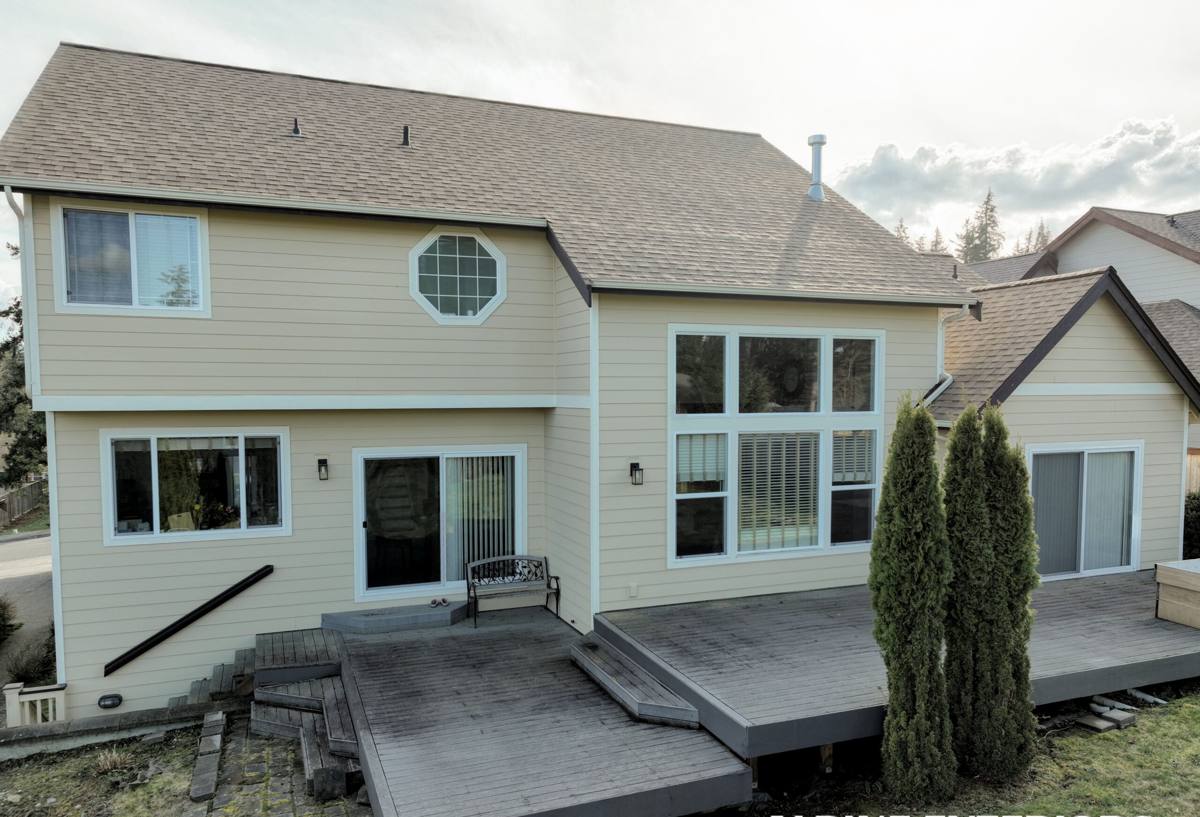
What Salt Air, Driving Rain, and Moss Actually Do to a Deck
It helps to understand the specific ways a harbor-area climate wears on a structure, because it changes almost every material decision on the project.
Salt Air and Hardware Corrosion
Airborne salt accelerates corrosion on any exposed metal — nails, screws, joist hangers, bolts, and railing brackets. Standard electro-galvanized fasteners that hold up fine in a dry inland yard can start rusting within a couple of seasons this close to the water. Once a fastener corrodes, it loses holding strength long before it looks obviously bad, which is part of why hardware selection matters more here than almost anywhere else in the region.
Driving Rain and Wood Movement
Blaine gets its share of wind-driven rain off the water, which pushes moisture into places a straight-down rain never would — under railings, behind ledger boards, into end grain on stair stringers. Wood that stays wet longer swells and shrinks more aggressively, which loosens fasteners, opens gaps for water to collect, and speeds up rot at joints and connections.
A Long Moss Season
Between the tree cover common on harbor-adjacent lots and the extended wet season, north-facing and shaded deck surfaces can stay damp for weeks at a stretch. That's exactly what moss and algae need. Beyond looking bad, a mossy deck surface is a real slip hazard on stairs and landings, and moss holds moisture against the board surface, which shortens the life of both wood and composite decking if it's never cleaned off.
Choosing the Right Decking Material for a Harbor-Adjacent Home
There's no single "best" decking material — there's a best fit for your budget, your maintenance appetite, and how exposed the deck is to sun, shade, and salt spray. Here's how the common options actually compare in this specific climate:
| Material | Moisture & Salt Resistance | Moss/Algae Resistance | Maintenance | Typical Lifespan |
|---|---|---|---|---|
| Cedar | Good if sealed regularly | Fair — needs periodic cleaning | Annual/biennial sealing | 15-20 years with upkeep |
| Pressure-treated fir/pine | Fair, hardware-dependent | Fair — needs cleaning | Regular sealing, board checks | 10-15 years |
| Capped composite (Trex, TimberTech, etc.) | Very good | Good — surface sheds algae better than wood | Periodic washing | 25-30 years |
| PVC decking | Excellent | Good | Low — occasional washing | 25-30+ years |
| Tropical hardwood (ipe and similar) | Excellent, very dense | Fair — dense grain still hosts algae in shade | Oiling to maintain color | 25-40 years |
Composite and PVC decking tend to make the most sense for shaded, harbor-facing decks because they don't absorb moisture the way wood does and they hold up better to repeated wet-dry cycles without warping. That said, plenty of homeowners want the look and feel of real wood, and a well-built cedar or hardwood deck can absolutely last here — it just needs a maintenance routine that actually gets followed, and hardware and flashing details that don't cut corners.
What's Underneath Matters As Much As What You Walk On
Most deck failures we see near the water don't start with the decking boards — they start with what's hidden underneath. This is where a marine-climate build has to differ from a standard inland job.
Ledger Flashing and the House Connection
The ledger board — where the deck attaches to your home — is the single most common source of hidden rot on any deck, and driving rain makes it worse. Proper flashing (metal flashing plus a self-adhering waterproof membrane behind it) keeps water from tracking behind the siding and into the rim joist. A ledger that's just bolted on without correct flashing will eventually let water in, and by the time it shows on the outside, there's often real structural damage behind the wall.
Joist Protection and Fastener Selection
Wrapping joist tops with a waterproof tape before decking goes down keeps rainwater from soaking into end grain and screw holes, which is one of the cheapest, most effective things a builder can do to extend a deck's life. Paired with that, we use stainless steel or high-grade coated fasteners and joist hardware rated for coastal exposure rather than the standard hardware that's fine forty miles inland. It costs more up front and saves real money over the life of the deck.
Footings and Drainage in Whatcom County Soil
Soil near the harbor tends to hold water longer than well-drained inland lots, which affects how footings are sized and set. Footings need to go below the frost line and bear on stable, well-compacted soil — not guesswork. On lower or elevated decks, we also think about where runoff goes once it comes off the deck surface, so water isn't pooling against the house foundation or footings over time.
Railings, Stairs, and Local Code Considerations
Any deck more than 30 inches off grade needs a code-compliant guardrail, and stairs have their own rules for rise, run, and handrail height. Those requirements don't change near the water, but a few practical things do:
- Metal railing components and cable rail hardware need corrosion-resistant fasteners and connectors — standard hardware corrodes visibly within a season or two this close to salt air.
- Stair treads in shaded areas benefit from a textured or grooved surface to cut down on slip risk once moss or algae starts to form.
- Homes on or near the shoreline may fall under Whatcom County shoreline management regulations, which can affect setbacks and what's allowed close to the water's edge — this is worth checking before design work goes too far.
- Any deck attached to the home requires a building permit in Blaine; skipping that step can create real problems at resale, even if the deck itself is well built.
We handle the permit application and inspection scheduling as part of the project, and if your lot is close enough to the water that shoreline rules might apply, we flag that early rather than after design work is done.
Our Process for a Blaine Harbor Deck Project
The steps aren't unusual, but the details inside each one are where a harbor-area deck earns its lifespan.
- Site visit and assessment. We look at sun exposure, shade patterns, wind direction, existing drainage, and how close the site is to the water, since all of that shapes material and framing choices.
- Design and material selection. We walk through decking, railing, and fastener options with the trade-offs laid out honestly — cost, maintenance, and expected lifespan for your specific site.
- Permitting. We prepare and submit the permit package, including any shoreline-related documentation if the site requires it.
- Framing and structural work. Footings, ledger flashing, joist protection, and hardware selection all happen at this stage — the part of the job nobody sees once it's finished.
- Decking, railing, and stairs. Installed to manufacturer specs (which matters for composite and PVC warranties) with corrosion-resistant fasteners throughout.
- Final walkthrough and inspection. We review the finished deck with you and make sure it passes final building inspection before we consider the job done.
Keeping a Harbor-Area Deck Looking Good Year-Round
Even the right materials need some seasonal attention in this climate. A short, consistent routine goes a long way toward keeping moss off and catching small issues before they become expensive ones:
- Sweep debris and standing leaves off the deck regularly, especially in shaded corners where moisture lingers longest.
- Wash the surface once or twice a year with a deck cleaner appropriate for your material — wood, composite, and PVC each have different cleaning needs.
- Check and re-seal or re-oil wood decking on the schedule your material calls for, typically every one to two years.
- Inspect railing connections and stair hardware annually for early signs of corrosion or loosening.
- Confirm gutters and downspouts near the deck are directing water away rather than onto the deck surface or framing below.
- Address moss at the first sign of it rather than waiting until it's established — it's far easier to remove early.
Why Local Experience in Blaine Harbor Matters
A contractor who mostly builds decks in drier, inland parts of Whatcom County can still build a technically sound deck — but they may not default to marine-grade hardware, extra flashing detail, or shade-aware material choices unless they're specifically thinking about it. Working regularly on homes near Blaine Harbor means those decisions aren't an afterthought; they're the starting point. We know which corners of a harbor-facing lot stay damp longest, which fastener grades actually hold up here, and what the local permitting process expects for decks near the water. That familiarity shows up in a deck that still looks and performs well after several wet Whatcom County winters, not just in the first year.
If you're planning a new deck or replacing one that hasn't held up to the salt air and rain, we're happy to take a look and talk through honest options for your property. Reach out for a free, no-pressure estimate using the form below.