 Blaine Siding
 Birch Point's Waterfront Exposure Is Its Own Category of Wear
Birch Point sits out on the water, and that location changes what a house needs from its siding compared to a home a few miles inland in Blaine. Wind off the Strait carries salt spray onto exterior walls, driving rain hits siding at an angle instead of falling straight down, and the tree cover and damp air that come with living near Whatcom County's shoreline keep north- and west-facing walls shaded and wet for long stretches of the year. None of this is unusual for the area, but it does mean siding on a Birch Point home ages differently than siding in a drier, more sheltered part of town.
We're not describing a disaster scenario. Most homes out here hold up fine for years. But when siding starts to fail at Birch Point, it usually fails because the original material or the original installation wasn't built for this specific combination of salt, wind-driven rain, and shade. A replacement done right accounts for all three from the start.
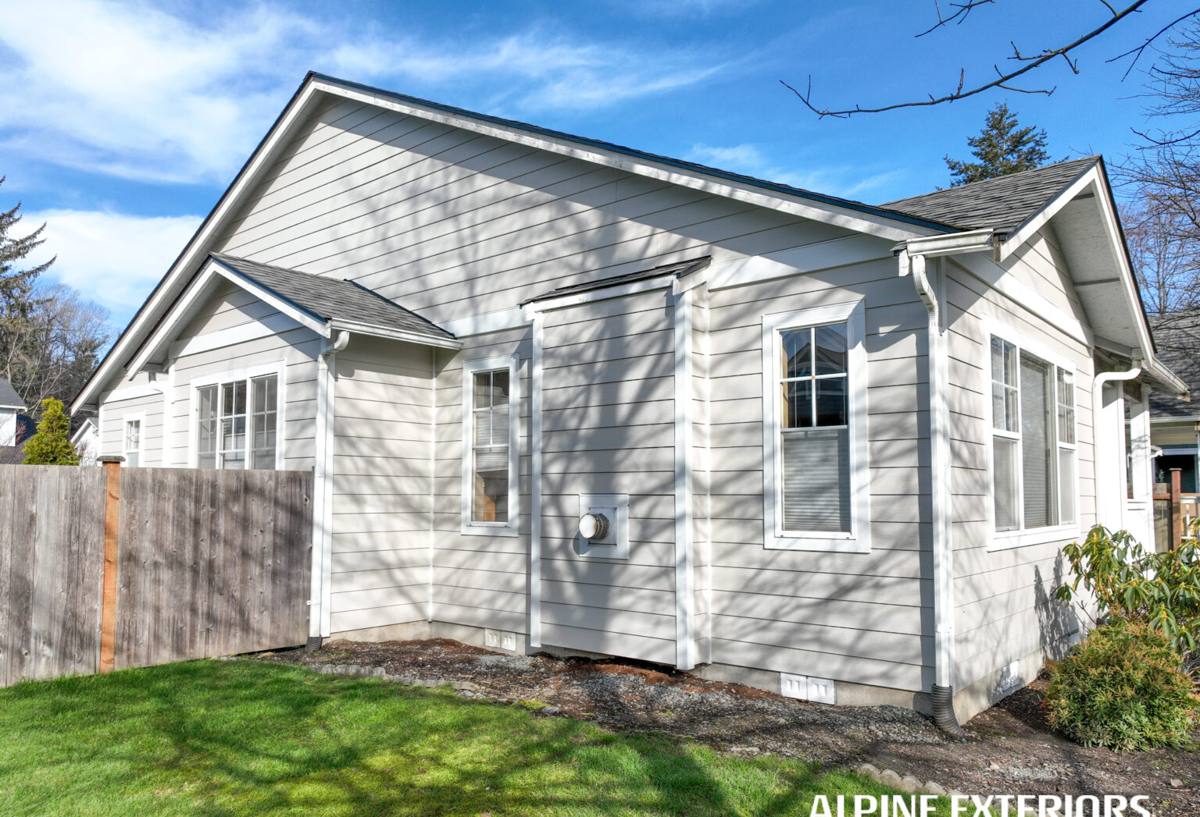
What Salt Air, Driving Rain, and Moss Actually Do to Siding
Each of these factors stresses siding in a different way, and understanding the mechanism helps explain why some materials and some installation shortcuts don't hold up on the water.
Salt Air
Airborne salt settles on exterior surfaces and accelerates corrosion of fasteners, trim flashing, and any metal components in the wall assembly. On painted wood or lower-grade composite siding, salt residue can also break down factory finishes faster than in non-coastal areas, leading to chalking, fading, and earlier repainting cycles.
Driving Rain
Wind-driven rain doesn't behave like a normal downpour. It gets pushed sideways and upward under laps, around trim, and into seams that would stay dry in calmer conditions. This is why lap spacing, caulking choices, and flashing details matter more on an exposed waterfront wall than on a sheltered one — water finds gaps that would never be tested on a typical inland elevation.
Moss and Prolonged Dampness
Whatcom County's moss season is long, and shaded, wet-facing walls near the water rarely get a full dry-out between rain events. Moss and algae growth holds moisture directly against the siding surface. On materials that absorb water or swell when wet, that constant dampness is what eventually leads to soft spots, delamination, or paint failure — even when the siding still looks fine from a distance.
Why We Install Only James Hardie Fiber Cement Here
We've standardized on James Hardie fiber cement siding for every home we side, including Birch Point, and we don't install vinyl, LP SmartSide, primed spruce, cedar, or other fiber cement brands like Allura or Cemplank. That's a deliberate professional standard, not a sales pitch, and it matters more on an exposed waterfront property than almost anywhere else in the region.
Fiber cement is non-combustible and dimensionally stable — it doesn't expand, contract, or absorb moisture the way wood-based products do, which is exactly the failure mode that salt air and constant dampness exploit. Hardie's factory-applied ColorPlus finish is baked on under controlled conditions and holds color and adhesion better in salt exposure than field-applied paint on wood or composite siding. Hardie also engineers specific product lines (the HZ5 line, for example) for harsher climate zones, which is the right specification for a wind- and moisture-exposed point like this one.
To be fair to the alternatives: vinyl is inexpensive and low-maintenance in mild conditions, and cedar has real aesthetic appeal that some homeowners genuinely prefer. We're not claiming those products are junk. We've simply seen enough coastal wear patterns — vinyl warping under UV and thermal cycling, cedar and primed wood needing more frequent recoating and edge sealing in a moss-prone microclimate — that we no longer install them, even when a homeowner is willing to accept the extra maintenance. We'd rather put one product on every home and know exactly how it performs over 20+ years than install several products and hope they all age the way the brochure says they will.
What a Correct Siding Replacement Involves
A siding replacement is a wall assembly project, not just a materials swap. Skipping any of these steps is where most premature failures on exposed homes actually start.
- Tear-off and inspection — removing the old siding down to the sheathing and checking for rot, soft spots, or hidden moisture damage, which is common to find on a wet-facing wall that's been holding moisture behind failing siding for years.
- Sheathing repair — replacing any damaged sheathing before anything new goes on. Covering over compromised sheathing just hides a problem that will resurface.
- Weather-resistive barrier — installing a proper water-resistive barrier (WRB) as the wall's real waterproofing layer, since siding itself is a rain screen, not a seal.
- Flashing details — correct flashing at windows, doors, roof-to-wall transitions, and any penetration is where wind-driven rain most often gets in if it's rushed.
- Hardie installation to manufacturer spec — correct fastener type and spacing (stainless or hot-dip galvanized fasteners matter in salt air), proper lap and gap dimensions, and factory-recommended clearances at grade and roof lines.
- Caulking and sealant — sealing only where Hardie's specifications call for it; over-caulking can trap moisture just as easily as under-caulking lets it in.
- Trim and finish work — trim, corners, and transitions finished so water sheds away from the wall rather than pooling or wicking at joints.
Each of these steps is standard practice everywhere, but on an exposed waterfront wall there's less margin for error. A flashing detail that's "close enough" inland can be the exact spot where driving rain finds its way in on the water.
Our Process, Start to Finish
We keep the process straightforward and try to minimize disruption, especially on a property where weather windows can be tighter than inland job sites.
- Site walk and assessment — we look at your home's specific exposure (which walls face the water and prevailing wind, existing moisture damage, roofline and trim conditions) before quoting anything.
- Written estimate — scope, product line, color, and timeline laid out clearly, with no pressure to decide on the spot.
- Scheduling around weather — tear-off and installation get scheduled with realistic dry-weather windows in mind, which matters more here than on a sheltered inland lot.
- Tear-off, repair, and install — following the sequence above, with sheathing issues flagged and discussed before we cover anything up.
- Final walkthrough — we review the finished job with you, including how the flashing and trim details were handled, before calling it complete.
Cost Factors for a Birch Point Siding Replacement
Every home is different, and we won't quote a number without seeing the property, but these are the main variables that move the price up or down on a coastal replacement:
| Factor | Why It Matters |
|---|---|
| Amount of sheathing repair needed | Hidden rot from prior moisture intrusion adds labor and material that can't be known until tear-off |
| Wall exposure and elevation | Waterfront-facing walls with heavier wind and rain exposure often need more attention to flashing and fastener spec |
| Home size and complexity | Number of corners, trim details, windows, and roof-to-wall transitions affects labor time |
| Access and site logistics | Waterfront lots, slopes, and limited staging space can affect equipment and crew efficiency |
| Product line and color selection | Hardie's climate-engineered HZ5 line and premium ColorPlus finishes vary in cost from standard options |
Signs Your Birch Point Home May Need Siding Replacement
Some warning signs are easy to spot from the ground; others show up only once you know what to look for. Worth checking before problems get worse:
- Soft or spongy spots when you press on the siding, especially on shaded or water-facing walls
- Paint that's peeling, bubbling, or chalking faster than the rest of the house
- Persistent moss or algae growth that returns quickly after cleaning
- Visible gaps, warping, or separation at seams and corners
- Musty smell or discoloration on interior walls that share an exterior wall with heavy siding wear
- Rust staining around fasteners or trim, a sign salt exposure is attacking the hardware
- Siding that's noticeably older than the roof and hasn't been replaced in 20+ years
Living With Fiber Cement Siding in a Moss-Heavy Climate
Even the right material benefits from a little seasonal attention. Fiber cement doesn't rot or absorb water the way wood does, but moss and algae can still grow on its surface if a wall stays shaded and damp for long stretches, which is common on north-facing walls near the water. A gentle rinse once or twice a year, avoiding high-pressure washing that can damage the finish, keeps growth from building up. Because Hardie's ColorPlus finish is factory-cured, it holds up to this kind of light maintenance far better than field-painted surfaces, which is one more reason it's the product we stand behind out here.
Why Hiring a Crew That Already Works Birch Point Matters
Siding contractors who mostly work inland don't always think about wind-driven rain angles, salt-air fastener corrosion, or the extra dry-out time a shaded coastal wall needs. A crew that's replaced siding on homes in this specific microclimate has already made the adjustments — fastener selection, flashing sequencing, scheduling around weather windows — that a generic installation approach misses. That familiarity is what separates a replacement that looks good on day one from one that still performs correctly ten and twenty years out, which is the real test on a property this exposed.
If your Birch Point home's siding is showing wear, or you're just not sure whether repair or full replacement makes sense, we're happy to take a look. Reach out for a free, no-pressure estimate using the form below.