 Blaine Siding
 Birch Point: A Shoreline Community That Asks More of Its Siding
Birch Point sits along the water on the edge of Blaine, close enough to the Strait of Georgia that the weather off the water shapes daily life for the homes there in ways that inland Whatcom County properties never have to deal with. Wind comes straight off open water, salt rides in on that wind, and the moisture that follows doesn't let up for long stretches of the year. Houses on Birch Point wear that exposure faster than a similar home ten miles inland would, and it shows first on the exterior — the siding, the trim, the fasteners holding it all together.
We install James Hardie fiber cement siding, and only James Hardie fiber cement siding. This page is about what that means specifically for a Birch Point home: what the local climate actually does to a wall assembly out here, what a correct Hardie installation looks like when it's built for that exposure, and why a crew that already works this stretch of shoreline handles the job differently than a company driving in from somewhere else in the county for a one-off project.
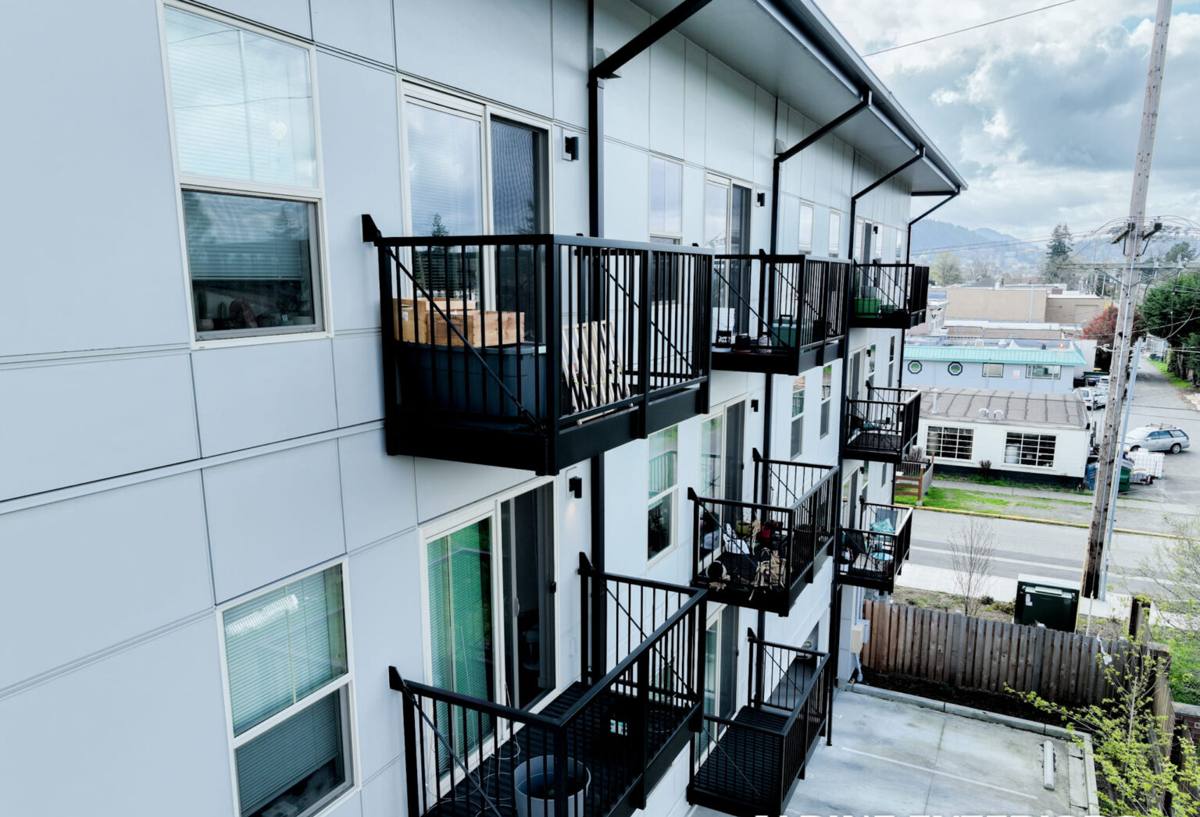
What Birch Point's Climate Does to a House
Salt Air Off the Water
Salt-laden air is a constant on Birch Point, not an occasional condition. It settles on every exterior surface, and over time it accelerates corrosion on fasteners, flashing, and any exposed metal trim faster than it would on a home set back from the shoreline. It also breaks down lower-grade paints and coatings well ahead of their rated lifespan. On a waterfront lot like this, the siding material and the hardware behind it both have to be chosen with that in mind from day one — there isn't much margin for a shortcut this close to open water.
Driving Rain and Wind Off the Strait
Storms coming off the Strait of Georgia don't arrive as simple vertical rainfall. Wind drives that rain sideways into wall assemblies, window flashing, and every seam where trim meets siding, which puts far more stress on those joints than the same rainfall total would in a sheltered inland yard. That wind-driven pattern is exactly the kind of moisture load that finds any gap a rushed installation leaves behind, and on an exposed shoreline property it happens more often and with more force than almost anywhere else in the county.
A Long Moss Season
Mild temperatures combined with near-constant dampness give moss and mildew a long growing season on Birch Point — often most of the year on shaded or north-facing walls. Surfaces that stay damp the longest are the first to show growth, and any siding material with even slight surface porosity becomes a foothold for it over time. On tree-lined or shaded lots near the water, that shows up earlier and spreads faster than homeowners expect.
Why James Hardie Is the Only Siding We Put on Birch Point Homes
We didn't start out installing a single product exclusively. That changed after years of tear-offs and service calls on coastal Whatcom County homes, where the pattern of what failed and what held up became too consistent to ignore. It wasn't a supplier relationship or a marketing decision — it came from what we kept finding once we opened up walls on properties exposed to conditions like Birch Point's.
- Non-combustible fiber cement core: Unlike wood-based siding products, fiber cement doesn't feed a fire, which matters for both homeowner safety and, in many cases, insurance considerations.
- Factory-applied ColorPlus finish: The color coat is baked on under controlled factory conditions rather than field-applied, so it resists fading, chalking, and the wear that salt air and UV exposure cause much longer than a site-painted finish.
- Climate-engineered HZ formulation: Hardie's HZ5 product line is engineered for regions with sustained moisture exposure and freeze-thaw cycling — a fair description of the Birch Point shoreline through most of the year.
- Dimensional stability: Fiber cement doesn't swell, cup, or warp the way engineered wood siding products can after repeated wetting and drying cycles off the water.
- A strong transferable warranty: Hardie backs the product with one of the more substantial warranty structures in the industry, provided the installation follows their published specification.
We don't install LP SmartSide, vinyl siding, Cemplank, Allura, primed spruce, or cedar. Each of those has a place in the broader market, and plenty of homeowners are satisfied with them in the right setting. But on a property that takes this much direct salt air and wind-driven rain, we've made a professional decision to stand behind one system rather than offer a cheaper option that quietly pushes maintenance risk onto the homeowner five or ten years down the road.
Hardie Product Lines and Where They Fit on a Birch Point Home
James Hardie makes more than one siding profile, and picking the right one for a shoreline property is part of getting the job right. The table below covers the main options we work with and how they typically fit a Birch Point exterior.
| Product Line | Profile | Best Fit on Birch Point |
|---|---|---|
| HardiePlank | Lap siding, various exposures and textures | The most common choice for full wall coverage; pairs well with the HZ5 formulation for coastal exposure |
| HardiePanel | Vertical panel siding | Often used on gable ends or as an accent alongside lap siding |
| HardieShingle | Staggered or straight-edge shingle profile | Used for accent areas where a shingled look is wanted without the moisture behavior of real wood shingle |
| HardieTrim | Trim boards for corners, fascia, window and door casing | Completes the moisture-resistant envelope around every penetration point |
On most Birch Point homes we're specifying the HZ5 formulation across the board rather than a milder-climate version of the product, because the exposure out here calls for it. Color selection also matters more on a waterfront lot than people expect — the factory ColorPlus finish comes in a range that holds up to sun and salt exposure far better than field-applied paint, and getting the color and sheen right up front avoids a repaint down the line that a lot of other siding products eventually require.
What Correct Installation Actually Involves
Hardie siding only performs the way it's designed to when the installation follows the manufacturer's specification closely, and on an exposed shoreline home like a Birch Point property, the details that are easy to skip are exactly the ones that matter most. A few we won't cut:
- Rain screen gap: A drainage cavity behind the siding lets any moisture that gets past the exterior surface drain and evaporate instead of sitting against the sheathing.
- Correct fastener type and spacing: Hardie specifies fastener placement and corrosion-resistant fastener grades for a reason; incorrect spacing or the wrong fastener type is one of the more common causes of premature siding failure we find on coastal tear-offs.
- Properly lapped house wrap and flashing: Every seam and penetration has to shed water downward and outward, especially on walls that take wind-driven rain directly off the strait.
- Sealed butt joints and trim transitions: Poorly sealed joints are the first place salt-laden moisture works its way behind the siding.
- Proper clearance at grade and roof lines: Siding installed too close to the ground or without correct kick-out flashing at roof intersections traps moisture against the bottom edge, which is where we see the earliest rot on shoreline homes.
None of this is unusual or exotic — it's the manufacturer's own installation spec, applied consistently rather than shortcut on the parts that are hardest to see once the siding is up and the job looks finished.
Our Process on a Birch Point Project
1. Walk the Property
We start by walking the exterior in person rather than quoting from a photo or a phone description. On a waterfront lot, exposure varies a lot from one wall to the next — a north wall under tree cover ages very differently than a wall facing open water — so we look at each elevation separately before scoping the work.
2. Check What's Behind the Existing Siding
Where the old siding comes off, we check the sheathing and framing underneath for moisture damage before anything new goes up. Covering a wet or compromised wall with new siding just hides a problem that will keep getting worse, and on a shoreline home that check matters more than it would inland.
3. Build the Water Management Layer First
House wrap, flashing, and the rain screen gap go in before a single piece of Hardie siding is installed. This layer is what actually keeps wind-driven rain out of the wall assembly — the siding itself is the visible finish, but the water management underneath it is what determines whether the wall stays dry over the next twenty or thirty years.
4. Install to Spec
Fastener type, spacing, joint sealing, and clearances all follow Hardie's published installation guide, checked as the work progresses rather than at the end.
5. Final Walkthrough
We walk the finished exterior with the homeowner before calling the job done, checking sightlines, joints, and trim details up close rather than just from the ground.
Cost Factors for a Birch Point Siding Project
| Factor | What Drives It | Shoreline Consideration |
|---|---|---|
| Home size and complexity | Total wall area, number of gables, dormers, and trim details | More corners and penetrations mean more joints exposed to wind-driven rain |
| Tear-off vs. new construction | Removing and disposing of existing siding adds labor | Sheathing repair is more likely on older shoreline homes with prior moisture exposure |
| Product selection | HardiePlank vs. panel vs. shingle accents, trim package | HZ5 formulation is the standard choice for this exposure, not an upgrade |
| Site access | Waterfront lots can have tighter access, slopes, or limited staging area | Affects scaffolding, material staging, and crew logistics |
These are general cost drivers, not a quote. Every Birch Point property sits at a slightly different distance from the water and under different tree cover, and two homes on the same road can need very different scopes once we're actually pulling old siding and looking at what's underneath. That's also why we're cautious about giving firm numbers before we've walked the property.
Why a Crew That Already Works Birch Point Matters
Siding work on a shoreline property isn't identical to siding work five miles inland, and a crew that only occasionally works near the water tends to treat it that way anyway — same fastener spacing, same flashing details, same product spec regardless of exposure. We work this stretch of Whatcom County regularly enough to build wind-driven rain protection and salt-air-rated hardware into every Birch Point job by default rather than as a special request. That familiarity also shows up in smaller ways: knowing what tends to be found once old siding comes off a waterfront wall, knowing which elevations on a shoreline lot take the worst of the weather, and not needing to relearn those lessons on the homeowner's project.
Signs a Birch Point Home May Need New Siding
- Visible cracking, warping, or separation at seams and trim joints
- Soft spots when pressing on siding near the base of walls or under windows
- Persistent moss or mildew staining that returns shortly after cleaning
- Peeling or chalking paint that keeps recurring within a few years of repainting
- Rust staining running down from fasteners or metal trim
- Interior signs like musty odor, staining, or soft drywall near exterior walls
Any one of these on its own isn't necessarily an emergency, but on a shoreline property they tend to compound faster than homeowners expect, since the same wind and moisture that caused the damage keeps working on it in the meantime.
Get a Straight Answer on Your Birch Point Siding
If you're weighing a siding project on Birch Point, we're glad to come take a look and give you an honest read on what your home actually needs — no pressure, no inflated scope. Use the form below to request a free estimate, and we'll walk the property with you before putting a number on the work.