 Blaine Siding
 Deck Building in Birch Point: A Shoreline Neighborhood That's Hard on Decks
Birch Point sits right on the water in Blaine, and that location is exactly what makes deck building here different from a job five or ten miles inland. Homes along this stretch of Whatcom County get a steady diet of salt-laden air off the bay, wind-driven rain that comes at the house sideways instead of straight down, and a long, damp moss season that can run from fall through spring. A deck built to a generic spec sheet will show its age in this environment faster than most homeowners expect — soft spots at the ledger, rusted fastener heads bleeding through the boards, moss carpeting the shaded corners. A deck built for Birch Point specifically holds up the way it should.
This page is about that one job — building a deck for a Birch Point home — and what it actually takes to get it right given the climate this neighborhood sits in.
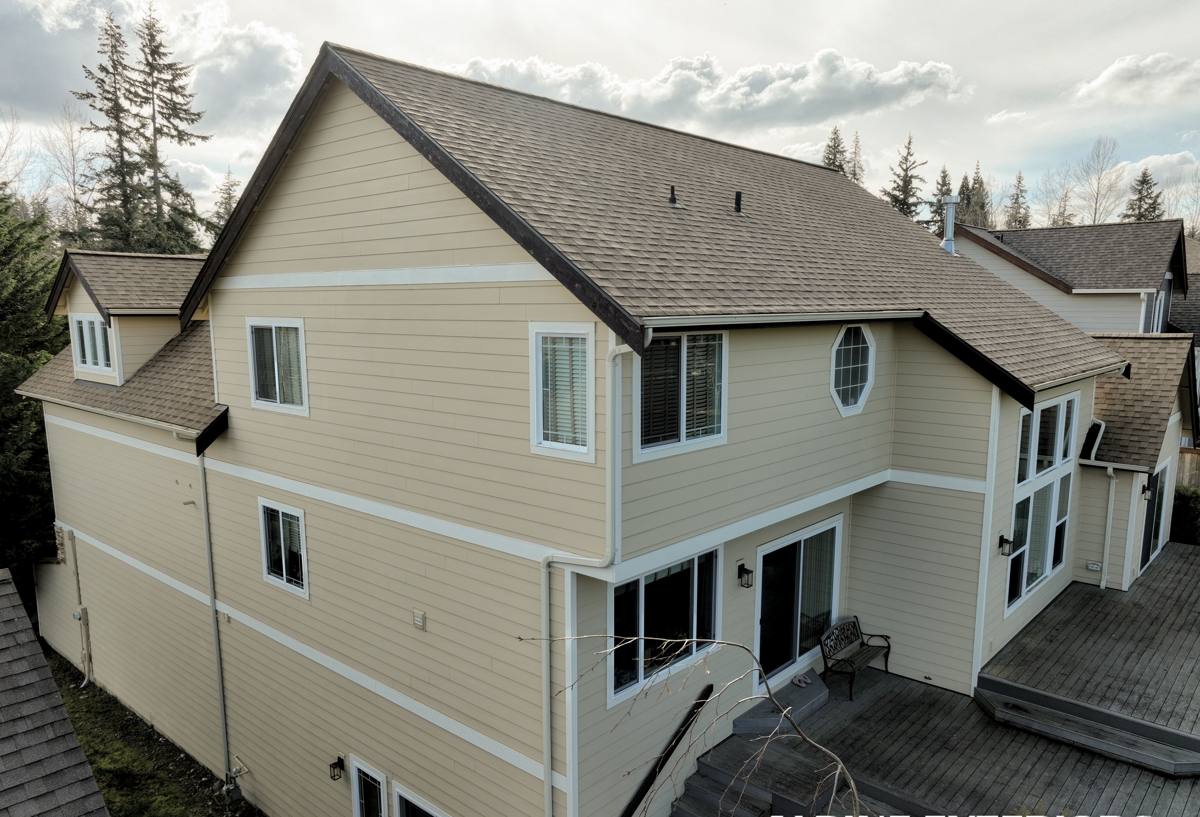
What Salt Air, Driving Rain, and Moss Actually Do to a Deck
Salt Air and Metal Fatigue
Airborne salt off the bay settles on every exposed surface, including the metal you can't see once the decking is down. Joist hangers, structural screws, bolts, and railing brackets are all vulnerable to accelerated corrosion in a salt-air environment. When the wrong grade of hardware goes into a Birch Point deck, the failure isn't cosmetic — it's the connectors holding the structure together losing strength years ahead of schedule.
Driving Rain at the House Connection
Wind off the water doesn't let rain fall straight down — it drives it sideways, right into the wall where the deck ledger board attaches to the house. That ledger-to-wall joint is the single most common point of water intrusion on any deck, and in a wind-exposed spot like Birch Point, it takes more abuse than it would on a sheltered inland lot. Flashing details that would be adequate elsewhere aren't always adequate here.
Moss, Shade, and Slick Surfaces
Whatcom County's wet season is long, and any deck with shade from trees, a north-facing exposure, or limited sun exposure will grow moss if the surface material and airflow underneath aren't accounted for. Beyond the slip hazard, moss holds moisture against the decking surface for months at a time, which speeds up rot in wood and can stain lighter-colored composite and PVC products if they're never cleaned.
Decking Material Options for a Birch Point Lot
There's no single "best" decking material for every home — the right choice depends on how much sun the deck gets, how close it sits to the water, and what the homeowner wants to maintain. Here's how the common options actually compare for this specific climate:
| Material | Salt Air / Moisture Behavior | Moss Susceptibility | Maintenance | Typical Lifespan Here |
|---|---|---|---|---|
| Pressure-treated lumber | Handles moisture if sealed regularly; end grain and cut edges are the weak point | High in shaded spots without upkeep | Annual cleaning and re-sealing | 10-15 years with upkeep |
| Cedar | Naturally moisture- and rot-resistant, but still needs sealing near salt air | Moderate — better than treated pine but not immune | Sealing every 1-2 years | 15-20 years with upkeep |
| Composite decking | Very good — doesn't absorb moisture or rot | Moderate; surface texture matters — some grip textures hold moss and grime more than others | Periodic washing, no sealing | 25+ years |
| PVC / capped polymer decking | Excellent — fully moisture sealed, no organic material to rot | Low — smoother, non-organic surfaces shed moss more easily | Occasional washing | 25-30+ years |
Composite and PVC products generally cost more up front than wood, but in a neighborhood like Birch Point where salt air and shade are working against a deck year-round, the reduced maintenance and moisture resistance often pay for themselves in avoided repairs. That said, a well-built and consistently sealed cedar or treated-lumber deck still has a long, honest place in this neighborhood for homeowners who prefer real wood and are willing to keep up with it.
Getting the Structure Right: Framing, Fasteners, and Footings
The decking surface is what everyone sees, but the framing underneath is what determines whether the deck is still solid in fifteen years. For a Birch Point build, that means being deliberate about a few things that matter more here than they would inland:
Hardware Grade
Structural connectors, screws, and bolts should be rated for coastal or high-moisture exposure — typically stainless steel or a heavy-duty coated fastener rather than standard galvanized hardware. It costs more per piece, and it's the difference between hardware that's still sound in year twenty and hardware that's rusting through by year eight.
Footings and Frost Depth
Footings need to be sized and set to the depth the local code requires, on soil that's been checked for what it can actually bear. Waterfront lots can have different soil conditions than a lot a half-mile inland, so this isn't a step to guess at.
Ledger Flashing
Given how much work that ledger-to-house connection does in wind-driven rain, the flashing detail there needs to shed water away from the wall assembly completely, not just slow it down. This is one of the most common places we find shortcuts on decks we're asked to repair or replace.
A correctly built deck substructure, at minimum, includes:
- Footings sized and set to code depth for the actual soil conditions on site
- Ledger board properly flashed and sealed against the house wall
- Coastal-rated fasteners and structural connectors throughout, not just at visible points
- Joist spacing and beam sizing matched to the actual decking material and span, not a generic default
- Proper blocking and bracing for lateral stability, especially on any elevated or multi-level deck
Drainage and Grading — The Part Nobody Sees After It's Built
Water management is the quiet part of a good deck build. Framing should be pitched slightly away from the house so water sheds off the structure instead of pooling against it. Board spacing needs to allow water through rather than trapping it on the surface, which matters even more under a moss-prone tree canopy. If the deck has usable space underneath — storage, a patio, a walkway — an under-deck drainage system keeps that area dry instead of turning it into a year-round drip zone through the wet season.
None of this shows up in a finished photo, but it's the difference between a deck that sheds Whatcom County's rainfall the way it's supposed to and one that's quietly rotting from the framing up.
Our Process for a Birch Point Deck Project
We approach every Birch Point deck the same practical way:
- Site visit and assessment — we look at sun exposure, tree cover, wind exposure, existing drainage, and the condition of anything being replaced.
- Design and material conversation — we walk through the material options honestly, including trade-offs in cost, maintenance, and how the deck's specific exposure will treat each option.
- Permitting — where a permit is required, we handle the paperwork and inspections rather than leaving that on the homeowner.
- Build — footings, framing, flashing, and hardware done to the standard this climate calls for, not the minimum that would pass elsewhere.
- Final walkthrough — we go over the finished deck and what upkeep, if any, it'll need going forward.
Permits and Shoreline Considerations in Blaine
Whatcom County generally requires a permit for decks above a certain height or attached to the home, and we handle that process as part of the job rather than treating it as the homeowner's problem to sort out. Birch Point's waterfront location adds another layer worth knowing about: shoreline and critical-areas rules can apply to construction on or near the water that simply don't come up on an inland lot. We don't guess on this — if a project needs a closer look at setback or shoreline requirements before design work starts, we say so up front rather than after materials are ordered.
Maintenance Checklist for Salt Air and Moss Country
Whatever material a Birch Point deck is built with, a little seasonal attention goes a long way in this climate:
- Sweep or blow off debris regularly, especially in the fall when leaf litter feeds moss growth
- Wash the deck surface at least once a year to remove salt residue, grime, and early moss growth
- Check railing hardware, screws, and connectors periodically for early signs of corrosion
- Reseal wood decking and railings on the schedule the product actually calls for — not just when it looks dry
- Keep gutters and downspouts near the deck clear so runoff isn't dumping extra water onto the structure
- Trim back overhanging branches where practical to cut down on shade and moss-feeding debris
Why a Crew That Already Works Birch Point Matters
A lot of what makes a deck last in this neighborhood isn't visible in a brochure — it's knowing that a north-facing deck under mature trees needs different detailing than one with full sun, that hardware corrodes faster here than it would ten miles inland, and that access on some Birch Point lots is tighter than a standard suburban build site. A crew that's already worked this shoreline has been through the county's permit process for it, has seen which flashing details actually hold up against driving rain off the bay, and isn't learning these lessons on your project. That local track record is worth something a general contractor from outside the area simply doesn't have yet.
If you're planning a new deck or replacing one that's showing its age in Birch Point, we're happy to come take a look and talk through what your specific lot needs. There's no pressure and no obligation — just a straight assessment and an honest estimate, using the form below.