 Blaine Siding
 Windows Built for Life on the Water in Birch Point
Birch Point sits close enough to the water that homes there deal with a different set of pressures than a house a few miles inland in Blaine or elsewhere in Whatcom County. Salt-laden air moves off the water and settles on everything, wind-driven rain finds gaps that would never be a problem in a drier climate, and the long gray stretch of the year keeps siding, trim, and window frames damp for weeks at a time. Windows are one of the first things on a house to show that stress. A window that would perform fine on a sheltered inland lot can fail early here if it wasn't chosen and installed with this specific exposure in mind.
Custom windows for a Birch Point home aren't just about matching an unusual opening size or a particular look. They're about picking materials, glazing, and installation details that hold up to salt corrosion, resist moisture intrusion during sideways rain, and keep performing after another wet, mossy winter. This page covers what actually matters for windows in this specific setting — not generic window advice, but what we've learned installing and repairing windows on homes exposed to this coastline.
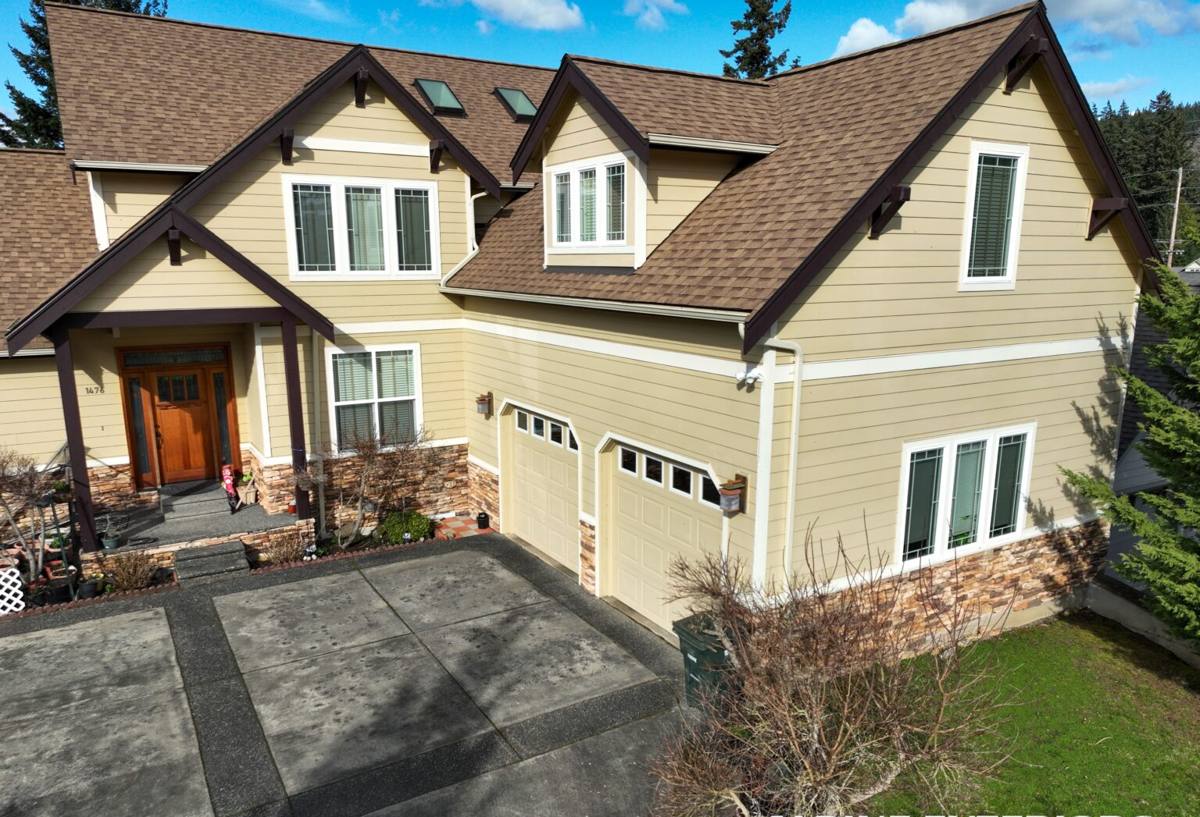
What Salt Air, Driving Rain, and Moss Season Actually Do to Windows
Salt Air and Metal Components
Salt in the air is corrosive to exposed metal — hardware, screws, cranks, and lower-grade aluminum components all degrade faster near the water than they would a few miles inland. Over years, corroded hardware can cause locks and operators to bind, stick, or fail outright, and pitted metal fasteners lose their grip in the frame.
Wind-Driven Rain
Rain that comes in mostly straight down is a much easier problem to solve than rain that's being pushed sideways by wind off the water. Wind-driven rain tests every seam, every piece of flashing, and every bead of sealant around a window opening. A window that's watertight in a light rain can still leak during a windstorm if the flashing and drainage details weren't done correctly, and those leaks often go unnoticed inside wall cavities for a long time before they show up as stains, soft trim, or a musty smell.
Moss Season and Prolonged Moisture
The long moss season in this part of Whatcom County means wood trim, sills, and siding around window openings stay damp for extended periods rather than drying out quickly between rains. Moss and algae hold moisture against the surface, which accelerates wood rot at sills and casings and keeps caulk and sealant joints under near-constant moisture load. Frame materials and finishes that can shrug off occasional rain don't always hold up as well under that kind of sustained dampness.
Choosing the Right Frame Material for This Exposure
There's no single "best" window material for every home — it depends on the home's exposure, the look you want, and your budget. But some materials handle this specific coastal-Whatcom environment better than others, and we walk every Birch Point homeowner through the real trade-offs rather than steering them toward whatever is easiest to install.
| Frame Material | How It Handles Salt Air & Moisture | Maintenance Load | Typical Fit |
|---|---|---|---|
| Vinyl | Won't corrode or rot; seams and welds are the main long-term watch point | Low | Budget-conscious remodels, rental or secondary properties |
| Fiberglass | Very stable in moisture and salt exposure; expands/contracts close to real-world temperature swings | Low | Homes with direct water exposure wanting a long-term, low-upkeep window |
| Aluminum-clad wood | Exterior clad face resists weather well; interior wood offers a traditional look | Moderate | Homeowners who want a wood interior but need real protection outside |
| Solid wood | Needs a well-maintained finish to resist the sustained damp of moss season; most vulnerable to rot if neglected | High | Historic or architecturally sensitive homes where wood is a requirement |
| Bare aluminum | Prone to pitting and corrosion in salt air over time without a protective finish | Moderate to high | Generally not our first recommendation this close to the water |
We don't push any one material as a blanket answer. A vinyl or fiberglass window with quality hardware is often the most sensible long-term choice for a home with direct exposure to salt spray and wind, while clad-wood options can make sense on homes where the interior look matters as much as the exterior performance. What we won't do is install a frame material that we know is a poor fit for this exposure just because it's cheaper up front — we'd rather explain the trade-off honestly and let you decide with full information.
Glass and Glazing Choices That Matter Here
The glass package matters as much as the frame. For Birch Point homes, three factors come up most often:
Condensation Resistance
Homes near the water deal with more humidity swings than inland homes. Double- or triple-pane units with a good low-E coating and argon or krypton gas fill resist interior condensation better, which matters both for comfort and for protecting wood sills and trim from repeated moisture exposure.
Wind Load and Impact Ratings
Windows facing open water or exposed lots take more direct wind pressure. Glazing and frame assemblies rated for higher wind loads hold up better over time and are worth discussing for any window facing the water directly, even outside of any building-code requirement.
UV and Fading
Even under our cloud cover, UV exposure over years fades flooring, furniture, and window treatments. A quality low-E coating cuts down on that fading without noticeably changing how much natural light comes through.
What a Correct Custom Window Installation Actually Involves
This is where most of the long-term performance of a window is actually decided — not in the showroom, but in the installation details that nobody sees once the trim is back on.
Opening Inspection Before Anything Goes In
Before a new window goes in, we check the rough opening for existing rot, soft framing, or old flashing failures. On a home in this environment, it's common to find some degree of moisture damage around older windows, especially on walls that face prevailing wind and rain. Any of that gets addressed before the new window goes in — installing a good window into a compromised opening just hides the problem.
Flashing and Drainage
Proper flashing — at the sill, jambs, and head of the opening — is what actually keeps wind-driven rain out of the wall cavity. This includes a sloped sill pan that directs any water that gets past the window back outside rather than into the wall, and head flashing that sheds water around the top of the window rather than behind it.
Sealing and Weatherproofing
Sealant and backer rod at the right joints, done with the right products for this climate, close up the gaps that wind-driven rain will otherwise exploit. We also pay attention to how the window ties into the home's existing weather-resistive barrier so water is directed out and down, not trapped behind siding.
Hardware and Fasteners
Given the corrosion risk from salt air, we use fasteners and hardware rated to hold up in a coastal environment rather than standard-grade parts that will pit and weaken faster here than they would inland.
Our Process, From Estimate to Final Walkthrough
- On-site assessment — we look at each opening, note existing damage or rot, and check the home's specific wind and rain exposure.
- Material and glazing recommendation — we walk through frame material, glass package, and style options suited to that home's exposure and your budget, with the trade-offs explained plainly.
- Written estimate — a clear scope of work and pricing before anything is scheduled.
- Removal and opening inspection — old windows come out, and we address any rot or flashing failures found underneath.
- Flashing, sill pan, and installation — the new window goes in with proper drainage and weatherproofing details, not just caulk and trim.
- Sealing and interior/exterior finish work — trim, caulking, and touch-up work to match the surrounding finish.
- Final walkthrough — we check operation, seals, and finish work with you before calling the job done.
What to Check Before Hiring Anyone to Replace Windows in Birch Point
- Ask whether they inspect and repair the rough opening, not just swap the window unit itself
- Ask what flashing and sill pan details they use, and why — a vague answer is a red flag
- Ask about fastener and hardware grade for a salt-air environment
- Ask for their approach to condensation resistance and glazing options, not just a single default package
- Ask whether they carry current licensing and insurance for work in Whatcom County
- Ask how they handle any rot or moisture damage discovered once the old window is removed
- Ask for a clear, written scope before work starts — verbal-only estimates make it hard to hold anyone accountable later
Signs Your Current Windows Are Already Losing the Battle
Homeowners in Birch Point often call us after noticing one or more of these signs, which usually mean moisture has already found a way in:
- Soft or discolored wood trim around the window frame
- Persistent fogging or moisture between panes on double- or triple-glazed units
- Visible corrosion or pitting on hardware, cranks, or locks
- Drafts or noticeable air movement around a closed window during windy weather
- A musty smell near a window that doesn't go away with cleaning
- Difficulty opening, closing, or locking a window that used to operate smoothly
Catching these early usually means a more contained repair. Waiting until trim or framing is visibly rotted turns a window job into a larger repair project.
Why a Crew That Already Works in Birch Point Makes a Difference
General window installers who don't regularly work this close to the water can underestimate what this exposure demands — using standard hardware, standard sealant schedules, or skipping a sill pan because "it usually doesn't leak" inland. On a Birch Point home facing open wind and salt spray, those shortcuts show up as problems within a few seasons rather than a decade or more. Crews who already work in this specific area have a feel for which walls take the worst of the wind and rain, what condition older flashing tends to be in on homes of a certain age here, and which material and hardware choices actually hold up rather than just looking good on install day.
That local pattern recognition doesn't replace a proper inspection of your specific home, but it does mean fewer surprises and a plan that accounts for the realities of this exposure from the start rather than treating every window job the same way regardless of where the house sits.
Maintenance That Actually Matters in This Climate
Even a well-installed window benefits from a little seasonal attention in a salt-air, moss-prone environment. Rinsing accumulated salt residue off frames and glass periodically, keeping weep holes and drainage tracks clear of debris and moss growth, and checking exterior caulk lines once a year for cracking or separation go a long way toward protecting the investment. Hardware that starts to feel stiff or gritty is worth addressing early, before corrosion sets in further and turns a simple lubrication or adjustment into a hardware replacement.
If your windows are showing their age, or you're planning a renovation and want windows chosen and installed correctly for a Birch Point property from the start, we're happy to come take a look. Estimates are free, there's no pressure, and you'll get a straight answer about what your home actually needs — use the form below to get started.