 Blaine Siding
 Why Birch Bay Roofs Age Differently Than Roofs Inland
Birch Bay sits right on the water along the Strait of Georgia, and that changes what a roof has to deal with year after year. Homes a few miles inland in Whatcom County still get plenty of rain, but they don't get the same steady salt spray, the same wind coming straight off open water, or the same shaded, damp lots that keep moss and algae growing most of the year. A roof in Birch Bay is doing more work than the same roof would be doing in Bellingham or Ferndale, even if both were installed the exact same week.
That doesn't mean Birch Bay needs exotic materials or a completely different approach to roofing. It means the details that get glossed over on an easy job — flashing, ventilation, underlayment choice, fastener selection — are the details that actually determine whether a new roof holds up here or starts showing problems in year six instead of year twenty.
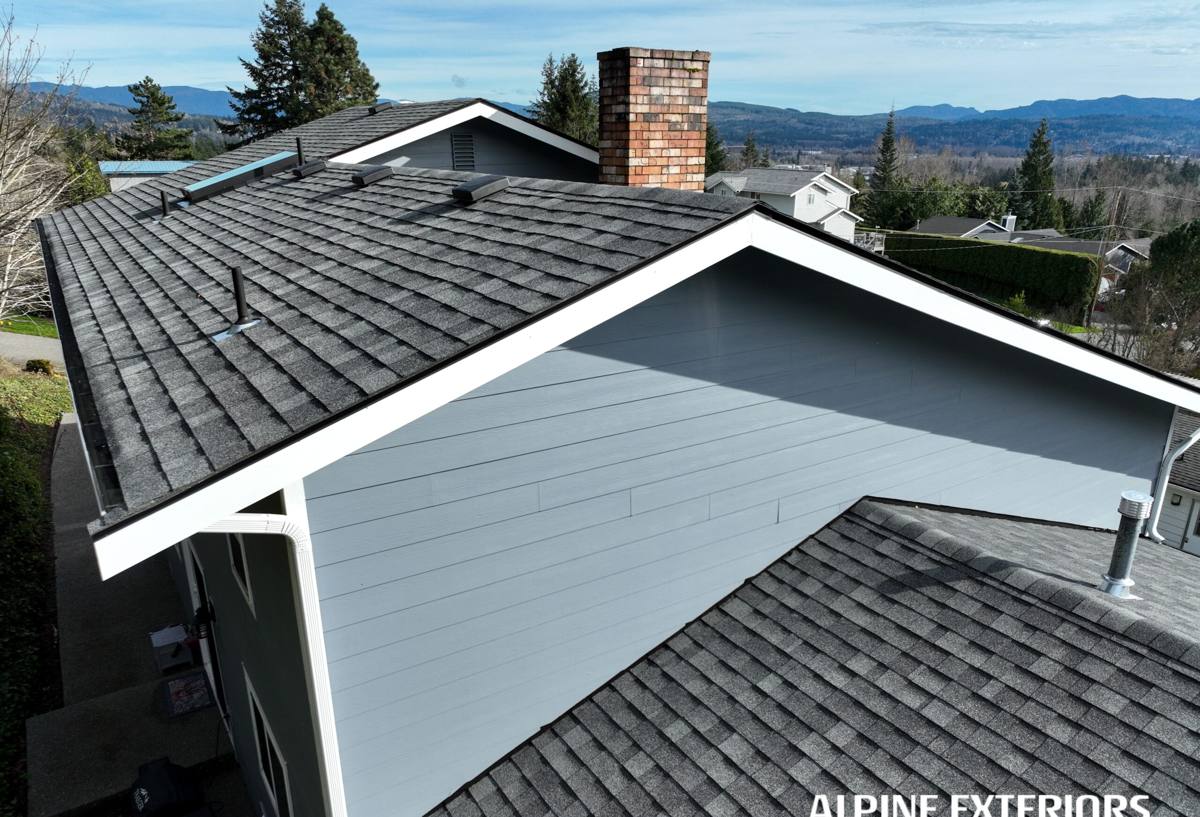
Signs a Birch Bay Home Needs Replacement, Not Another Repair
Plenty of roofs get patched for years past the point where patching still makes sense. Before we ever talk about a full new roof installation, we want to be honest with you about whether you actually need one. Some signs that repair is no longer the right call:
- Granule loss heavy enough that you're seeing bare, shiny patches on asphalt shingles, especially on slopes that face the wind off the bay
- Soft or spongy decking felt underfoot in the attic, which usually means moisture has been getting past the roofing for a while
- Repeated leaks around the same flashing points — chimneys, vent pipes, valleys — even after past repairs
- Widespread moss or algae staining that keeps coming back within a season or two of cleaning
- A roof that's simply reaching the end of its material's realistic service life, especially one installed with builder-grade materials and minimal flashing detail
- Visible sagging along the roofline, which is a structural concern, not a cosmetic one
If a roof is younger and the damage is localized, a repair is usually the right and more affordable answer. We'll tell you that directly. This page is about the homes where a full replacement is genuinely the smarter long-term move.
Roofs That Deserve Extra Attention in Birch Bay
A few property types in this area tend to need a closer look sooner than average: older beach cottages that were originally built as seasonal cabins and later converted to year-round homes, waterfront properties with direct wind exposure, and homes tucked under mature conifers where shade and needle debris keep the roof surface damp for long stretches at a time.
Choosing a Roofing System Built for This Exposure
There's no single "best" roofing material for every home — it depends on your roof's slope, your budget, and how exposed the property is to wind and salt. What we won't do is put a roofing system on your house that we know is a poor match for a bay-front lot just because it's popular elsewhere. Here's how the common options actually compare for a property like this:
| Material | Salt Air / Wind Performance | Moss Resistance | Typical Service Life Here |
|---|---|---|---|
| Architectural asphalt shingle | Good, with proper fastening and edge detail | Fair — needs algae-resistant granules and periodic cleaning | 20–25 years |
| Standing seam metal | Excellent when properly coated and fastened | Very good — sheds moisture, little surface for moss to grip | 40+ years |
| Synthetic composite shake/slate | Good, lightweight and stable in wind | Good, though grooved profiles need occasional clearing | 30–40 years |
| Basic 3-tab asphalt | Fair — lower wind rating, more vulnerable to uplift | Poor without added treatment | 15–18 years |
For most Birch Bay homes we recommend architectural shingle rated for high wind, or standing seam metal for waterfront properties that take the most direct exposure. We won't install materials with a track record of trapping moisture or requiring maintenance most homeowners won't keep up with — we'd rather size expectations correctly up front than sell a system that looks good on paper and disappoints in year eight.
What a Correct New Roof Installation Actually Involves
A new roof is more than laying new shingles or panels over what's there. Done right, every one of these steps matters, and skipping any of them is where premature failures come from:
Tear-Off and Deck Inspection
We remove the old roofing down to the deck so we can actually see the wood underneath. This is where hidden moisture damage from years of small leaks usually shows up. Soft or delaminated decking gets replaced, not covered.
Underlayment Suited to Wind-Driven Rain
Standard felt underlayment is fine in a lot of the country. On a bay-exposed roof taking sideways rain off open water, we lean toward synthetic underlayment and self-adhered membrane at eaves, valleys, and any low-slope transitions, because that's where wind-driven rain gets pushed up under standard shingle laps.
Flashing Detail
Chimneys, skylights, vent pipes, and roof-to-wall transitions are where the large majority of roof leaks actually start — not the open field of shingles. We flash these properly with corrosion-resistant metal, not just sealant, because sealant alone fails faster in salt air than it does inland.
Ventilation
A roof that can't breathe traps moisture in the attic, which shortens the life of the decking and the roofing above it. We check intake and exhaust ventilation as part of every replacement, not as an upsell afterward.
Fastening for Wind Exposure
Nail pattern and fastener count matter more on a property that regularly takes wind gusts off the water. We follow manufacturer high-wind fastening schedules rather than standard patterns on any home with real exposure.
Our Process, Start to Finish
- Free on-site estimate. We walk the roof (or inspect from the attic and eaves if it's not safely walkable) and give you a straight assessment — repair or replace, and why.
- Written scope and quote. You'll see exactly what materials, underlayment, and flashing work are included, no vague line items.
- Scheduling around Birch Bay's weather windows. We plan tear-off for dry stretches and keep the home dried-in if weather shifts mid-project.
- Tear-off and deck repair. Old material removed, deck inspected, any damaged sheathing replaced before anything new goes down.
- Installation. Underlayment, flashing, and roofing material installed to manufacturer and high-wind specifications.
- Final walkthrough and cleanup. We check the work with you and do a full magnetic sweep of the yard for stray fasteners.
What Drives Cost on a Birch Bay Roof
We're not going to quote a number here that doesn't mean anything without seeing your roof — every home is different. What we can tell you is what actually moves the price up or down, so you can budget with some real information instead of guessing:
| Factor | Why It Matters |
|---|---|
| Roof size and number of planes | More squares and more valleys/hips mean more material and labor |
| Deck condition | Rotted or soft sheathing found at tear-off adds material and labor to replace |
| Material choice | Standing seam metal and synthetic composites cost more upfront than asphalt but last longer |
| Roof pitch and access | Steep roofs or difficult access (tight lots near the water) increase labor and safety setup |
| Number of penetrations | Chimneys, skylights, and multiple vents each need individual flashing work |
| Wind rating and fastening spec | High-wind installation uses more fasteners and sometimes upgraded underlayment |
Keeping a New Roof Healthy Through Moss Season
A correctly installed roof still needs basic upkeep in this climate, especially on shaded lots. This isn't a sales pitch for a maintenance contract — it's just what keeps a good roof good:
- Clear gutters and downspouts before the fall rains start so water isn't backing up under the eaves
- Remove overhanging branches that keep sections of the roof shaded and damp longer than the rest
- Have moss and algae growth treated and gently removed rather than pressure washed, which can strip granules and shorten shingle life
- Check attic ventilation isn't blocked by insulation or debris once a year
- Have flashing points inspected after any major windstorm off the water
Why It Matters That We Already Work in Birch Bay
A roofing crew that mostly works drier, inland jobs can still do competent work, but they're often applying general-purpose assumptions to a property that doesn't fit them — standard underlayment where wind-driven rain calls for more, standard fastening where wind exposure calls for a tighter pattern, or a material choice that looks fine on a spec sheet but struggles specifically with salt air. Working Birch Bay and the rest of the Blaine area regularly means we're not guessing at how a roof here actually holds up over time — we're basing the recommendation on what we've seen fail and what's held up on homes with the same exposure as yours.
It also means faster, more realistic scheduling. We know the weather patterns that make or break a tear-off window on a bay-front property, and we plan around them instead of finding out the hard way mid-job.
Get a Straight Answer About Your Roof
If you're weighing whether your Birch Bay home needs a repair or a full new roof, we'll give you an honest read either way — not a push toward the bigger job. Fill out the form below for a free, no-pressure estimate, and we'll walk the roof and talk through what actually makes sense for your home, your budget, and this specific stretch of coastline.