 Blaine Siding
 Why Birch Bay's Exposure Puts Ordinary Siding to the Test
Birch Bay sits right on the water, which means homes here deal with a combination of stresses that inland Whatcom County properties simply don't face. Salt-laden air moves off the bay and settles on every exterior surface, wind-driven rain comes in sideways during winter storms, and the shaded, damp stretches of the year create a long moss and algae season that can run from fall through spring. Any siding material that isn't built to handle all three at once is working at a disadvantage from day one.
This isn't a page about siding in general — it's about what fiber cement siding specifically needs to do for a home in Birch Bay, what a correct installation looks like given that exposure, and how our process is built around it.
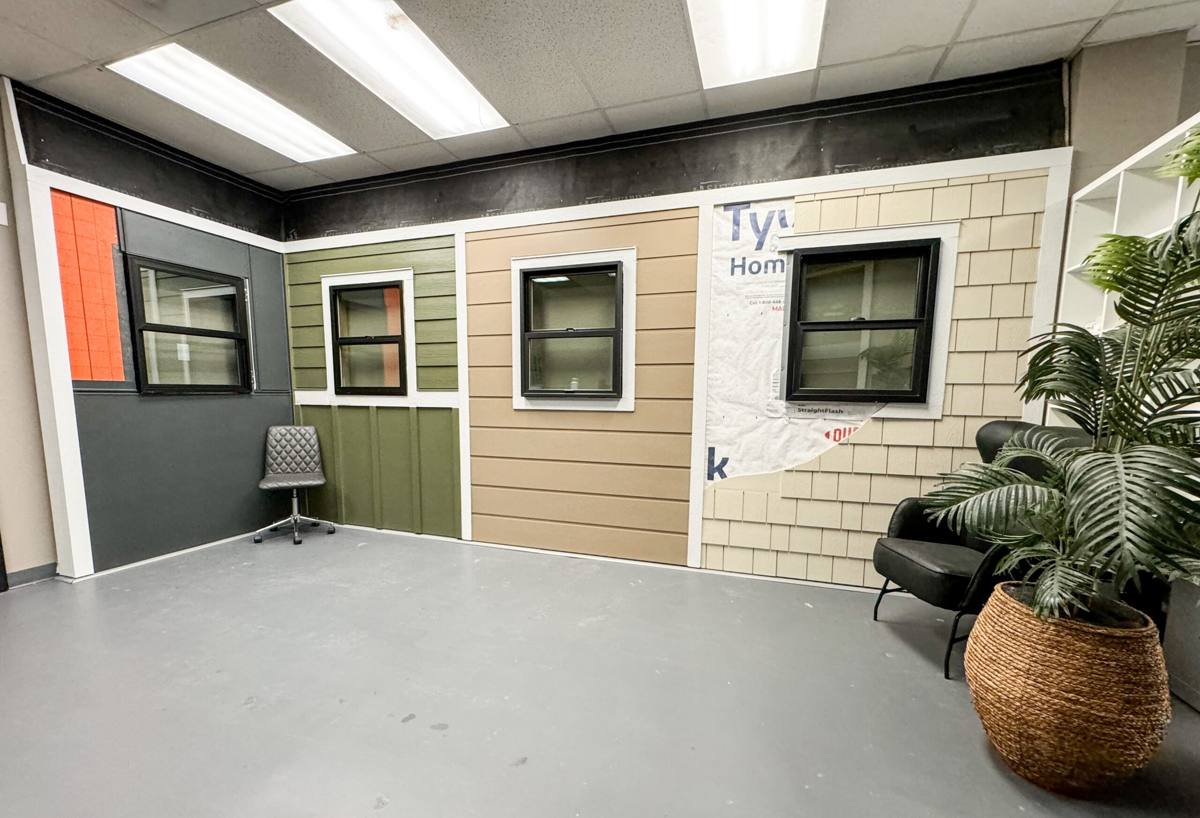
What Salt Air, Driving Rain, and Moss Actually Do to a Wall
Salt Air
Airborne salt is corrosive to metal fasteners, flashing, and trim, and it accelerates the breakdown of paint films that aren't formulated to resist it. Over years, a coastal home can show chalking, fading, and edge deterioration well ahead of what the same product would show a few miles inland.
Driving Rain
Wind off the bay doesn't just wet a wall — it drives water sideways and upward, pushing moisture into laps, joints, and penetrations that would stay dry in a calmer setting. Siding systems that rely on face-sealing (caulking every seam to keep water out) tend to fail here, because once a bead of caulk cracks, water has a direct path behind the cladding with nowhere to escape.
Moss and Algae
Shade, moisture, and mild temperatures are exactly what moss and algae need to establish themselves. On a north-facing wall or a section of the house that stays damp longer after a storm, organic growth can take hold within a season or two if the siding material and finish don't resist it.
Why We Install James Hardie Fiber Cement — and Nothing Else
We're a James Hardie-only siding contractor. We don't install vinyl, LP SmartSide, primed wood, cedar, or other fiber cement brands, and that's a deliberate standard, not a sales pitch. For a bay-front climate like Birch Bay's, the reasons are specific:
- Non-combustible core. Hardie's fiber cement doesn't feed a fire the way wood-based products can, which matters for insurance conversations and long-term peace of mind.
- ColorPlus factory finish. The color is baked on in a controlled factory process rather than field-applied, which gives more consistent, more fade- and chip-resistant coverage than most site-applied paint jobs — important where salt air is working against the finish year-round.
- HZ5 climate engineering. Hardie manufactures specific product formulations engineered for wetter, harsher climate zones. Western Washington, including Whatcom County, falls into that category, and installing the correctly engineered product for this region is part of doing the job right.
- Dimensional stability. Fiber cement doesn't swell, rot, or delaminate the way wood-based sidings can when they take on repeated moisture exposure.
- Transferable warranty backed by a large, established manufacturer. That matters more, not less, on a home that's going to spend decades facing this kind of weather.
We're not going to tell you every other siding product is worthless — vinyl and engineered wood both have legitimate uses. But we've made a professional judgment that for the homes we work on, especially in exposed coastal settings like Birch Bay, fiber cement done correctly is the standard we're willing to put our name behind.
What a Correct Fiber Cement Job Looks Like Here
Fiber cement siding is only as good as the system behind it. In a low-exposure inland setting, small installation shortcuts might not show up for years. In Birch Bay, they show up fast. A correct installation includes:
Water Management Behind the Cladding
Modern best practice — and what we install — treats the siding as the outer layer of a drainage system, not the only line of defense. That means a water-resistive barrier, properly lapped flashing at every window, door, and penetration, and in many cases a rainscreen gap that lets any water that does get behind the siding drain and dry out instead of sitting against the sheathing.
Correct Clearances and Gaps
Hardie's installation specifications call for specific clearances from grade, roof lines, decks, and other siding-to-trim transitions. Skipping these is one of the most common ways fiber cement jobs fail prematurely — wicking moisture at the bottom edge where it sits too close to a hard surface or standing water.
Fastening for Wind and Moisture
Fasteners need to be corrosion-resistant and driven correctly — not overdriven, not underdriven — and following Hardie's nailing pattern for the wind exposure category the home actually sits in. A waterfront property in Birch Bay is not the same exposure category as a sheltered inland lot, and the fastening schedule should reflect that.
Joint Treatment
Where possible, we favor factory-finished, engineered joints over relying purely on field-applied caulk, because caulk is a maintenance item that eventually fails — and in a driving-rain environment, a failed caulk joint is a direct path for water intrusion.
Our Process for a Birch Bay Project
- On-site assessment. We look at sun and wind exposure on each elevation, existing moisture damage, current flashing and drainage condition, and any trouble spots specific to the lot — a shaded north wall, a section catching runoff, and so on.
- Tear-off and substrate check. We remove the existing siding and inspect the sheathing and framing underneath for rot or moisture damage before anything new goes up. This is often where problems that were invisible from outside get found.
- Water-resistive barrier and flashing. Every window, door, and penetration gets properly lapped flashing before siding goes on — not caulked over afterward.
- Hardie panel or plank installation to manufacturer spec, using the climate-appropriate product line and correct fastening for the site's wind exposure.
- Trim, joints, and final detailing, minimizing reliance on caulk where an engineered detail can be used instead.
- Walkthrough and cleanup. We review the finished work with the homeowner and clear the site of debris and old material.
Cost Factors for Fiber Cement Siding in Birch Bay
Every home is different, and we'll give you a specific number after seeing the property — but these are the main variables that move the price up or down on a coastal Whatcom County job:
| Factor | Why It Matters |
|---|---|
| Home size and wall complexity | More corners, gables, and dormers mean more cutting, flashing, and labor time |
| Current siding removal | Tear-off and disposal of old material adds cost versus new construction |
| Substrate repair | Rot or moisture damage found during tear-off has to be repaired before new siding goes on |
| Product line and profile | Lap plank, panel, and shingle-style profiles carry different material and labor costs |
| Trim and detail work | Corner boards, window trim, and fascia detailing add finish quality and cost |
| Site access | Waterfront lots, slopes, and limited staging area can affect labor time |
Maintaining Fiber Cement Siding in a Salt Air, Moss-Prone Setting
Fiber cement with a factory finish is low-maintenance compared to wood, but "low-maintenance" isn't "no-maintenance," especially this close to the water. A simple annual routine keeps a Birch Bay home's siding performing the way it should:
- Rinse the exterior with a garden hose once or twice a year to clear salt residue, especially on bay-facing walls
- Check shaded and north-facing sections for early moss or algae growth and clean it before it spreads
- Keep gutters clear so overflow isn't running down the siding face
- Inspect caulk joints around windows, doors, and trim annually and re-caulk any that have cracked or pulled away
- Trim back vegetation and landscaping that's keeping any section of the wall shaded and damp longer than the rest of the house
- Watch the bottom few inches of siding near grade, decks, and walkways for signs of moisture staining
Why Local Experience in Birch Bay Matters
A crew that's worked this stretch of Whatcom County coastline knows which elevations of a house typically take the worst of the wind-driven rain, where moss tends to establish first, and how the salt exposure here compares to a job five or ten miles inland. That's not something you can fully account for from a spec sheet — it comes from having actually installed and followed up on siding in this specific environment. It shows up in small decisions: where we tighten up flashing details beyond the bare minimum, which elevations get extra attention during the walkthrough, and what we flag for the homeowner to keep an eye on going forward.
Get a Straight Answer for Your Home
If you're dealing with aging, damaged, or moss-covered siding on a Birch Bay home, we're happy to take a look and walk you through what correct fiber cement installation would involve for your specific property — no pressure, no obligation. Fill out the form below to request a free estimate.