 Blaine Siding
 Bellingham Siding Installation, From a Crew That Already Works This Stretch of the Coast
Bellingham sits on its own bay, but the exterior challenges its homes face aren't unique to the city limits — they're the same salt-tinged air, sideways rain, and long moss season that run the length of the Whatcom County coastline, including up in Blaine where our crew is based. That's the reason Bellingham is regular territory for us rather than a stretch job we take on occasionally. We install siding up and down this corridor often enough to know how differently a house here ages compared to a home thirty miles inland, and that experience shapes how we approach every installation, not just the material we choose.
This page is specifically about the installation itself — what a Bellingham home actually needs from the process of putting new siding on, not just the product that ends up on the wall. Material quality matters, and we'll get to that, but a good product installed carelessly fails the same way a poor product does, sometimes faster. The install is where most of the real protection either happens or gets skipped.
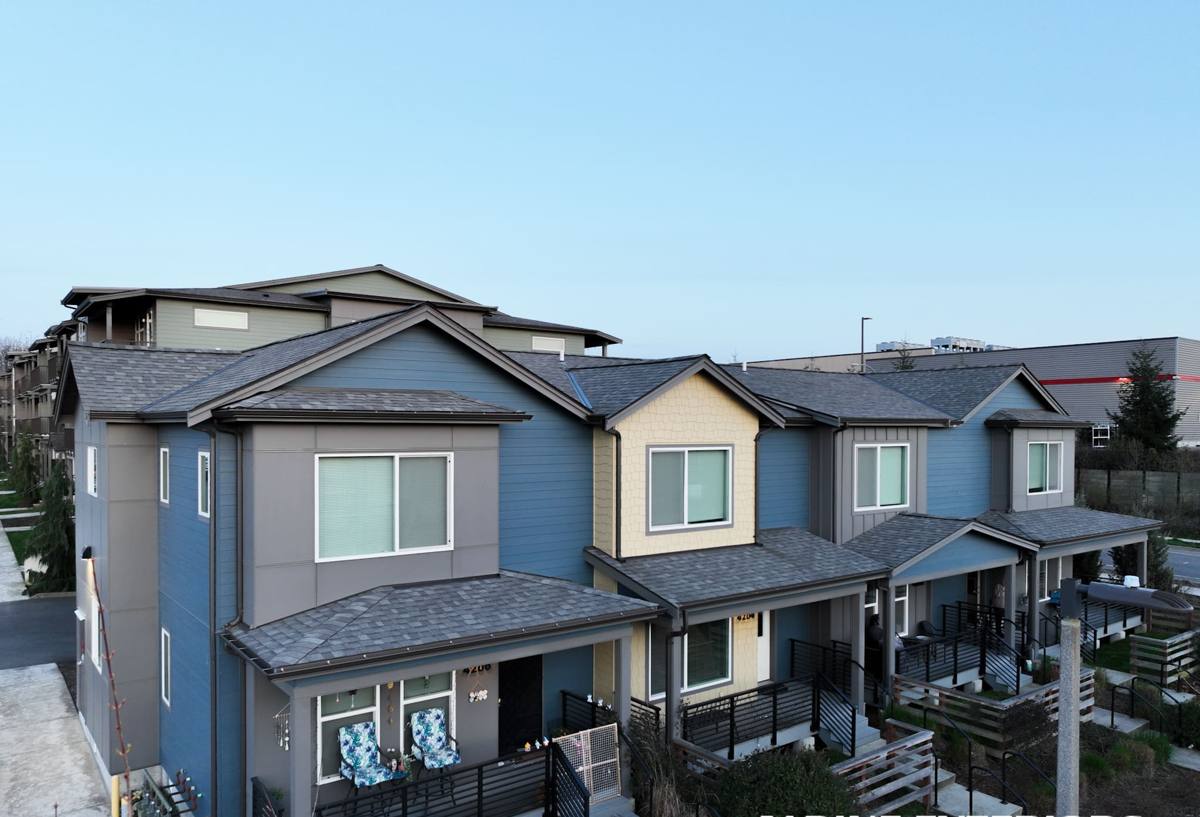
What Bellingham's Climate Demands From an Installation
Salt-Tinged Air Off the Bay
Homes near Bellingham Bay sit in a near-constant flow of moisture-laden, mildly corrosive marine air. It's not dramatic day to day, but it works on fasteners, flashing, and any exposed metal trim steadily, year after year. An installation that uses the wrong fastener type, or doesn't account for corrosion resistance at every penetration, is choosing a failure point that won't show itself for a few years — which is exactly long enough for it to be someone else's problem to explain.
Rain That Hits Walls Sideways
Storms coming off the water rarely drop straight down here. Wind pushes rain into lap joints, trim seams, and wall penetrations at an angle, which puts real pressure on details that a fair-weather installation might skip without consequence in a drier climate. A wall built for vertical rainfall alone is not built for what actually happens on a windy Bellingham afternoon.
A Moss Season That Doesn't Really End
Mild temperatures and consistent dampness give moss and mildew a growing season that runs most of the year on shaded and north-facing walls, especially on the tree-covered lots common around the city. Any installation detail that leaves moisture sitting against the wall instead of draining and drying gives moss a head start it won't give back.
What a Correct Siding Installation Actually Involves
None of what follows is exotic. It's the manufacturer's own installation spec, applied consistently — including on the parts of the wall nobody sees again once the siding goes up.
- Substrate inspection before anything new goes on: Old siding comes off, and the sheathing underneath gets checked for rot, soft spots, or existing moisture damage before a single new board is hung.
- A drainage gap behind the siding: A rainscreen cavity lets any moisture that gets past the surface drain and evaporate instead of sitting against the wall sheathing.
- Correctly lapped house wrap and flashing: Every seam and penetration needs to shed water downward and outward, particularly on walls that catch wind-driven rain directly.
- Fastener type and spacing to spec: Corrosion-resistant fasteners, placed exactly where the manufacturer calls for them — not "close enough."
- Sealed butt joints and trim transitions: Open or poorly sealed joints are where moisture finds its way behind siding first, and where a wall closest to the bay pays for it soonest.
- Field-cut edges primed before installation: Factory finish protects the face of the board; any edge cut on site needs its own protection or it becomes the weak point.
Our Installation Process, Start to Finish
- Walk-through and assessment: We look at the whole exterior, not just the siding — trim, flashing, roofline transitions, and any visible signs of moisture already at work.
- Tear-off and substrate check: Old siding comes off and the sheathing gets inspected. This is where hidden moisture damage from a prior installation usually turns up, and we'll tell you plainly if repair work is needed before new siding goes on.
- Weather barrier and rainscreen installation: House wrap goes up lapped correctly, and a drainage gap is built in before any siding touches the wall.
- Siding installed to manufacturer spec: Correct fastener type and spacing, proper clearance from grade and rooflines, and joints lapped and sealed the way Hardie's own installation guide requires.
- Trim, flashing, and sealant detail: Every penetration, corner, and transition gets flashed and sealed as part of one connected water-management system, not patched in afterward.
- Final walkthrough: We go over the finished work with you before calling the job done, not after.
Why We Install Only James Hardie Fiber Cement
We install one siding system: James Hardie fiber cement. We don't install LP SmartSide, vinyl siding, Cemplank, Allura, primed spruce, or cedar. That's a professional standard we hold to everywhere we work, not a Bellingham-specific rule, but it matters more here than it would in a drier, calmer climate.
- Non-combustible core: Fiber cement doesn't feed a fire the way wood-based siding products can.
- Factory-applied ColorPlus finish: Cured under controlled factory conditions rather than brushed on at the job site, so it resists fading and moisture intrusion longer than field-applied paint.
- Climate-engineered HZ5 formulation: Built for regions with sustained moisture and freeze-thaw cycling, which describes coastal Whatcom County well.
- Dimensional stability: Fiber cement doesn't swell, cup, or warp the way engineered wood can after repeated wet-season exposure.
- Strong transferable warranty: Backed by one of the stronger warranty structures in the industry, provided the installation follows spec — which is exactly why we're as particular about the install as we are about the product.
LP SmartSide, vinyl, and cedar are all legitimate products with homeowners who are happy with them, and other contractors install them competently. We made a professional call that in a climate this consistently wet and salt-exposed, standing behind one system we fully understand serves our customers better than offering a cheaper option that quietly shifts maintenance risk onto them a few years down the road.
Installation Mistakes We Find When We Tear Off Older Siding
A lot of what we see on tear-offs in Bellingham isn't a material failure — it's an installation shortcut that took a few wet seasons to show itself. A few of the repeat offenders:
| Installation Shortcut | What It Looks Like Years Later |
|---|---|
| No rainscreen or drainage gap behind the siding | Staining, soft sheathing, and mold at the wall cavity even though the siding face looks fine |
| Face-nailed trim with no clearance | Cracked caulk lines and water tracking straight down behind the trim board |
| Fasteners driven at the wrong spacing or angle | Loose siding, visible fastener heads, and gaps that widen after every windstorm |
| House wrap lapped backwards or taped instead of properly overlapped | Water finding its way behind the barrier at exactly the seams meant to shed it |
| Unprimed field-cut edges | Swelling and paint failure starting at cut ends long before the rest of the board shows wear |
None of these show up on install day. That's part of what makes them common — they're invisible until the next wet season, by which point the crew that cut the corner is long gone.
Installation Cost Factors for a Bellingham Home
| Factor | What It Affects | Why It Matters in Bellingham |
|---|---|---|
| Tear-off vs. overlay | Labor scope and substrate access | Tear-off is the only way to catch moisture damage hidden under decades-old siding |
| Substrate condition | Repair cost before new siding goes on | Years of trapped moisture behind failing siding can rot sheathing before it's visible outside |
| Home size and wall complexity | Total material and labor | More dormers, trim, and roof intersections mean more places wind-driven rain can work its way in |
| Site access and terrain | Labor time and staging needs | Sloped lots and mature tree cover common around Bellingham can add setup time |
| Trim and color selection | Material cost and finish longevity | Factory-cured finishes hold up against salt air and UV exposure far longer than field-applied paint |
These are general cost drivers, not a quote. We walk every property before putting a real number on the work, because two homes on the same block can need very different scopes once old siding actually comes off.
Why a Crew Already Working the Blaine-Bellingham Corridor Matters
Siding installation is detail work, and a lot of that detail is judgment: knowing which walls stay wet longest through a Bellingham winter, which flashing details are worth the extra time on a bay-facing exterior, and which fastener choices actually hold up against this much salt air rather than just meeting a minimum spec. That judgment comes from working this specific stretch of coastline repeatedly, not from a general contractor's playbook applied the same way everywhere.
There's a practical side to it too. A crew based nearby in Blaine and working Bellingham regularly is easier to reach if a punch-list item needs a second look, keeps a working relationship with local suppliers for matching trim and color down the road, and already understands Whatcom County permitting and inspection expectations rather than learning them on your job. None of that replaces a well-run installation, but it's part of why hiring locally, for a trade this dependent on getting small details right, isn't just a convenience — it's a real factor in how the finished work holds up.
Timing an Installation Around Bellingham's Weather
The driest, most stable stretch for siding installation here generally runs through spring and summer, when materials, adhesives, and sealants can cure under conditions they're actually rated for rather than between storm systems. Late fall through winter tends to be wetter and windier, which can slow a project down and makes it harder to guarantee ideal curing conditions for every step. That said, a home with active moisture intrusion shouldn't wait for the calendar to cooperate — a damaged wall assembly gets worse the longer it sits, regardless of season.
If your Bellingham home needs new siding, or you're not sure whether what you have is installed the way it should be, we're glad to take a look. Reach out using the form below to schedule a free, no-pressure estimate.