 Blaine Siding
 Decks Built for Bellingham's Weather, Not Just Its View
A deck in Bellingham has to do more work than a deck almost anywhere inland. Between the marine air coming off Bellingham Bay, the long stretch of driving rain from fall through spring, and the moss and algae that colonize any shaded, damp surface for months at a time, a deck here is under constant low-grade attack. That doesn't mean decks fail here more than elsewhere — it means they need to be built and maintained with that reality in mind from the start, rather than treated like a weekend project copied from a drier climate.
We build and repair custom decks for homeowners around Bellingham and the rest of Whatcom County, and most of the problems we get called out to fix trace back to the same root cause: a deck that was designed or installed without accounting for how much moisture this region actually sees over a full year.
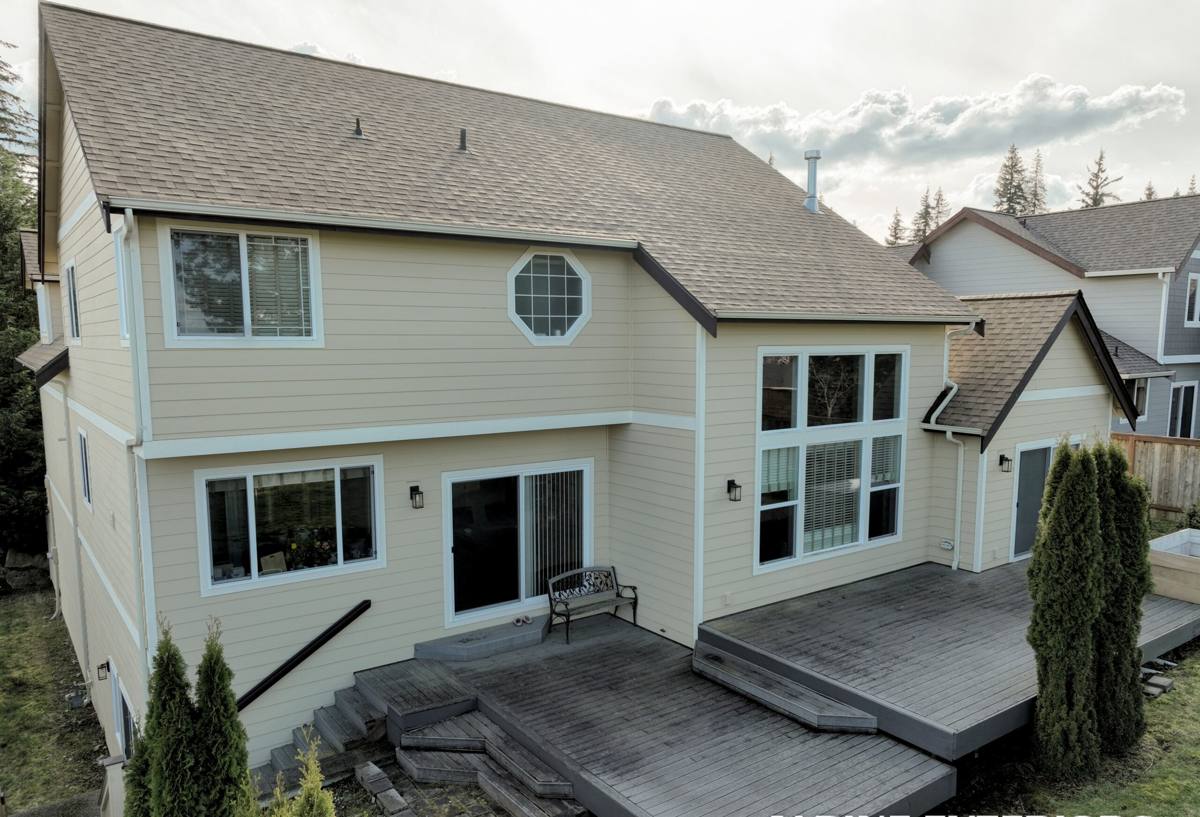
What Local Conditions Actually Demand From a Deck
It helps to be specific about what "Pacific Northwest climate" means for a deck, rather than treating it as a vague warning label.
- Salt-influenced air: Homes closer to the water deal with corrosion on exposed fasteners and metal hardware faster than inland properties. Cheap or under-spec fasteners show rust streaks and weakening well before the wood itself is a problem.
- Sustained rain, not just rain volume: It's less about single heavy storms and more about weeks of steady, driving rain that gets wind-driven under rail caps, into end grain, and behind ledger boards if flashing wasn't done correctly.
- Long moss and algae season: Shaded decks, north-facing decks, and anything under mature trees can stay damp for days after a storm passes. That constant moisture is what actually breaks decking down over time — not the rain itself, but how long the surface stays wet.
- Freeze-thaw cycling, even if mild: Whatcom County doesn't get brutal winters, but repeated light freezing and thawing still works water into small cracks in aging wood and finds weak spots in fastening.
A deck built without these specifics in mind can still look fine for a year or two. The failures usually show up in year three to five — soft spots near ledgers, moss buildup that never fully dries, or hardware that's rusted enough to be a real structural concern.
Decking Material Options for This Climate
There's no single "right" decking material for every Bellingham home — it depends on budget, sun exposure, and how much maintenance you actually want to do. Here's how the common options compare specifically against wet, shaded, salt-air conditions.
| Material | Moisture Behavior | Moss/Algae Resistance | Maintenance | Typical Lifespan Here |
|---|---|---|---|---|
| Pressure-treated fir/hemlock | Absorbs and releases moisture readily; prone to cupping if not sealed | Low — needs regular cleaning and re-sealing | Annual cleaning, re-sealing every 1-2 years | 10-15 years with upkeep |
| Cedar | Naturally moisture-resistant, but surface still needs protection | Moderate — natural oils help, still needs cleaning | Cleaning and oil/stain every 2-3 years | 15-20 years with upkeep |
| Composite decking | Doesn't absorb water into the board core | Moderate to good depending on brand/finish — can still grow surface algae in constant shade | Periodic washing, no sealing needed | 25+ years, backed by manufacturer warranty |
| PVC/cellular decking | Essentially non-absorbent | Good — smoother surface sheds moss more easily | Occasional washing | 25-30+ years |
Composite and PVC decking cost more up front, but for a shaded, north-facing, or waterfront deck in this area, the reduced maintenance often pays for itself in avoided re-sealing and repair work over a decade. For a sunny, well-drained deck away from the water, a well-maintained cedar or treated-wood deck is still a reasonable, more affordable choice.
A Note on Fasteners and Hardware
Whatever decking material you choose, the hardware matters just as much — arguably more, given the salt air. We use stainless steel or heavy-duty coated fasteners rated for coastal exposure, along with corrosion-resistant structural connectors at every ledger and post connection. Standard interior-grade hardware is a false economy here; it's often the first thing to fail, long before the decking itself shows wear.
Framing and Structural Details That Actually Matter
The decking surface is what you see, but the framing underneath is what determines whether the deck lasts. A few details we treat as non-negotiable on every job:
- Proper ledger flashing: Where a deck attaches to the house, water intrusion at the ledger board is one of the most common — and most serious — failure points we find on older decks. Correct flashing keeps rain from wicking into the house's wall framing, not just the deck itself.
- Post base drainage: Posts set directly in concrete or sitting in standing water rot from the bottom up. We use elevated post bases that keep wood off wet surfaces.
- Joist spacing for composite or PVC decking: These materials often require tighter joist spacing than traditional lumber, especially on angled or diagonal decking patterns. Skipping this step voids most manufacturer warranties.
- Airflow underneath: Low decks with poor ventilation underneath trap moisture and accelerate rot in framing that's otherwise hard to inspect once the decking is installed.
Our Deck-Building Process
Every project starts with an honest look at the site, not a generic quote.
- On-site assessment: We look at sun exposure, drainage, proximity to the house, and how the deck ties into existing siding or structure.
- Material and layout discussion: We walk through the tradeoffs above in plain terms — no pushing a specific brand without explaining why it fits your situation.
- Permitting: Most decks above a certain height or attached to the house require a permit through the local jurisdiction. We handle that process rather than leaving it to the homeowner.
- Framing and flashing first: We don't rush past the structural work to get to the visible decking — this is where long-term durability is actually decided.
- Decking, railing, and finish work: Installed to manufacturer spec, with fastening and spacing appropriate for our climate's seasonal wood or composite movement.
- Final walkthrough: We go over basic care for whatever material you chose, so you know what upkeep is actually needed versus optional.
Common Deck Problems We Get Called to Fix
Repair calls in this area tend to fall into a short list of recurring issues:
- Soft or spongy boards near the house: Almost always a sign of ledger flashing failure letting water track along the band joist.
- Persistent moss on north-facing or shaded sections: Usually a combination of poor airflow, no periodic cleaning, and sometimes original decking laid too tight with no gap for drainage.
- Rusted rail hardware or fasteners: Common on older decks built with standard interior-grade hardware rather than coastal-rated fasteners.
- Wobbly or leaning railings: Often a post-to-frame connection that was never properly through-bolted, which becomes more obvious after a few years of wind and rain exposure.
- Uneven settling: Post footings that weren't set below frost depth or on stable soil can shift slightly over repeated wet-dry cycles.
In most cases, catching these early means a repair rather than a full rebuild — which is why we'd rather look at a deck that "seems fine but a little off" sooner than later.
A Practical Maintenance Checklist
Whatever material your deck is built from, a short annual routine goes a long way in this climate:
- Sweep debris and standing leaves off the deck surface regularly through fall, when moss growth accelerates fastest.
- Rinse or wash the surface at least once a year to remove algae film before it becomes ingrained.
- Check railings and stair posts by hand for movement, especially after winter storms.
- Inspect the ledger board area at the house connection for any staining, soft wood, or gaps in flashing.
- Re-seal or re-stain wood decking on the manufacturer's or installer's recommended schedule — don't wait until it looks obviously weathered.
- Keep gutters and downspouts near the deck clear so runoff isn't draining directly onto or under it.
Why Local Experience Matters for This Job
Deck-building isn't complicated in principle, but building one that holds up specifically in Whatcom County's wet, salt-influenced climate is a different standard than building one for a drier region. A crew that regularly works in and around Bellingham has already seen where decks in this area tend to fail, which fasteners actually hold up near the water, and how much ventilation a given site needs based on its sun exposure and surroundings. That local pattern recognition is hard to replicate from a general framing crew working from a one-size-fits-all spec sheet.
We treat every deck as a structure that has to perform through another twenty or more Pacific Northwest winters, not just look good for photos on installation day.
If you're planning a new deck or dealing with an aging one that needs an honest assessment, we're glad to take a look. Use the form below to request a free, no-pressure estimate for your Bellingham property.