 Blaine Siding
 Bellingham's Climate Is Hard on Decks — Here's Why
A deck in Bellingham doesn't fail the way a deck in a dry inland climate fails. It's rarely one dramatic problem. It's the slow accumulation of moisture that never fully dries out between rains, salt-laden air drifting in off the water, and months of shade and dampness that let moss and algae take hold on any surface that can't shed water fast enough. By the time a homeowner notices soft boards, discolored fasteners, or a slick green film underfoot, the damage has usually been building for a season or two.
Composite decking exists specifically to handle this kind of environment better than wood does, but only if it's installed with that environment in mind. A composite deck built the same way you'd build one in a dry climate will still struggle in Whatcom County. The material matters, but the installation details matter just as much.
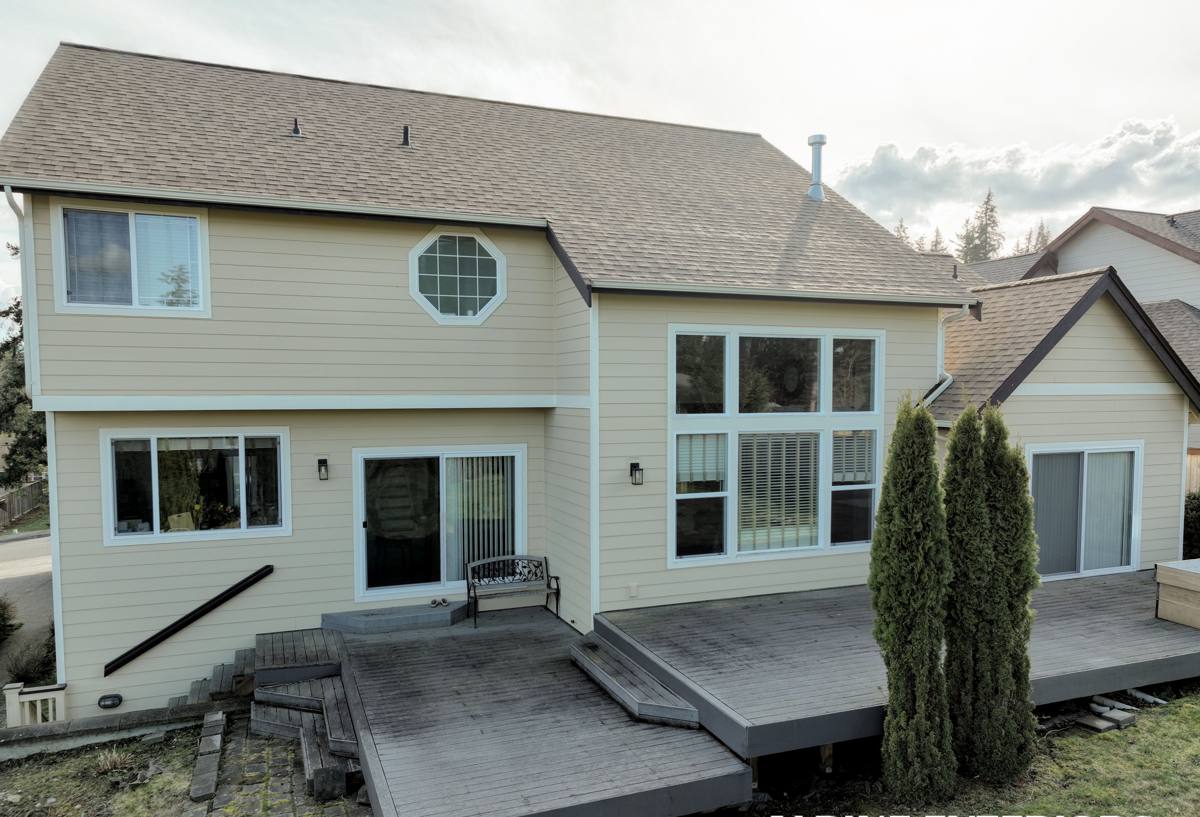
What Bellingham Homes Actually Need From a Deck
Before talking about brands or board styles, it helps to be clear about what the deck needs to survive here:
- Fast water shedding — standing water is the single biggest driver of moss growth and substructure rot
- Airflow underneath the deck, not just around it, so the frame and board undersides can actually dry
- Fasteners and hardware rated for coastal, salt-air exposure
- A surface texture that doesn't turn into a skating rink once it's damp and shaded for weeks at a time
- A structure that can be cleaned without damaging the board finish, because cleaning here isn't optional maintenance — it's routine
Any composite deck we build in Bellingham gets designed around those five points first, then we talk about color and style.
What a Correct Composite Installation Involves
The Substructure Comes First
Composite boards get the attention, but the frame underneath does most of the work of keeping a deck dry and stable. In this climate we pay close attention to joist spacing (often tighter than the manufacturer's dry-climate minimum), joist tape or flashing to protect the wood substructure from the moisture that inevitably reaches it, and ledger board flashing where the deck ties into the house — a detail that causes a disproportionate share of hidden rot problems if it's rushed.
Airflow and Height Off Grade
A deck built low to the ground with poor cross-ventilation underneath will trap moisture no matter how good the boards on top are. We look at grading, drainage paths, and clearance underneath the frame as part of the design, not as an afterthought once the deck is already up.
Fastening and Hardware
Salt air corrodes standard fasteners faster than most homeowners expect. We use fastening systems and structural hardware rated for coastal exposure, and we don't mix metals in ways that cause galvanic corrosion between hardware components.
Board Orientation and Drainage Gaps
Board spacing and orientation affect how quickly water leaves the surface. Too tight, and water sits between boards long enough to feed algae growth; too loose, and the deck feels unfinished and debris collects in the gaps. Getting this balance right is a judgment call based on the specific site's sun exposure and drainage.
Composite vs. Wood vs. PVC for This Climate
We install composite for most Bellingham deck projects because of how it holds up here specifically, but it's worth understanding the honest trade-offs between the main options.
| Material | Moisture Behavior | Maintenance Burden | Typical Lifespan Here |
|---|---|---|---|
| Pressure-treated wood | Absorbs water, prone to cupping and splintering in prolonged damp shade | Regular sealing/staining, sanding, and moss removal | Shorter — resealing intervals shrink in this climate |
| Composite decking | Low water absorption, resists rot in the board itself | Periodic cleaning to control surface moss/algae; no staining or sealing | Long, provided substructure and drainage are done correctly |
| Capped PVC | Essentially non-absorbent | Lowest cleaning need, but higher material cost | Long, similar caveats around substructure quality |
Composite isn't maintenance-free — nothing outdoors in this region is — but it removes the sealing and staining cycle that wood demands, which matters most in a climate where that window of dry weather to do the work is short.
Moss, Algae, and the Long Wet Season
This is the part of deck ownership in Whatcom County that catches people off guard. Composite decking resists rot, but it does not resist surface growth on its own — moss and algae will colonize any damp, shaded surface, composite or wood. The difference is that composite doesn't degrade structurally from that growth the way wood can, and it cleans up without needing to be resealed afterward.
What actually controls moss and algae buildup:
- Design choices that reduce standing water and shaded dampness in the first place
- A seasonal cleaning routine — a stiff brush and the manufacturer-approved cleaner, done before growth gets established, not after
- Keeping gutters and nearby drainage clear so runoff isn't constantly draining across the deck surface
- Trimming back vegetation that keeps the deck in permanent shade, where practical
We walk homeowners through this as part of the handoff, because the deck's long-term appearance depends more on this routine than on which board color was chosen.
Board Selection for Salt Air and a Wet Climate
Board texture and color both play a role here. Deeply embossed wood-grain textures can hide dirt well but also give algae more surface area to grip. Smoother, more uniform textures tend to clean up faster with less scrubbing. On color, darker boards show less staining from tannins and organic debris but run hotter in direct sun during the summer months; lighter boards show grime faster but stay cooler. There's no universally "correct" choice — it depends on the deck's sun exposure, how much shade it gets, and how the homeowner wants to handle cleaning. We talk through these trade-offs on site rather than defaulting to whatever looks best in a sample board display.
Our Process for a Bellingham Composite Deck Project
- On-site assessment of the existing structure (if replacing a deck), grading, drainage paths, and sun/shade exposure
- Design discussion covering board style, color, railing, and any structural changes needed for proper drainage and airflow
- Substructure work — framing, joist protection, flashing, and ledger detail done to hold up under sustained damp conditions
- Composite board installation with coastal-rated fasteners and attention to spacing for drainage
- Final walkthrough covering the deck's care routine, including realistic expectations about seasonal cleaning
We don't skip the substructure conversation to get to the visible part of the job faster. It's the part that determines whether the deck is still solid in ten years.
Common Problems We See on Existing Decks in This Area
When we're called out to look at an older deck — composite or wood — in Bellingham, a handful of issues show up repeatedly: ledger boards without proper flashing where the deck meets the house, framing built too close to grade with poor airflow underneath, fastener corrosion from mismatched hardware, and board spacing too tight to shed water in shaded areas. None of these are unique to any one brand of decking material — they're installation issues, and they're exactly what we design around from the start on new builds.
What Affects the Cost of a Composite Deck Project
| Factor | Why It Matters |
|---|---|
| Substructure condition | Reframing or added joist protection for damp-climate durability adds labor and material |
| Deck size and shape | Cuts, angles, and multiple levels add labor time beyond straight square footage |
| Board tier and brand | Composite and capped PVC options span a range of price points and warranty structures |
| Railing and fascia choices | Composite railing systems and fascia wraps add to material cost but reduce long-term upkeep |
| Site access and grading work | Sites needing regrading for drainage or difficult access add time to the project |
We give homeowners a real number after seeing the site, not a rough guess based on square footage alone — the substructure condition on an older deck can change the scope significantly.
What to Ask Before Hiring a Deck Contractor Here
- Do you flash the ledger board and joists, or just fasten the boards down?
- What fastener and hardware system do you use, and is it rated for coastal exposure?
- How do you handle drainage and airflow underneath the deck, not just on top?
- What does the manufacturer's warranty actually cover, and does your installation meet its requirements?
- Have you built decks elsewhere in Whatcom County, and do you understand the moss and moisture issues specific to this area?
A contractor who's worked in Bellingham and the surrounding area already knows the answers to these before you ask — because they've seen what happens when these details get skipped.
If you're planning a new composite deck or replacing one that's struggled with rot, moss, or drainage issues, we're happy to take a look and give you a straightforward, no-pressure estimate. Use the form below to get started.