 Blaine Siding
 Dakota Creek's Windows Work Harder Than Most
Homes along Dakota Creek sit close enough to the water and the open air moving in off Semiahmoo Bay and the Strait of Georgia that windows here take on a different kind of wear than windows fifty miles inland. Salt-laden air corrodes hardware and finishes faster. Driving rain, pushed sideways by winter storms, finds every gap in old flashing and trim. And the long stretch of grey, wet months that Whatcom County is known for keeps wood, vinyl, and caulk lines damp for weeks at a time, which is exactly the environment moss and mildew prefer. None of this is exotic — it's just steady, cumulative exposure, and it shows up in windows before it shows up almost anywhere else on a house.
If you own a home in this part of Blaine, your windows are one of the first places that climate damage becomes visible: hazy glass from failed seals, corroded latches, soft trim, or a draft that wasn't there five years ago. Replacing windows here isn't just a cosmetic upgrade — done right, it's a chance to close off the specific weak points this environment exploits.
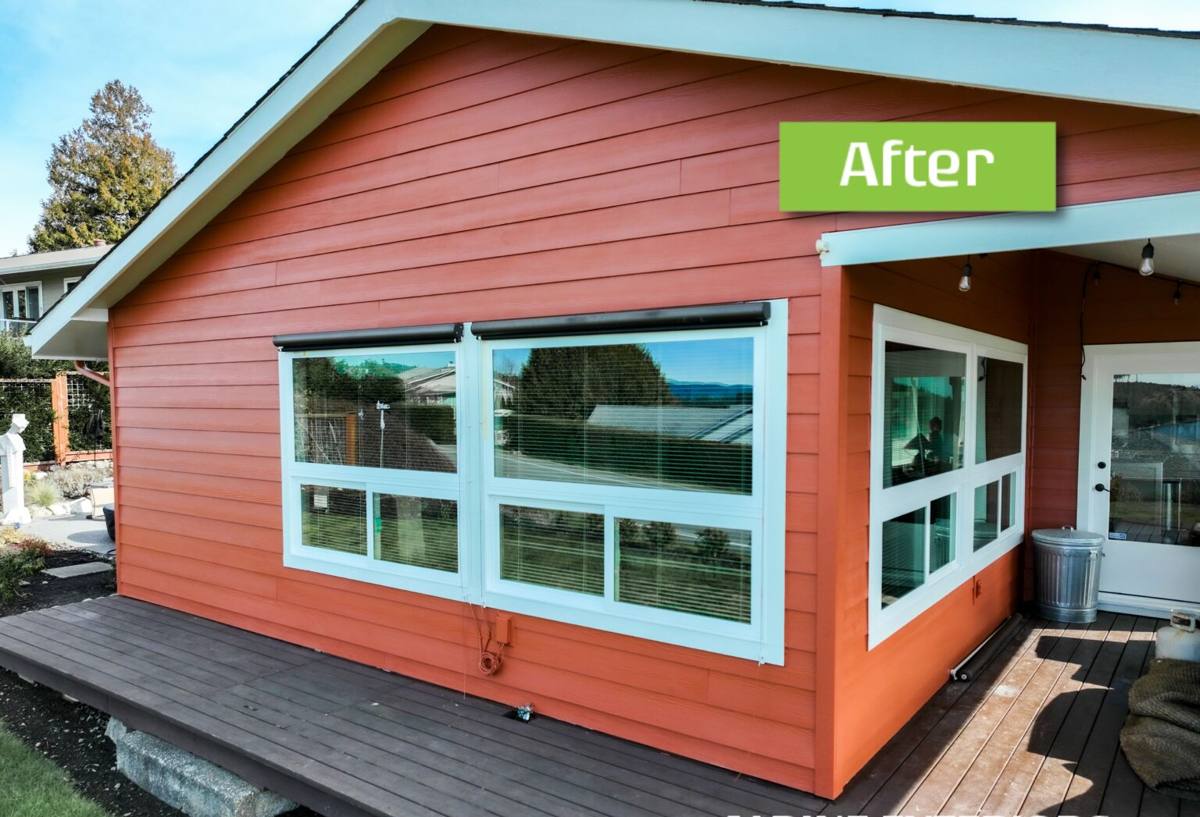
Signs a Dakota Creek Home Needs Window Replacement
Some of these signs are obvious. Others build slowly enough that homeowners get used to them before recognizing what's actually happening.
- Fogging or a milky haze between the panes of a double-pane window — the seal has failed and the gas or air fill has been replaced by trapped moisture
- Hardware — latches, cranks, hinges — that's gone stiff, corroded, or won't lock flush anymore
- Visible gaps, soft spots, or paint failure on the exterior trim and sill around the window
- A noticeable draft near the frame in windy weather, even with the window fully latched
- Moss or dark streaking building up on the sill, casing, or the wall just below the window
- Difficulty opening or closing sashes that used to move freely — often a sign the frame has swollen or warped
- Rooms near the water-facing side of the house that feel noticeably colder or noisier than others
Any one of these can be a minor fix. Several together, especially on the side of the house that takes the brunt of the weather off the water, usually means the windows are past the point where patching makes sense.
What a Correct Window Replacement Involves
Window replacement done properly is mostly about what happens around the window, not just the window unit itself. A high-quality window installed with poor flashing and sealing will fail early in this climate — and a modest window installed correctly will often outperform it.
Flashing and Water Management
The most important part of any replacement in this area is how water is directed away from the opening. That means proper head flashing above the window, back-dammed sill pans that route any water that gets past the glass back outside instead of into the wall cavity, and correctly lapped house wrap so water sheds downward and outward at every layer. In a climate with this much sustained wind-driven rain, a shortcut here doesn't show up as a leak on day one — it shows up as rot inside the wall two or three winters later.
Sealing and Insulation
Around the frame, the gap between the window and the rough opening needs to be insulated and air-sealed correctly — not just stuffed with fiberglass and caulked shut on the outside. Done wrong, this is a common source of the draft and condensation complaints we hear about most on older replacement jobs.
Frame and Hardware Selection
Salt air corrodes exposed metal hardware over time, and it also degrades finishes that aren't rated for coastal exposure. Choosing the right frame material and hardware finish for a home this close to the water matters more than it would for the same house set back further inland.
Frame Material Comparison for Coastal Blaine Homes
| Material | How It Handles Salt Air & Moisture | Maintenance | Typical Trade-Off |
|---|---|---|---|
| Vinyl | Won't corrode or rust; handles moisture well | Low — occasional cleaning | Can't be repainted; color options are fixed |
| Fiberglass | Very stable in temperature swings and coastal humidity | Low | Higher upfront cost than vinyl |
| Wood (clad exterior) | Good if the exterior cladding is intact; bare wood suffers in salt air | Higher — finish and seals need regular attention | Best appearance option, but demands upkeep near water |
| Aluminum | Prone to corrosion and pitting in salt air unless well-finished | Moderate to high | We're selective about where we recommend this near the water |
There's no universal right answer — it depends on the house, the budget, and how much upkeep an owner wants to take on. Our job is to lay out the honest trade-offs for a house in this specific location, not push one product line regardless of fit.
Our Process for a Dakota Creek Window Job
The process is straightforward, but the details matter more here than in a drier, calmer climate.
- On-site assessment. We look at the existing windows, the condition of the surrounding trim and sheathing, and how exposed each elevation of the house is to prevailing wind and rain direction.
- Scope and product discussion. We walk through frame material, glass options, and hardware finish based on the house's exposure — not a one-size-fits-all recommendation.
- Removal and inspection. Old windows come out carefully so we can check the rough opening and sheathing underneath for hidden moisture damage before anything new goes in.
- Flashing and sealing. This is where most of the long-term performance is won or lost, and it's the step we spend the most care on.
- Installation and finish work. Windows are set, shimmed, and sealed, then trim and finish work is completed to match the surrounding exterior.
- Final walkthrough. We check operation, seals, and finish with the homeowner before calling the job done.
Moss, Trim, and the Long Wet Season
Whatcom County's long moss season isn't just a roof and gutter problem — it affects window sills, trim, and the wall area just below a window, especially on shaded or north-facing elevations near the water. Moss and algae hold moisture against wood and painted surfaces far longer than bare exposure would, which accelerates rot and finish failure. When we replace windows in this area, we pay attention to sill slope and trim detailing so water sheds cleanly instead of sitting — a small design choice that makes a real difference over a wet Blaine winter.
Cost Factors to Expect
Every home is different, so exact numbers depend on window count, size, material, and the condition of what's being replaced. In general terms, homeowners in this area should expect pricing to be shaped by the following:
| Factor | Why It Affects Cost |
|---|---|
| Frame material | Vinyl is typically the most economical; fiberglass and clad wood cost more upfront |
| Number and size of windows | Larger openings and whole-house jobs have different per-unit economics than a handful of replacements |
| Condition of the rough opening | Hidden rot or water damage found during removal adds repair work before the new window can go in |
| Access and elevation | Upper-story or hard-to-reach windows near steep grades take more time and equipment |
| Trim and exterior finish work | Matching existing siding and trim detail adds labor beyond the window unit itself |
We'd rather walk a homeowner through these factors on-site and give a real number than quote a range that doesn't reflect the actual house.
What to Ask Before Hiring a Window Contractor
Given how much of a window's long-term performance comes down to installation rather than the product itself, it's worth vetting a contractor carefully.
- Do they specifically address flashing and sill pan detailing, or only talk about the window brand?
- Are they licensed and insured to do exterior work in Washington state?
- Will they inspect the rough opening for hidden moisture damage before installing, and tell you honestly if they find any?
- Do they have experience with homes in coastal or high-exposure areas of Whatcom County specifically?
- Is the warranty tied to correct installation practices, or just the manufacturer's product warranty?
- Will they explain frame material trade-offs honestly, rather than pushing whichever product they have on hand?
Why Local Experience in Dakota Creek Matters
A crew that already works this stretch of Blaine knows which elevations of a house tend to take the worst weather, how far moss and moisture problems typically travel up from grade, and which flashing details actually hold up through a full winter of wind-driven rain off the water. That's not something you can fully learn from a spec sheet — it comes from having done the work in this exact climate, on homes with the same exposure. It also means a faster, more accurate assessment, because we're not guessing at how the coastal conditions here will treat a given product or detail — we've already seen how it plays out.
If your windows are showing their age, drafting, fogging, or just not doing their job through Blaine's wet season anymore, we're happy to take a look. A free, no-pressure estimate is the easiest way to find out what your home actually needs — use the form below to get started.