 Blaine Siding
 Windows Near Blaine Harbor Face a Different Set of Problems
Homes along the Blaine Harbor waterfront sit in one of the more demanding window environments in Whatcom County. The combination of salt-laden air off the water, wind-driven rain that comes in sideways during winter storms, and a long, damp moss season means window assemblies here work harder than they would a few miles inland. A window installation that would hold up fine in a dry, sheltered lot can fail years early in this setting if it isn't detailed for the exposure.
This page is about one job, done right, in one place: replacing or installing windows on homes in and around Blaine Harbor. Not a general overview of window types — the specific things that matter when your house is a short walk from saltwater and gets hit with the full weather rotation coming off the Strait.
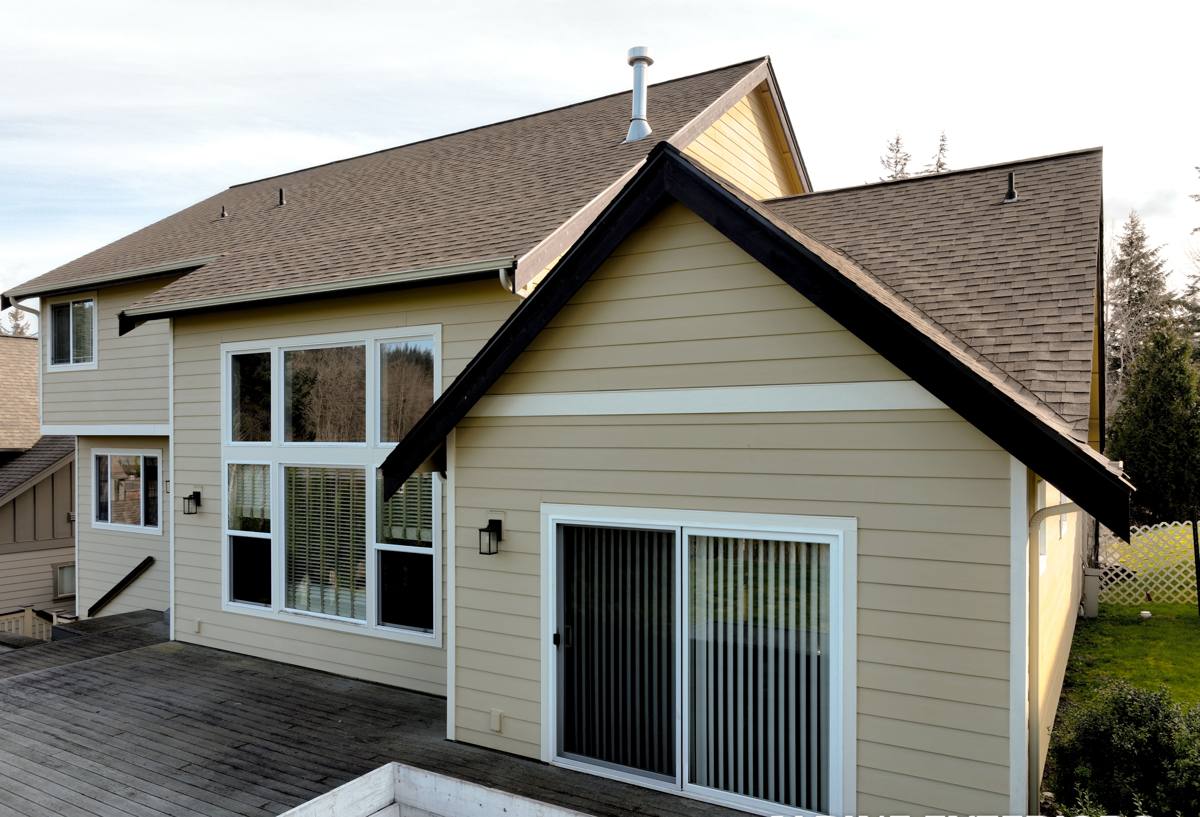
What Salt Air, Driving Rain, and Moss Season Actually Do to a Window
Salt Air
Airborne salt is corrosive to unprotected metal. Over years, it can pit and weaken aluminum window components, corrode fasteners, and degrade the finish on lower-grade hardware — latches, hinges, and balance mechanisms that weren't specified for a marine environment. The damage is gradual and easy to miss until a window won't latch properly or a screen frame crumbles at the corners.
Driving Rain
Blaine Harbor gets weather that doesn't just fall straight down — it's pushed sideways by wind coming off the water. That matters because a window opening is only as good as its ability to shed water that's being forced upward and sideways against the wall, not just water running down the siding. Flashing details that would be adequate on a calm, inland elevation aren't always enough here.
Moss Season
Whatcom County's long wet stretch keeps exterior surfaces damp for months at a time. Moss and algae don't just grow on roofs — they take hold on north-facing trim, sills, and anywhere water sits instead of draining. Constant moisture against wood trim or an improperly sealed frame is what leads to slow rot around a window opening, often hidden behind trim until it's advanced.
Signs a Blaine Harbor Home May Need Window Work
- Soft or spongy trim or sill wood when pressed with a thumb
- Visible moss, algae, or black staining collecting at the bottom corners of a window
- Corroded or stiff hardware — latches that are hard to turn, cranks that grind
- Fogging or moisture between panes of a double-pane unit (a sign the seal has failed)
- Drafts or a noticeable temperature difference near the window on windy days
- Paint or caulk that's cracked, peeling, or pulling away from the frame
- Visible daylight or gaps around the frame from inside
What a Correct Window Installation Involves Here
Flashing and Water Management First
The window itself is often not where a failure starts — the flashing around it is. A correct installation builds in a sloped sill pan so any water that gets past the exterior seal drains back out instead of pooling against the framing, plus properly lapped flashing tape integrated with the house wrap so water is always directed outward and down, never behind the siding. On a wind-exposed harbor lot, this detail matters more than the brand of window going in.
Sealing and Insulation
Gaps between the window frame and the rough opening need to be sealed with a material that stays flexible through temperature swings and doesn't compress or crack over a few seasons — not just stuffed with fiberglass and caulked over. Poor air sealing shows up as drafts and higher heating costs; poor water sealing shows up as rot you don't see until the trim is removed.
Hardware and Fasteners
In a salt-air setting, the fasteners and hardware matter as much as the window frame. We use corrosion-resistant fasteners and hardware rated for coastal exposure rather than standard-grade parts, since it's the small metal components that tend to fail first this close to the water.
Choosing Materials for a Coastal Whatcom County Home
There's no single "best" window material — the right choice depends on your home's exposure, your maintenance appetite, and your budget. Here's how the common options actually perform in a salt air, high-moisture setting like Blaine Harbor:
| Material | Coastal Performance | Maintenance | Trade-offs |
|---|---|---|---|
| Vinyl | Good — won't corrode or rot | Low | Frame color and stiffness can be affected by extreme temperature swings; fewer high-end finish options |
| Fiberglass | Very good — stable and corrosion-resistant | Low to moderate | Higher upfront cost than vinyl |
| Wood | Requires diligent upkeep in this climate | High | Best appearance for some homes, but exposed wood needs consistent repainting/sealing to resist the moss-season moisture cycle |
| Wood-clad (wood interior, aluminum or vinyl exterior) | Good if the cladding and flashing are detailed correctly | Moderate | Cladding seams and end caps are common failure points if not sealed properly at install |
| Aluminum | Vulnerable to salt-air corrosion unless marine-grade | Moderate | Standard-grade aluminum hardware is one of the first things to show pitting near the water |
For most homes right at Blaine Harbor, we steer clients toward vinyl or fiberglass for the field of the house, and reserve wood or wood-clad for areas that are sheltered from direct weather — porches, covered entries, or upper stories set back from the prevailing wind. That's a maintenance and moisture-behavior call, not a statement that wood windows are a bad product; they just ask more of the homeowner in this specific exposure.
How Our Installation Process Works
- On-site assessment — we look at each opening individually, checking existing flashing, sill condition, and any signs of hidden moisture damage before quoting anything.
- Measurement and material selection — exact sizing plus a frank conversation about which material and glass package fits your exposure and budget.
- Removal and opening inspection — old windows come out carefully so we can inspect the rough opening and sheathing for rot or prior water intrusion before anything new goes in.
- Repair as needed — any soft framing or damaged sheathing gets addressed before the new window goes in, not covered over.
- Sill pan and flashing installation — sloped drainage and properly lapped flashing tape, integrated with the existing water-resistive barrier.
- Window installation and leveling — set, shimmed, and fastened to manufacturer spec with corrosion-resistant hardware.
- Air sealing and insulation — perimeter gaps sealed with a flexible, long-lasting sealant.
- Exterior trim and finish sealing — trim reinstalled or replaced and caulked at all joints exposed to weather.
- Final walkthrough — operation, locks, and seals checked with you before we consider the job finished.
What Affects the Cost
| Cost Factor | Why It Matters |
|---|---|
| Window material and glass package | Vinyl runs lower upfront than fiberglass or wood-clad; upgraded glass (low-E, additional panes) adds cost but improves comfort and energy performance |
| Condition of the existing opening | Hidden rot or prior water damage found during removal adds repair work before the new window can go in |
| Number and size of openings | Larger units and more openings mean more material, labor, and flashing work |
| Access and story height | Upper-story or hard-to-access windows take longer and may require additional equipment |
| Trim and finish work | Full trim replacement versus reusing existing trim changes both material and labor cost |
We give straightforward, itemized estimates rather than a flat "per window" number, since exposure and condition vary so much even within the same street in Blaine Harbor.
Why Local Experience in Blaine Harbor Matters
A crew that has worked this specific stretch of Whatcom County waterfront already knows which elevations take the worst of the wind-driven rain, what the moss-season moisture cycle does to trim and sills over a few years, and which flashing details actually hold up here versus what's adequate elsewhere in the county. That's not something you get from a manufacturer's install manual — it comes from having pulled apart enough failed installations near this water to know exactly where they went wrong. It also means someone who understands your home's exposure without needing it explained to them, and who will size the job to how your house actually sits relative to the harbor, not to a generic checklist.
Keeping Coastal Windows Performing Long-Term
- Rinse salt residue off frames and glass periodically, especially after storms
- Keep an eye on moss or algae buildup at sills and clean it before it holds moisture against the frame
- Check and re-caulk exterior joints every couple of years, since coastal UV and moisture cycle sealants faster than inland
- Operate hardware regularly — latches and cranks that sit unused are more prone to seizing from corrosion
- Watch for soft trim or paint failure as an early warning sign, not a cosmetic issue to defer
If your Blaine Harbor home has windows showing any of the wear signs above, or you're planning ahead for a remodel, we're happy to take a look and give you a straightforward, no-pressure estimate — just fill out the form below.