 Blaine Siding
 Storm Damage in Cherry Point: What Makes This Stretch of Whatcom County Different
Cherry Point sits out on the water, exposed to weather that doesn't hit the same way it hits homes further inland in Whatcom County. Wind comes off the Strait of Georgia and Boundary Bay with little to slow it down, driving rain sideways into roof edges, and salt-laden air settles on every exposed surface year-round. Add a long, wet moss season that runs from fall through spring, and you've got a roof environment that ages faster and fails differently than a typical suburban roof forty minutes south.
When a storm rolls through, the damage isn't always obvious from the ground. A few lifted shingles near a ridge, a soft spot where wind-driven rain found a seam, or granule loss that won't show up until the next heavy rain finds a new path inside — these are common patterns we see specifically in this area, not generic storm damage talking points. Repairing a Cherry Point roof correctly means understanding those patterns, not just patching what's visible.
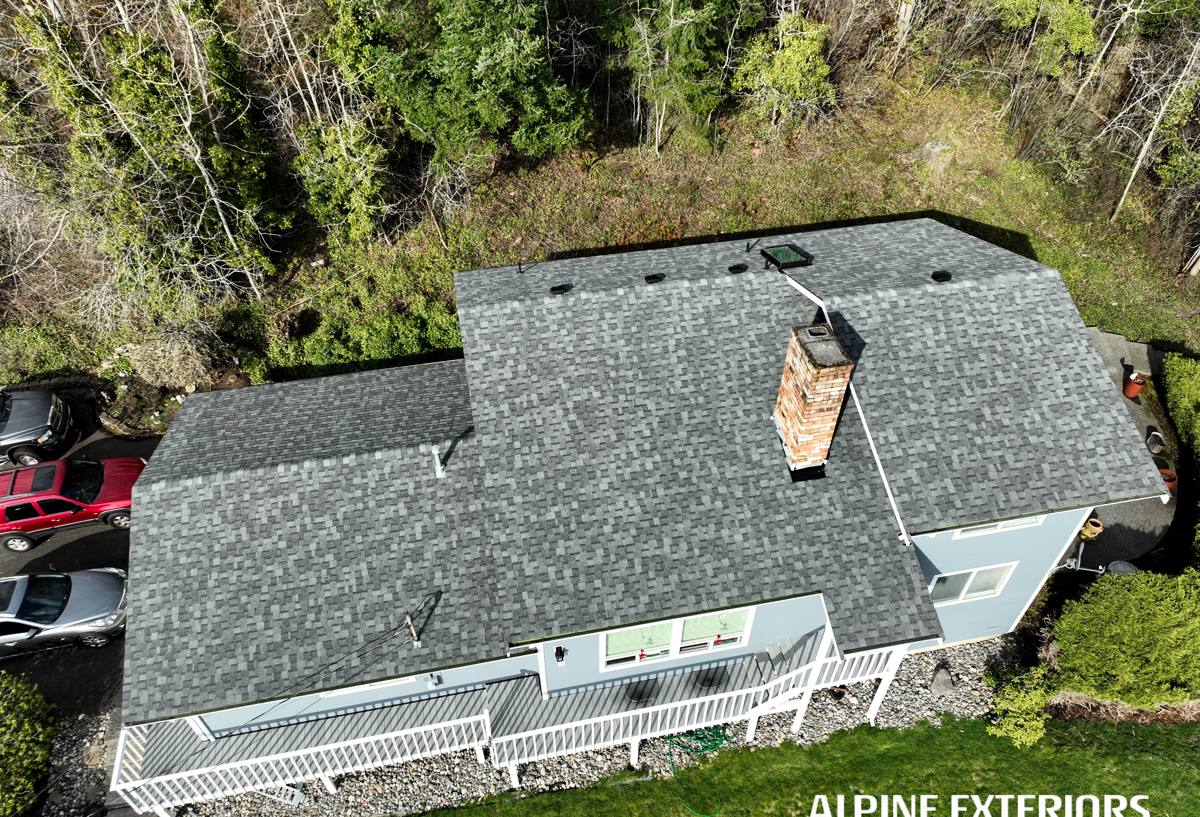
What Counts as Storm Damage (and What Doesn't)
Not every roof problem after a windstorm is storm damage in the way an insurance adjuster or a contractor means it. It matters to sort this out early, because it changes both the repair approach and, often, whether a claim makes sense.
- Wind damage: Shingles creased, lifted, or torn loose, usually starting at the roof's edges, ridges, and any place the wind can get underneath a tab.
- Impact damage: Bruising or punctures from falling branches or debris carried by wind — common with the mature trees found around many Cherry Point properties.
- Water intrusion: Staining, soft decking, or interior leaks that show up after driving rain gets past a compromised seal, flashing, or vent boot.
- Pre-existing wear mistaken for storm damage: Moss undermining shingle edges, UV-brittled sealant, or years of salt exposure thinning granule coverage. A storm can expose this, but it didn't cause it.
An honest inspection separates these categories out loud, in writing, so you know exactly what you're paying to fix and why.
Wind, Salt Air, and Moss: The Three-Part Strain on Cherry Point Roofs
Wind Exposure
Open water exposure means gusts here can exceed what a roof's rated wind resistance was designed around, especially on older installations. Repeated flexing during storms loosens fasteners and breaks the adhesive seal between shingle tabs well before any single storm looks dramatic enough to have caused it.
Salt Air Corrosion
Metal components take the brunt of this — flashing, nail heads, vent caps, and gutter hardware corrode faster near the water than they do even a few miles inland. Corroded flashing is one of the most common hidden causes of a "mystery leak" that only shows up during a storm, because the metal has quietly stopped doing its job long before it visibly fails.
Moss and Moisture
Western Washington's wet season keeps roofs damp for extended stretches, and moss doesn't just sit on top — its root structure lifts shingle edges and holds moisture against the roof deck. A roof carrying moss going into a storm is already weakened at exactly the points where wind-driven rain will try to get in.
What a Correct Storm Damage Repair Actually Involves
A patch job that only addresses the visible symptom tends to fail again in the next storm season. A correct repair works through the roof system in order:
- Deck inspection: Confirm the plywood or OSB underneath hasn't gone soft from water that got in before the surface damage was noticed.
- Underlayment check: The waterproofing layer beneath the shingles is what actually stops most leaks — if it's compromised, replacing shingles alone won't fix the problem.
- Flashing and penetrations: Chimneys, vents, and roof-to-wall transitions are checked and re-sealed or replaced, since these are the most common failure points in wind-driven rain.
- Shingle or roofing material repair: Matching existing material where possible, replacing full courses rather than spot-patching where wind uplift has affected a broader area.
- Gutter and drainage review: Storm damage often overlaps with debris-clogged gutters, which back water up under the roof edge if left unaddressed.
Skipping any one of these steps is how homeowners end up calling back the following winter for a "new" leak that's really the same unresolved issue.
Our Process From Call to Completed Repair
We keep this straightforward because storm damage is stressful enough without a confusing process on top of it.
- Initial call and scheduling: We ask what you're seeing and get a visit on the calendar, prioritizing active leaks.
- On-site inspection: We get on the roof (weather permitting) and check the attic or ceiling from inside where relevant, documenting everything with photos.
- Written scope and estimate: You get a plain-language explanation of what's damaged, what's pre-existing wear, and what it will cost to fix — no vague line items.
- Repair work: Scheduled around weather windows, since installing or sealing a roof in active rain does more harm than good.
- Final walkthrough: We confirm the fix with you before calling the job done.
Repair vs. Replacement: How We Help You Decide
Not every storm-damaged roof needs a full replacement, but pretending an aging roof just needs one more patch isn't honest either. Here's how we walk through that decision with homeowners:
| Factor | Leans Toward Repair | Leans Toward Replacement |
|---|---|---|
| Roof age | Under 12-15 years | Nearing or past manufacturer lifespan |
| Extent of damage | Isolated to one section or slope | Spread across multiple slopes |
| Deck condition | Solid, dry decking underneath | Soft spots or rot found during inspection |
| Moss/moisture history | Minor, recently maintained | Long-term moss growth affecting multiple areas |
| Underlayment condition | Intact where inspected | Brittle, torn, or failing broadly |
We'll never push a replacement a roof doesn't need, and we'll never recommend a repair when the underlying material is too far gone to hold one reliably — either approach costs you more down the road.
Insurance Claims and Storm Damage
Many storm repairs in this area involve a homeowner's insurance claim, and we work alongside that process rather than around it. That means documenting damage thoroughly at the first inspection, providing a clear written estimate an adjuster can review, and being straightforward about what is and isn't storm-related — because misrepresenting pre-existing wear as storm damage can jeopardize a claim rather than help it. We're not a public adjuster and don't promise claim outcomes, but we aim to make the roofing side of the process as clean as possible.
Choosing a Crew That Already Works Cherry Point
A roofing crew that mostly works inland and only occasionally comes out to the water can miss things that are routine to a crew that's out here regularly. Knowing which flashing details tend to corrode first in this air, which slopes take the worst of the prevailing wind, and how aggressively moss grows on a shaded north-facing section near the trees isn't guesswork — it's pattern recognition built from being out here repeatedly, in every season Whatcom County throws at a roof.
That familiarity also shows up in smaller ways: knowing which weather windows are realistic for scheduling repair work near the coast, and not underestimating how fast conditions change out on the point compared to a few miles inland.
A Homeowner Checklist After a Storm
If you've just been through a windstorm or a heavy rain event, here's what's worth checking (safely, from the ground) before calling anyone:
- Look for shingles or roofing debris in the yard or gutters — a sign of wind uplift.
- Check the attic or top-floor ceilings for new stains, damp spots, or musty odor.
- Note any sagging or visibly disturbed sections of the roofline from the ground.
- Check gutters and downspouts for clogging or separation from the fascia.
- Photograph anything you notice, with a date, in case it's needed for an insurance claim later.
- Avoid getting on the roof yourself after a storm — wet, damaged roofing is a real fall hazard.
Small issues caught early are far cheaper and simpler to fix than damage that's had a full wet season to work its way into the deck and structure underneath.
If you're dealing with storm damage on a Cherry Point roof, or just want an honest look at where things stand before the next storm season, we're glad to come take a look. The estimate is free, there's no pressure, and you'll get a straight answer either way — just fill out the form below to get started.