 Blaine Siding
 Point Roberts Puts Siding Through a Different Kind of Wear
Point Roberts sits on its own peninsula, surrounded by water on three sides and exposed to open marine air off Boundary Bay and the Strait of Georgia. That geography is part of what makes the community special, but it's hard on the outside of a house. Homes here take on salt-laden wind, long stretches of wind-driven rain, and — thanks to heavy tree cover and shaded lots common throughout this part of Whatcom County — some of the longest moss seasons in the region. Siding that would hold up fine in a drier, more sheltered part of Blaine can start failing years early out here.
This page is about one job done right for this one area: replacing siding on a Point Roberts home with a product and installation process built for what this specific climate actually does to a wall system.
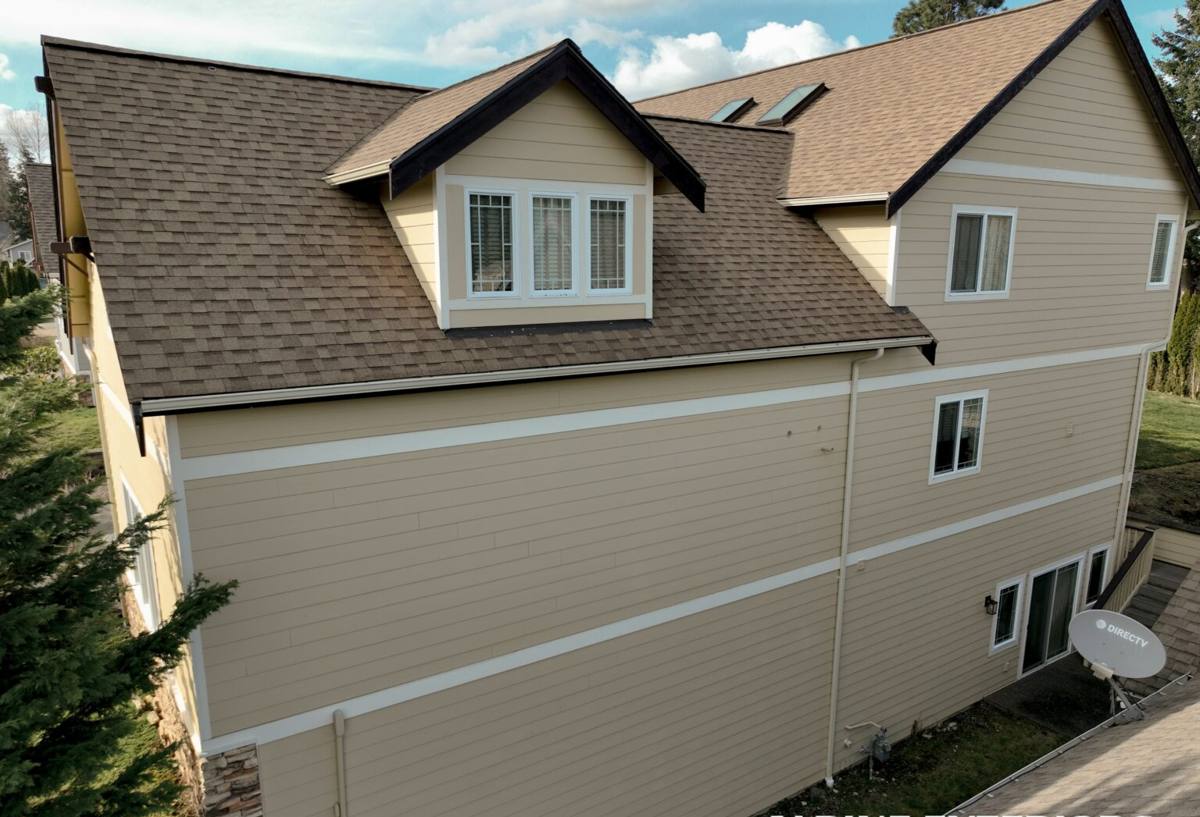
What Salt Air, Rain, and Moss Actually Do to Siding
Salt air
Airborne salt doesn't just sit on the surface — it works into fastener heads, seams, and any spot where a factory finish has started to break down. Over time it accelerates corrosion of exposed metal fasteners and speeds up the breakdown of paint film, especially on the sides of a house that face open water or take wind directly.
Wind-driven rain
Rain that comes in sideways behaves differently than rain that falls straight down. It gets pushed up under laps, into corner joints, and around windows and doors — the exact spots where a siding job is either flashed and lapped correctly or isn't. A system that's only built to shed vertical rainfall isn't enough here.
Moss and shade
Shaded, tree-lined lots stay damp longer after every rain. Moss and algae take hold on any surface that retains moisture, and on wood-based or fiberboard products that organic growth can trap water against the substrate long enough to start real decay. Even where it doesn't cause structural damage, moss staining makes a home look neglected within a couple of years of a repaint.
Signs Your Point Roberts Home Needs Siding Replacement
- Soft, spongy, or crumbling spots when you press on the siding, especially near the bottom courses or under windows
- Paint that's chalking, peeling, or needing repainted more often than it used to
- Persistent moss or dark streaking that comes back within months of cleaning
- Boards that are warping, buckling, or separating at the seams
- Rust streaks or corroded fastener heads showing through the finish
- Gaps opening up around trim, corners, or window and door casings
- Rising heating bills that suggest the wall assembly is no longer doing its job
- Musty smells, bubbling paint, or soft drywall on interior walls that back up to exterior siding
One or two of these on their own might mean a repair. Several at once, especially on the weather-facing sides of the house, usually means the siding has reached the end of its useful life.
Why We Install Only James Hardie Fiber Cement Here
We standardized on James Hardie fiber cement and don't install vinyl, LP SmartSide, or other engineered wood products, and Point Roberts is exactly the kind of exposure that explains why. Fiber cement is non-combustible and dimensionally stable, so it doesn't swell, cup, or delaminate the way wood-based sidings can when they take on repeated moisture. Hardie's ColorPlus factory finish is baked on under controlled conditions rather than field-applied, which means it holds color and resists the chalking and fading that salt air and UV speed up. And because Hardie engineers its HZ5 product line specifically for climates with prolonged moisture exposure, the plank itself is built for conditions like this rather than adapted after the fact.
That doesn't mean Hardie is maintenance-free or immune to moss — nothing installed outdoors in this climate is. It means the material itself gives a correctly installed system a much longer runway before moisture becomes a structural problem, and a stronger, transferable warranty behind it.
How the Main Siding Options Compare in This Climate
| Factor | James Hardie Fiber Cement | Wood-Based / Engineered Wood Siding | Vinyl Siding |
|---|---|---|---|
| Moisture tolerance | Dimensionally stable; engineered HZ5 lines built for wet climates | Absorbs moisture at cut edges and damaged coating; prone to swelling | Doesn't absorb water, but traps moisture behind panel if installed poorly |
| Moss / algae resistance | Non-organic substrate resists fungal decay from surface growth | Wood fiber content can feed rot once moisture gets in | Growth sits on the surface but panel itself doesn't decay |
| Fastener/hardware exposure | Standard corrosion-resistant fasteners per Hardie spec | Similar fastener needs, less forgiving of moisture around them | Fewer exposed fasteners, but panels can warp or crack in wind |
| Finish longevity in salt air | Factory-baked ColorPlus finish, long fade/chalk resistance | Field-applied paint/stain, shorter repaint cycle in marine exposure | Color molded through panel, but can become brittle over time |
| Fire performance | Non-combustible | Combustible | Combustible, can deform under heat |
What a Correct Siding Replacement Actually Involves
Replacing siding is more than swapping old boards for new ones. The work that matters most on a Point Roberts home happens underneath what you can see:
- Full tear-off of the old siding so the sheathing and framing can actually be inspected, not just covered over
- Checking for hidden rot or water damage at the sheathing, especially around old window and door penetrations
- Installing or repairing the weather-resistive barrier so it laps correctly, shingle-style, from bottom to top
- Correct flashing at every window, door, and penetration — the single most common point of failure in wind-driven rain
- Proper clearances from grade, roof lines, and decks, per Hardie's installation specifications, so the bottom edge of the siding isn't sitting in standing moisture
- Correct fastener pattern and spacing, which affects both wind resistance and long-term warranty coverage
- Sealant only where Hardie's spec calls for it — over-caulking a fiber cement installation can trap moisture instead of shedding it
Skipping any one of these doesn't necessarily show up right away. It shows up in three to five years, as trapped moisture, rot at the sheathing, or premature finish failure — problems that cost far more to fix than they would have to do correctly the first time.
Our Process for a Point Roberts Job
Point Roberts is geographically part of Whatcom County but functionally separated from it — reaching the peninsula by road means crossing an international border, and reaching it back out means crossing again. That's not a complication we work around after the fact; it's something we plan for from the first estimate.
- On-site assessment — we look at existing siding condition, sheathing exposure, sun/shade pattern, and which elevations take the worst weather
- Written estimate — scope, product line, color, and a realistic timeline that accounts for material delivery and crew scheduling to the peninsula
- Scheduling — materials staged and crew logistics planned in advance, rather than improvised the morning of, so border crossings don't turn into project delays
- Tear-off and haul-away of the old siding, with sheathing inspected and any damage addressed before new siding goes up
- Installation to Hardie's written specifications — flashing, clearances, fastening, and finish work done to spec, not shortcuts
- Final walkthrough so you know exactly what was done and what maintenance, if any, it needs going forward
Maintenance After Installation
A correctly installed Hardie system in this climate still benefits from basic upkeep:
- Rinse salt residue and organic buildup off the siding once or twice a year, especially on water-facing walls
- Keep tree branches and shrubs trimmed back so shaded walls get more airflow and dry out faster after rain
- Check caulking at trim and penetrations annually and have any gaps resealed before winter rains set in
- Address any impact damage — from branches, equipment, or debris — promptly rather than letting it sit exposed
Why Hiring a Crew That Already Works in Point Roberts Matters
A contractor unfamiliar with Point Roberts can plan a job the same way they'd plan any siding replacement in Blaine proper — and run into trouble the first time a material delivery or crew change gets held up at the border. A crew that already works this peninsula builds that reality into the schedule from day one, understands how exposed each side of a typical lot is to wind and salt air, and isn't learning the local moss-and-moisture pattern on your house for the first time. That familiarity shows up as fewer surprises mid-project and a siding system that's actually specified for the conditions it has to survive.
If your Point Roberts home is due for new siding, we'd be glad to take a look and give you a straightforward, no-pressure estimate — what we see, what we'd recommend, and why. There's a form below to get started.