 Blaine Siding
 Building New in Sandy Point? The Windows Are a Structural Decision, Not Just a Finish Choice
If you're framing a new home in Sandy Point, the windows you choose and how they're installed will affect that house for the next 30-plus years. New-construction windows are set into the rough opening with a nailing fin and integrated into the home's water-resistive barrier before siding ever goes on. That means the installation happens once, it happens early, and it's very difficult to correct later without removing siding. Get it right at this stage and you've built in decades of protection. Get it wrong, and the mistake gets buried behind trim and cladding until it shows up as a stain, a soft spot, or a mold smell years down the road.
Sandy Point sits right on the water in Whatcom County, and that location is exactly why this stage deserves more attention than it gets on a typical inland build.
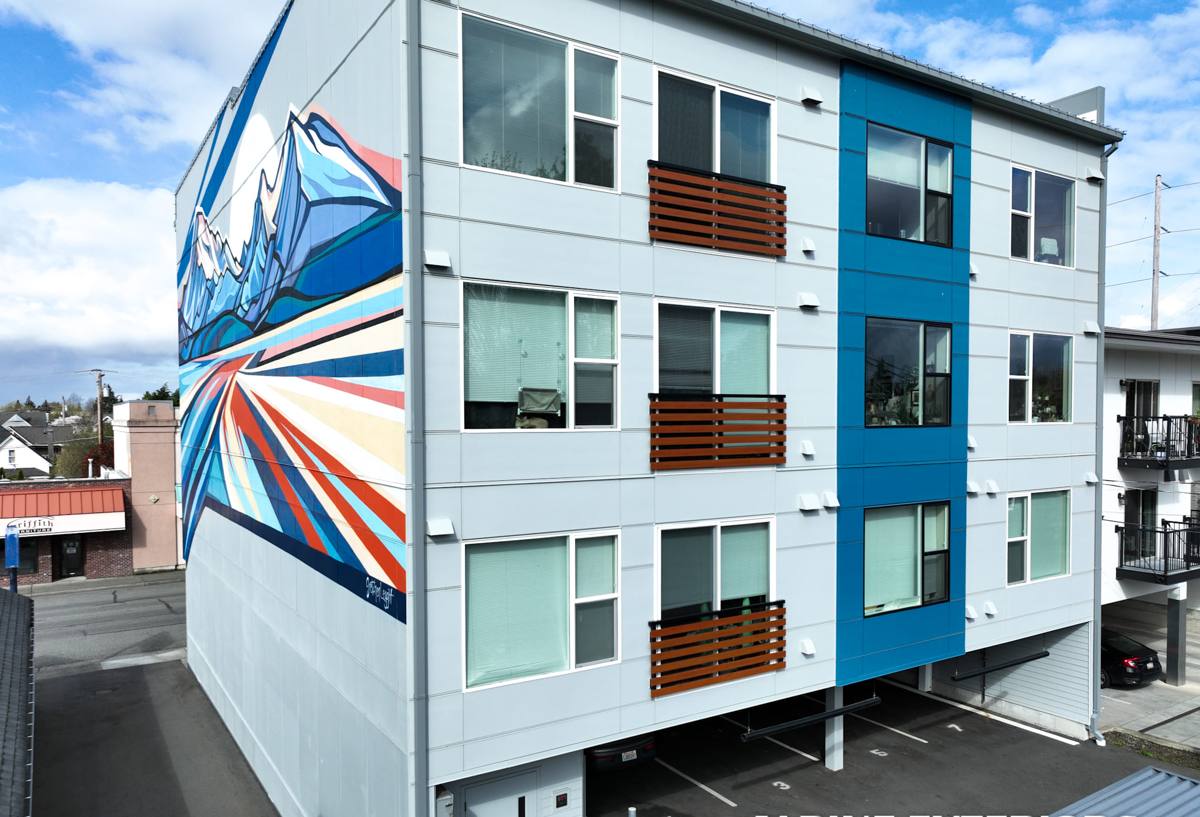
What Blaine's Coastal Climate Demands from New-Construction Windows
Whatcom County's marine climate is generally mild, but Sandy Point's direct waterfront exposure adds three stressors that inland Blaine homes don't deal with in the same way.
Salt Air
Salt-laden air corrodes unprotected fasteners, degrades certain finishes faster than manufacturers' inland test data predicts, and accelerates wear on hardware like hinges, locks, and cranks. Frame material and hardware coatings matter more here than they would a few miles inland.
Driving Rain
Wind off the Strait of Georgia doesn't just drop rain on a window — it drives it sideways and forces it against the glazing and frame under pressure. A window that would perform fine in a calm rain event can leak under wind-driven rain if the flashing details weren't done correctly. This is the single biggest factor in how we sequence flashing on Sandy Point builds.
A Long Moss Season
Cool, damp, and shaded conditions for much of the year mean moss and algae growth on sills, trim, and anywhere water sits instead of shedding. Beyond the cosmetic issue, sustained moisture against wood trim or poorly sealed sills shortens the life of both the window and the surrounding structure.
None of this means Sandy Point can't have beautiful, low-maintenance windows — it means the product selection and the installation sequence both need to account for the site, not just the framing plan.
New-Construction vs. Replacement Windows — Why the Distinction Matters Here
These two window types solve different problems, and using the wrong one on a new build creates weak points that are hard to see until they fail.
| Factor | New-Construction Window | Replacement (Insert) Window |
|---|---|---|
| How it attaches | Nailing fin fastens to sheathing, fully integrated with the WRB and flashing | Fits inside the existing frame, relies on the old frame for structure |
| Best used for | New builds, additions, or full wall openings down to the studs | Swapping an existing window without disturbing siding |
| Water management | Flashing is built in layers as part of the wall assembly | Depends on the condition of the original opening |
| Long-term coastal performance | Strong when flashed correctly from the start | Only as good as what's underneath it |
On a new build, there's no reason to compromise — the wall is open, so the flashing and window integration can be done properly from the ground up.
Frame Material Choices for Salt-Air Exposure
We don't push a single "best" material on every job — the right choice depends on your budget, your architectural style, and how much upkeep you want to take on. What we do insist on is being honest about the trade-offs specific to a waterfront lot.
- Vinyl: Cost-effective, doesn't corrode, and handles salt air well. Quality varies significantly between manufacturers, so we stick with lines that hold up to UV and moisture cycling rather than the cheapest option available.
- Fiberglass: More dimensionally stable than vinyl across temperature swings, resists corrosion, and generally carries a stronger warranty structure. Higher upfront cost.
- Aluminum-clad wood: Attractive interior wood look with an exterior shell that resists weather, but the cladding and any exposed fasteners need to be genuinely corrosion-resistant this close to the water — not just rated for general exterior use.
- Bare wood: We're honest with clients that unclad wood exteriors carry the highest maintenance burden in a salt-air, high-moss environment. It can be done, but it needs a real maintenance commitment.
Flashing and Water Management — Where New-Construction Windows Succeed or Fail
Ask any contractor about window failures and the conversation almost always comes back to flashing, not the window itself. The window is a manufactured product tested to a standard. What happens around it — how water is directed away from the rough opening — is on-site craftsmanship, and it's where shortcuts hide.
Our sequence on Sandy Point builds
- Rough opening is checked for square, level, and correct dimensions before the window ever arrives on site.
- Sill pan flashing is installed first, sloped to shed any water that gets past the window back outward, never inward.
- Window is set, shimmed level and plumb, and fastened per the manufacturer's schedule — this affects the warranty, so it's not a step we skip or guess on.
- Side and head flashing is layered shingle-style — each piece overlapping the one below it — so water always moves downward and outward, never behind the layer beneath.
- Housewrap or WRB is integrated back over the flashing, maintaining the drainage plane for the whole wall assembly.
- Interior and exterior sealant is applied only where it should be — sealing the wrong gap can trap water instead of releasing it, which is a mistake we see on rushed installs.
Given how much driving rain this stretch of coastline sees, we don't treat any one of these steps as optional, regardless of how tight the framing schedule is.
Choosing a Crew That Already Works in Sandy Point
A crew that mostly works inland Whatcom County jobs isn't wrong about windows in general — they just haven't had to solve for wind-driven rain off open water on a regular basis. That experience shows up in small decisions: how far the flashing extends, which sealants hold up to salt exposure, how sills are detailed to shed water instead of holding it, and how hardware is specified so it doesn't corrode within a few seasons.
When you're vetting a contractor for a Sandy Point build, it's fair to ask directly how they handle flashing sequencing on waterfront lots, whether they've worked in the neighborhood before, and how they select fasteners and hardware for salt exposure. A contractor who's comfortable answering in detail has done this before; vague answers are worth a second opinion.
What Drives the Cost of New-Construction Windows
Every new build is different, so we don't quote from a chart — but these are the factors that move the number up or down, and understanding them helps you budget realistically before we ever measure your openings.
| Factor | Why it matters |
|---|---|
| Frame material | Vinyl runs lower than fiberglass or clad-wood; material choice is usually the biggest line-item swing |
| Number and size of openings | More glass and larger units mean more material and labor |
| Glazing package | Double vs. triple pane, and coatings for solar control or added weather resistance, add cost |
| Flashing complexity | Larger openings, bay or corner configurations, and higher wall sections take more time to detail correctly |
| Site access | Waterfront lots with limited staging area or scaffolding needs can affect labor time |
| Hardware and finish upgrades | Corrosion-resistant hardware and premium finishes cost more but matter more in this location |
We'll walk your plans with you and give you real numbers tied to your actual openings and material choices, not a generic per-window estimate that doesn't reflect a coastal build.
A Pre-Drywall Checklist for New-Construction Window Installs
Whether we're doing your install or you're reviewing another crew's work before drywall closes the wall up, these are worth confirming on every opening:
- Rough openings are square, level, and correctly sized for the specified window unit
- Sill pan flashing is present and sloped outward, not flat or reverse-sloped
- Flashing is layered shingle-style with no reverse laps that could trap water
- Window is shimmed and fastened per the manufacturer's installation instructions, not "close enough"
- WRB/housewrap is properly lapped back over the flashing to maintain the drainage plane
- Sealant is applied only at the specified points, with weep paths left open where required
- Hardware and fasteners are corrosion-resistant, appropriate for a salt-air environment
- Interior and exterior photos or notes exist documenting the flashing before it's covered
If a crew can't walk you through each of these on your own build, it's worth pausing before the wall closes up — this is the one point in construction where problems are cheap to fix and, after drywall and siding go on, expensive to find.
If you're planning new construction in Sandy Point and want windows detailed correctly for this exact stretch of coastline, we're happy to walk your plans, answer questions about material and flashing choices, and give you a straightforward, no-pressure estimate. Use the form below to get started.