 Blaine Siding
 Roof Replacement for Sumas Homes Near Blaine
Homes in the Sumas area near Blaine sit in a tough spot for roofing. You're close enough to the water to catch salt-laden air off the Strait, and far enough into Whatcom County's marine climate to get long stretches of driving rain followed by weeks of damp, shaded conditions that never quite dry out. That combination is hard on a roof in ways that don't show up on a typical inspection checklist from a contractor who mostly works inland or south of here. We've replaced roofs throughout this corridor for years, and the failures we see are consistent: fasteners corroding faster than the shingle warranty assumes, moss working into laps and seams, and ventilation that was adequate for a drier climate but isn't cutting it here.
A roof replacement in this area isn't just "tear off and reshingle." It's an opportunity to fix the things that caused the old roof to fail early in the first place, so the new one actually reaches its expected lifespan instead of falling short of it.
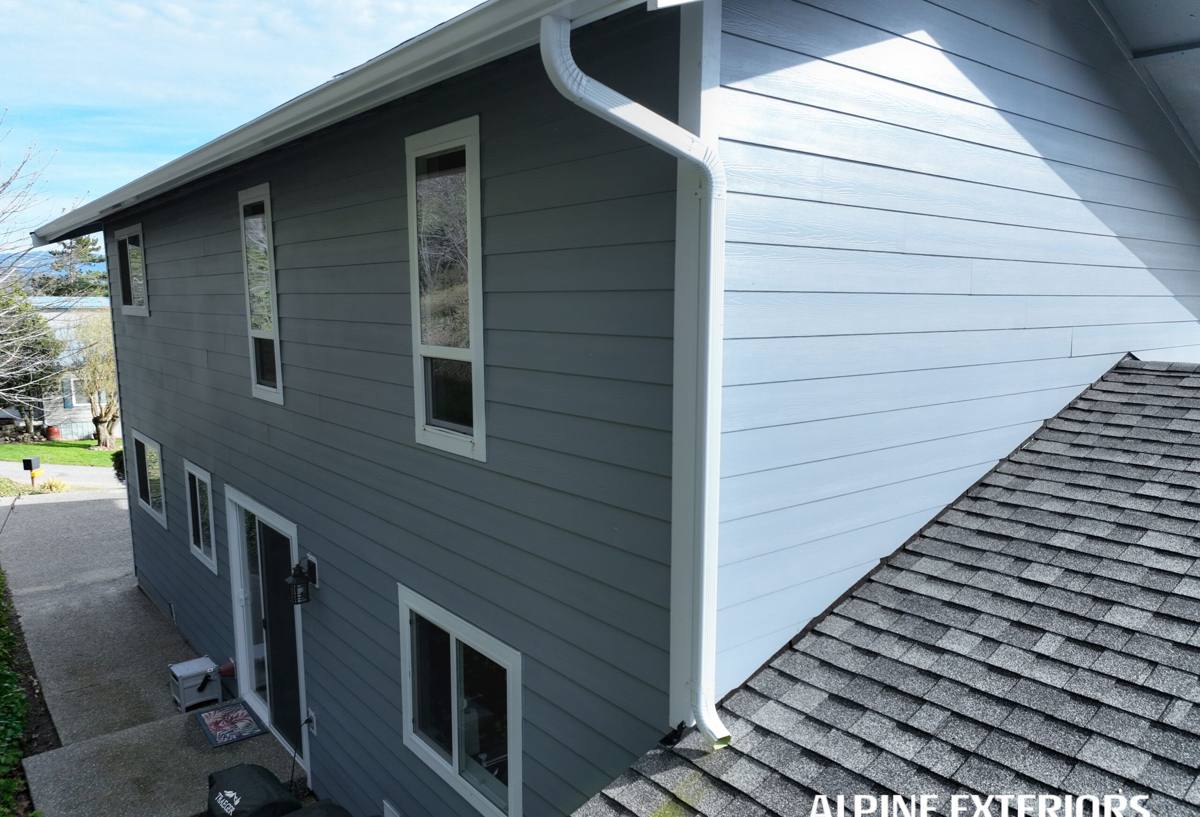
What Sumas' Climate Actually Does to a Roof
Salt Air and Metal Components
Proximity to the water means airborne salt settles on every exposed surface, including your roof. Standard steel fasteners, flashing, and vent components corrode faster here than they would twenty or thirty miles inland. Once a nail head starts rusting, it's only a matter of time before it backs out or the shingle around it loses its grip. This is one of the most common causes of leaks we find on roofs that are otherwise still in decent shape.
Driving Rain and Wind-Driven Water
Storms coming off the water don't just drop rain straight down — wind pushes it sideways and up under laps, flashing, and vents that would stay dry in a calmer climate. A roof detailed for vertical rain only will leak here eventually, usually at the exact spots you'd expect: valleys, wall-to-roof transitions, and anywhere flashing was cut short to save time.
Moss, Shade, and Slow Drying
Tree cover and persistent overcast conditions mean roof surfaces in shaded sections can stay damp for days after a storm. That's exactly what moss needs to establish. Once moss gets a foothold, it lifts shingle edges, holds moisture against the roof deck, and accelerates granule loss. A roof that looks fine from the ground can already have moss working under the surface in north-facing or tree-shaded sections.
Signs a Sumas-Area Roof Needs Replacing, Not Patching
- Granules collecting in gutters or at downspout outlets, especially after the first hard rain of the season
- Moss or dark streaking concentrated on shaded slopes or under overhanging trees
- Rusted or backed-out fasteners visible at ridge caps, flashing, or exposed nail heads
- Soft spots or slight sagging when walked, which usually means deck damage underneath
- Daylight visible through the attic at roof penetrations, or damp insulation near vents and chimneys
- Repeated patch repairs in the same area over the last few years without the leak fully stopping
- Shingles curling, cupping, or cracking, particularly on slopes that get the most sun and wind exposure
If you're seeing two or more of these, patching is usually a short-term fix that costs more over time than a properly done replacement.
What a Correct Roof Replacement Includes Here
A roof replacement done right for this climate goes beyond swapping old shingles for new ones. The details below are what separate a roof that lasts from one that fails early.
Full Tear-Off and Deck Inspection
We don't roof over existing layers. A full tear-off lets us inspect the deck for rot, soft spots, or moisture damage that's been hidden under the old roofing — common in shaded sections or anywhere a leak has been slowly working for a while. Any damaged decking gets replaced before new roofing goes down; skipping this step just seals the problem back up.
Corrosion-Resistant Fasteners and Flashing
Given the salt exposure in this area, we use fasteners and flashing rated for coastal-adjacent conditions rather than the standard-grade hardware that's fine further inland. It costs a little more upfront and saves you a premature leak repair five or six years down the road.
Ice-and-Water Barrier at Vulnerable Points
Valleys, eaves, and roof-to-wall transitions get a self-adhering waterproof membrane underneath the shingles. This is the backup layer that keeps wind-driven rain from reaching the deck even if it gets past the shingles themselves — the single most effective defense against the driving rain this area sees regularly.
Ventilation Sized for a Wet Climate
Balanced intake and exhaust ventilation matters everywhere, but it matters more here because trapped moisture doesn't get a chance to dry out between storms. We check and correct attic ventilation as part of every replacement — undersized or blocked ventilation shortens shingle life and invites moisture problems regardless of how good the shingles themselves are.
Moss Prevention Built In
Where trees keep sections of the roof shaded, we install zinc or copper strips near the ridge. Rain washing over these strips carries trace metal ions down the roof surface, which discourages moss growth without any ongoing treatment on your part. It's a small addition during replacement that meaningfully reduces moss pressure over the roof's life.
Material Options and How They Hold Up Locally
| Material | Typical Lifespan Here | Notes for This Climate |
|---|---|---|
| Architectural asphalt shingle | 20-30 years | Good balance of cost and durability; needs proper ventilation and moss prevention to hit full lifespan in shaded, damp conditions |
| Standing seam metal | 40-50+ years | Sheds water and moss well due to steep, smooth surface; requires marine-grade coatings and fasteners near the water to avoid corrosion |
| Synthetic/composite shingle | 30-40 years | Resists moisture absorption better than wood alternatives; good option where moss and rot have been recurring problems |
| Cedar shake | 20-25 years with upkeep | Attractive but demands regular maintenance in a damp, shaded climate; moss and rot risk is higher without diligent care |
We'll talk through which of these fits your home, your budget, and how much maintenance you actually want to keep up with — there's no single right answer for every property.
Cost Factors for a Sumas-Area Roof Replacement
Every roof is different, but the following factors are what actually move the price on jobs in this area, more than the base material cost alone:
| Factor | Why It Matters Here |
|---|---|
| Deck condition | Hidden rot from long-term moisture exposure often isn't visible until tear-off, and replacing damaged decking adds material and labor |
| Roof pitch and access | Steeper roofs and limited access (trees, tight lot lines) slow down the job and affect safety setup |
| Flashing complexity | Homes with multiple valleys, dormers, or wall transitions need more detail work to keep wind-driven rain out |
| Ventilation upgrades | Correcting undersized or blocked ventilation adds a modest cost but prevents much larger problems later |
| Moss remediation | Heavily mossed roofs may need extra prep, and zinc/copper strip installation adds a small line item |
Get a written estimate that breaks these out rather than a single lump number — it's the only way to know what you're actually paying for.
Our Process for a Sumas-Area Roof Replacement
- On-site inspection — we walk the roof, check the attic, and identify current damage plus the conditions (shade, exposure, drainage) that caused it
- Written estimate — a clear breakdown of material, labor, and any deck repair or ventilation work, with no vague allowances
- Scheduling around weather — we plan tear-off days to minimize how long your deck is exposed, watching the forecast closely given how quickly conditions here can turn
- Tear-off and deck repair — full removal of old roofing, replacement of any compromised decking, and correction of ventilation issues found along the way
- Installation with climate-specific details — corrosion-resistant fasteners, ice-and-water membrane at vulnerable points, and moss-prevention strips where needed
- Final walkthrough — we go over the finished roof with you and explain any maintenance that will help it reach its full lifespan
Why Local Experience Matters for This Job
A roofing crew that mostly works drier, inland areas will often spec a roof the same way they would anywhere else — standard fasteners, standard ventilation, no moss consideration. That roof might perform fine for a few years before the local conditions catch up to it. Working in and around Blaine and Whatcom County regularly means we've already seen where those shortcuts show up as leaks, and we build the fixes in from the start rather than waiting for a callback. That's the difference between a roof that needs attention again in eight years and one that comfortably reaches its full expected life.
If your roof is showing wear, or you just want an honest read on how much life it has left, we're happy to come take a look. The estimate is free, there's no pressure to move forward, and you'll get a straight answer about what your roof actually needs.