 Blaine Siding
 New Roof Installation in Everson: Built for the Nooksack Lowlands
Everson sits inland along the Nooksack River, in the farm country of northern Whatcom County. It doesn't get the direct salt spray of a waterfront town, but it sits inside the same marine-influenced weather system that shapes roofing across this whole corner of Washington. Moist air moves up the valley from the Sound, rain comes in wind-driven more often than it falls straight down, and mild temperatures keep moss and algae growing on shaded roof planes for most of the year. A new roof installed without those specific loads in mind can look fine at first and still age faster than it should.
We install new roofs, and we handle siding, windows, and decks across the rest of our Whatcom County service area, from Blaine down through Everson and the surrounding valley towns. When a homeowner in Everson needs a new roof rather than another repair, the job is the same as anywhere else we work: build it correctly for sustained moisture and a long moss season, not just for a dry install day.
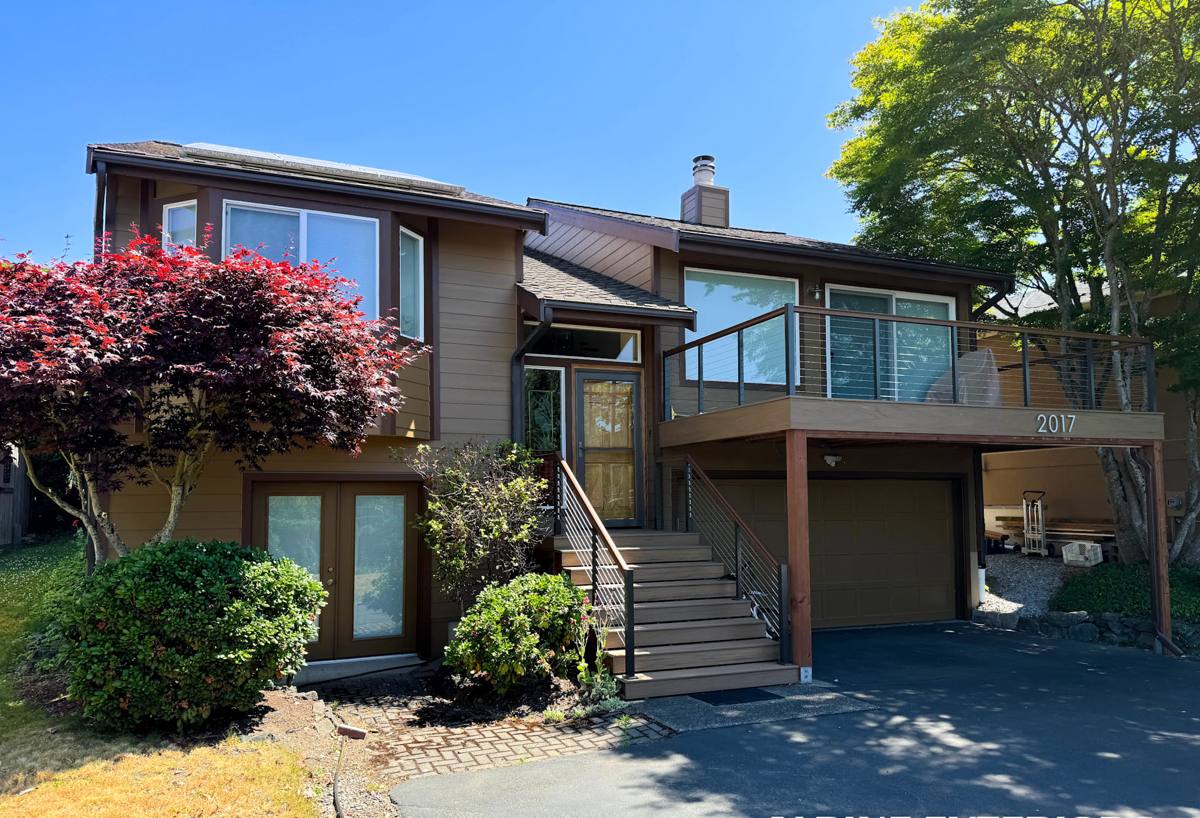
What Everson's Climate Demands From a New Roof
Sustained Moisture and Roof Deck Saturation
Farmland and river-bottom terrain around Everson tend to hold humidity a little longer than the more open, breezier lots closer to the water. That matters most during a tear-off, when the roof deck is exposed to the weather for the first time in years. A deck that's been sitting damp under old shingles for a long time can have soft spots or delamination that only becomes obvious once the old roofing comes off, and a new roof installed over decking that isn't sound is a problem waiting to resurface.
Wind-Driven Rain at Valleys and Transitions
Rain moving up the Nooksack valley rarely falls straight down. Wind pushes it sideways into roof valleys, around vent pipes and chimneys, and under any flashing that isn't lapped and sealed correctly. That's a heavier, more directional load than a simple annual rainfall number suggests, and it's exactly where a new roof will leak first if the underlayment and flashing details are treated as an afterthought instead of the foundation of the job.
A Long Moss Season
Mild temperatures and consistent moisture add up to a moss and algae season that can run most of the year on shaded or north-facing roof planes. Tree cover and farmland windbreaks around many Everson properties can keep certain roof sections damp longer than a more open, sun-exposed lot would. On a new roof, that means choosing materials and installation details that account for moss from day one rather than treating it as a maintenance problem to deal with later.
What a Correct New Roof Installation Actually Involves
A new roof is only as good as what happens before the new material goes down. Skipping steps underneath the visible roofing is one of the more common ways a twenty-five-year roof turns into a fifteen-year roof, and it rarely shows up until well after the crew has left.
- A full tear-off to bare decking, not an overlay, so hidden moisture damage doesn't get sealed under a new layer
- Decking inspection and replacement of any soft, delaminated, or rotted sheathing before new material goes on
- Underlayment rated for sustained moisture exposure, installed over the entire deck
- Ice-and-water shield at eaves, valleys, and other spots where water and debris tend to collect
- Properly lapped and sealed flashing at every valley, chimney, vent pipe, and roof-to-wall transition
- Attic and roof deck ventilation that lets moisture escape rather than getting trapped under the new roofing
- Fasteners and metal components chosen for corrosion resistance in a consistently damp climate
- A final walkthrough and cleanup, including a magnetic sweep for stray nails around the property
None of these steps add much to the overall cost of a new roof relative to the roofing material itself, but leaving any of them out is exactly what turns a well-marketed product into a roof that underperforms its rated lifespan.
Choosing the Right Roofing Material for an Everson Home
There's no single right material for every roof. The right choice depends on the home's roof pitch, how much shade it gets, the budget, and how long the homeowner plans to stay in the house. What matters is understanding the honest trade-offs for this specific climate before deciding.
| Material | Moss & Moisture Behavior | Typical Maintenance | Realistic Lifespan Here |
|---|---|---|---|
| Architectural asphalt shingle | Performs well with proper ventilation; moss-resistant granule options help on shaded slopes | Periodic moss removal and gutter checks | 20-30 years |
| Standing seam metal | Sheds water and resists moss buildup well due to a smooth, non-porous surface | Low; occasional fastener and sealant checks | 40-60 years |
| Composite/synthetic shingle | Resists moisture absorption; performance varies by product quality | Low to moderate | 30-50 years depending on product |
| Cedar shake | Absorbs moisture readily; needs airflow underneath to dry between rains | Higher; regular treatment and moss control | 20-30 years with consistent upkeep |
On a shaded, tree-lined Everson lot, we'll often steer the conversation toward a moss-resistant shingle line or a metal option if the budget allows, simply because those roof planes rarely dry out fully between rains. On a more open, sun-exposed roof, a standard architectural shingle can be the more practical choice. We'll walk through what fits your specific roof rather than defaulting to whatever's easiest to sell.
Our New Roof Installation Process, Step by Step
- On-site inspection and estimate: We walk the roof, check the attic for existing ventilation and moisture signs, and give you a written estimate based on what we actually find, not a generic per-square number.
- Material selection: We go over the realistic trade-offs between shingle, metal, and composite options for your roof's pitch and sun exposure.
- Permitting: We handle the local permitting a new roof installation requires before work begins.
- Tear-off: The old roofing comes off down to bare decking, with debris contained and hauled off the property as we go.
- Decking repair: Any soft or damaged sheathing is replaced before anything new goes down.
- Underlayment, ice-and-water shield, and flashing: These go in first, at every valley, chimney, and transition, before the finish material is installed.
- New roofing installation: The shingles, metal, or composite roofing goes on to manufacturer spec, including ventilation components.
- Final walkthrough and cleanup: We review the finished roof with you and do a full site cleanup, including a nail sweep.
New Roof Cost Factors for Everson Homes
| Factor | What It Affects | Why It Matters Here |
|---|---|---|
| Roof size and pitch | Total material and labor | Steeper pitches and larger roof planes take more time and safety setup |
| Number of existing layers | Tear-off labor and disposal | Older homes with multiple layers take longer to strip to bare decking |
| Decking condition | Repair costs before new roofing goes on | Years of trapped moisture under old roofing can rot sheathing that isn't visible until tear-off |
| Material choice | Upfront cost and long-term maintenance | Moss-resistant and metal options cost more upfront but need less upkeep in a shaded, damp climate |
| Ventilation upgrades | Attic airflow and moisture control | Many older Everson homes were built with minimal attic ventilation by current standards |
| Site access | Labor time and equipment needs | Larger rural lots and outbuildings can add setup and staging time |
Exact numbers depend on the specific roof, which is why we walk the property in person before giving a real estimate instead of quoting off a generic price sheet.
Signs an Everson Roof Needs Full Replacement, Not Another Repair
- Multiple existing layers of roofing already in place, with no room left for another overlay
- Moss and dark staining spread across large sections, not just one shaded corner
- Soft spots, sagging, or visible give when the roof deck is walked on
- Curling, cupping, or missing shingles across multiple roof planes
- Water staining on interior ceilings near exterior walls, chimneys, or skylights
- Daylight visible through the roof deck when viewed from inside the attic
- A roof already near or past its material's rated service life
One or two of these on their own might still be a repair. Several at once, especially combined with an aging roof, usually means a new roof is the more honest recommendation than another round of patchwork.
Why a Crew That Already Works Everson Matters
A crew that installs roofs across Whatcom County through every season sees how moss, wind-driven rain, and sustained moisture actually behave on real houses over years, not just how a product performs on a data sheet. That shows up in practical decisions on install day: how much ice-and-water shield a given valley actually needs, which roof orientations on a tree-lined Everson lot stay wet the longest, and which flashing details are worth the extra time so you're not dealing with a callback two winters later. It also means understanding that an inland farming community like Everson doesn't face identical conditions to a waterfront town like Blaine, even though both sit inside the same regional weather pattern, and not applying a one-size-fits-all approach to either.
Beyond the Roof: Siding, Windows, and Decks
A new roof installation is often the moment other exterior issues surface, since a full tear-off can reveal moisture damage at a roof-to-wall transition or aging trim and siding nearby. We also handle siding, window replacement, and deck construction, and we install James Hardie fiber cement siding as our standard, chosen for how it holds up against sustained moisture and moss compared to lower-cost alternatives. If a roof project turns up related issues, we can address them as part of the same conversation instead of sending you to find a second contractor.
If your Everson home needs a new roof, or you're not sure whether a repair will actually hold through another wet season, we're glad to take a look and give you a straightforward, honest read on what it needs. Reach out using the form below to schedule a free, no-pressure estimate.