 Blaine Siding
 Deck Building in Lynden: A Whatcom County Crew That Knows This Climate
Lynden sits in northern Whatcom County, close enough to the coast and the Canadian border to catch the same weather patterns that shape exterior work across this whole corner of Washington. A deck here isn't just outdoor furniture bolted to the house — it's a structure that sits directly in the path of salt-tinged marine air, driving rain off the water, and a moss season that can run most of the year on shaded boards. We work in Lynden regularly, and a deck built without that climate in mind is one of the fastest exterior projects to show its age, often within just a few wet seasons.
This page is specifically about deck building for Lynden homes. We also handle siding, roofing, and windows, and we treat all of it as one connected exterior system, but decks have their own set of climate demands, code requirements, and failure points that deserve their own explanation rather than a paragraph tacked onto a general services page.
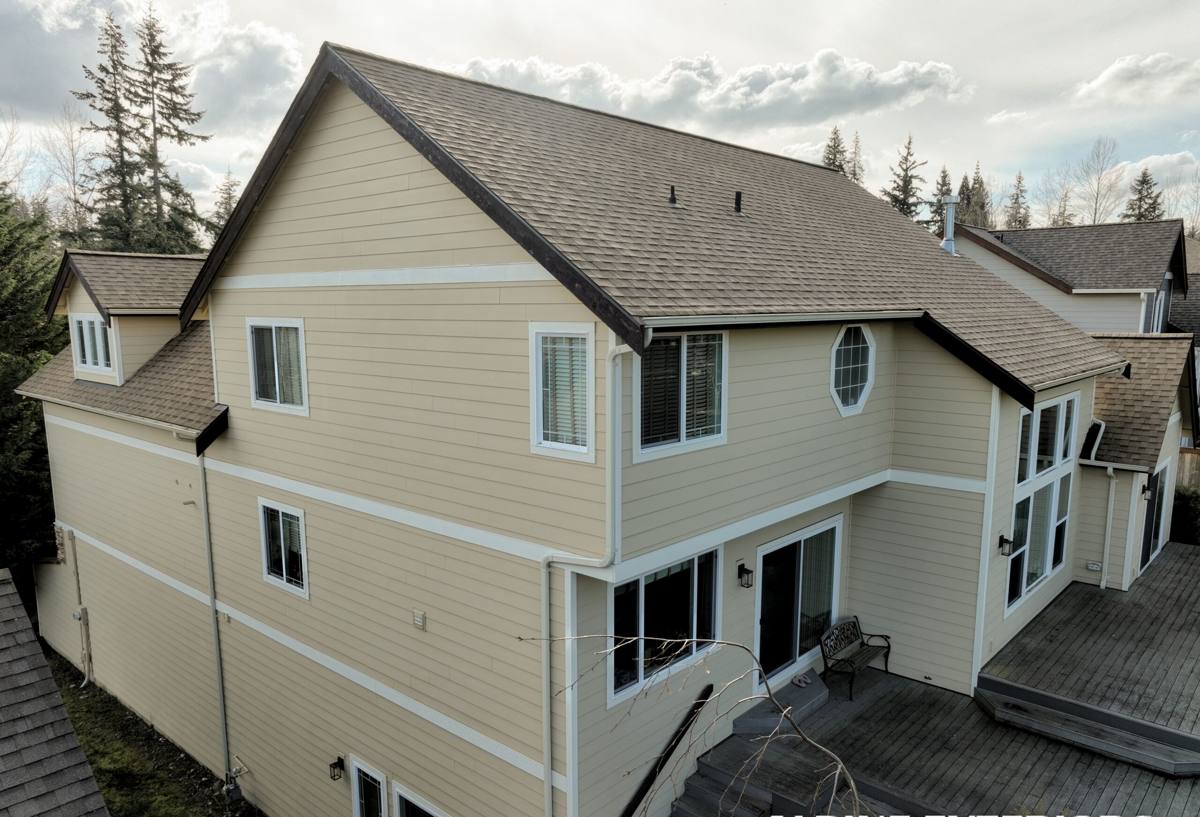
What Lynden's Climate Does to a Deck
Salt Air and Fastener Corrosion
Even away from the immediate shoreline, homes in this part of Whatcom County get a steady dose of salt-laden air. On a deck, that shows up first at the fasteners — screws, joist hangers, and structural connectors are exposed to weather on every surface, unlike siding fasteners that are mostly covered. Standard or under-rated hardware corrodes faster here than it would in a drier, inland climate, and a rusting fastener at a structural connection is a much bigger problem on a deck than a cosmetic one on a wall.
Driving Rain and Standing Moisture
Rain in this region rarely falls straight down. Wind pushes it sideways and pools it on horizontal surfaces, and a deck is almost entirely horizontal surface. Board gaps, framing, and the ledger connection to the house all need to shed and drain water rather than hold it, because a deck that traps moisture against wood framing is setting up rot in places that aren't visible until the damage is already advanced.
A Long Moss Season
Mild temperatures, shade from mature trees, and near-constant moisture add up to a moss and mildew season that can stretch across most of the year on shaded decking. Moss holds moisture against the board surface, and on wood decking it accelerates rot underneath a layer that looks fine from a few feet away. It also turns a deck slippery, which is a safety issue as much as a maintenance one. Lynden's mix of open farmland and tree-sheltered lots means some decks fight this harder than others, but almost every deck in the area deals with it to some degree.
What a Correctly Built Deck Needs Here
A deck that's going to hold up in this climate needs a handful of details done right from the start. None of these are exotic upgrades — they're the baseline for building a deck that won't need major repair inside a decade.
Ledger Board Flashing
The ledger board, where the deck attaches to the house, is the single most common failure point we see on older decks in this area. If it isn't properly flashed to shed water away from the house sheathing, moisture works its way behind the ledger and rots both the deck framing and the wall structure behind it, often long before it's visible from outside.
Framing and Fastener Selection
Structural framing needs to be rated for exterior, ground-contact, or wet-use exposure depending on where it sits, and every fastener and connector needs corrosion resistance that matches this climate, not a generic national spec. Cutting corners on hardware is one of the cheapest ways to shorten a deck's life and one of the hardest problems to spot after the decking boards are down.
Drainage and Airflow Underneath
A deck built low to the ground or over poorly graded soil traps moisture underneath the frame, which keeps joists and beams damp long after a storm has passed. Proper grading, clearance, and in some cases a drainage system underneath the deck all help the structure actually dry out between wet spells instead of staying damp through an entire season.
Board Spacing and Material Choice
Gaps between boards need to be wide enough to let water drain and air circulate, but tight enough to stay comfortable underfoot and keep debris from building up in the joints. The decking material itself, wood or composite, also changes how much moisture and moss the surface holds over time, which is covered in more detail below.
Decking Material Options for Lynden Homes
| Material | Upfront Cost | Maintenance in This Climate | Moss and Moisture Behavior |
|---|---|---|---|
| Pressure-treated lumber | Lowest | Regular cleaning, sealing, and periodic board replacement | Prone to moss and surface checking if not maintained consistently |
| Cedar | Mid-range | Periodic sealing and cleaning to maintain appearance and resist rot | Naturally rot-resistant but still needs upkeep in sustained moisture |
| Composite decking | Higher | Occasional washing; no sealing or staining required | Sheds moisture and resists moss better, though shaded boards can still need cleaning |
There's no single right answer for every home. Wood costs less upfront and has a warmer, natural look that some homeowners prefer, but it demands consistent maintenance to hold up in this much sustained moisture. Composite costs more initially but generally holds up with less ongoing work, which matters most on shaded lots where moss pressure is highest. We'll walk through the honest tradeoffs for your specific property rather than pushing one material as the only option.
Our Deck Building Process
A deck project in Lynden generally moves through the same stages, though the details shift based on the site, the home's structure, and the scope of the project.
- Site walk and design: We look at the home's structure, the yard's drainage and sun exposure, and how the deck will actually get used before talking materials or layout.
- Permitting: Most deck projects in Whatcom County require a building permit, and we handle that process as part of the job rather than leaving it to the homeowner.
- Footings and framing: Footings are set to meet local code and the site's soil conditions, and framing is built with fasteners and hardware rated for this climate's moisture and salt exposure.
- Ledger connection: Where the deck ties into the house, we flash and seal that connection carefully, since it's the point most likely to cause hidden damage if it's rushed.
- Decking and railing installation: Boards go down with drainage-appropriate spacing, and railing is installed to meet code height and spacing requirements.
- Final walkthrough: We go over the finished deck with the homeowner, including what maintenance the chosen material will actually need going forward.
Common Deck Problems We See on Lynden Homes
Most of the deck calls we get in this area fall into a handful of recurring patterns, almost all traceable back to moisture, corrosion, or a build that skipped a detail that only shows up years later.
- Soft or spongy decking boards, usually starting near the ledger or in shaded corners
- Rust staining running down from fasteners or metal connectors
- Heavy moss growth that returns quickly after cleaning
- Visible gaps, cracking, or water staining where the deck meets the house
- Railings or stairs that feel loose or spongy underfoot
- Standing water or persistently damp ground underneath the deck frame
Any of these are worth a look before they turn into a structural repair rather than a maintenance item. A deck that's rotting from the ledger connection outward can look fine on the surface for a surprisingly long time before the problem becomes obvious.
Permits and Code Considerations
Deck construction in Lynden falls under Whatcom County's building code, and most new decks, along with many significant repairs or rebuilds, require a permit and inspection. Requirements typically cover footing depth and design, structural framing and fastener specifications, railing height and baluster spacing for safety, and the strength of the ledger connection to the house. Exact requirements depend on the specific project and site, and we handle the permitting process as part of the build so homeowners aren't left navigating it alone.
Maintaining a Deck in Lynden's Climate
Even a well-built deck needs some seasonal attention in this climate to get its full lifespan. A basic maintenance routine goes a long way:
- Sweep debris off the deck surface regularly, especially in fall when leaves and needles build up in board gaps
- Clean moss and algae off the surface before it has a chance to spread, particularly on shaded sections
- Check fasteners, railings, and stair connections annually for looseness or rust staining
- Reseal or restain wood decking on the schedule appropriate for the specific product used
- Keep gutters and downspouts near the deck clear so runoff isn't draining directly onto or under the structure
- Confirm the area underneath the deck stays graded to drain, rather than collecting standing water
Why Hire a Crew That Already Works Lynden
A contractor who builds decks across Whatcom County day to day sees how salt air, driving rain, and moss actually affect a structure over a full year, not just how a product performs on paper. That experience shapes real decisions on a Lynden job: how much clearance to leave under the frame, which fastener grade is worth the extra cost, and where the ledger connection needs extra attention because of how a particular lot drains. Lynden's mix of open farmland and tree-sheltered properties means those calls aren't identical from one address to the next, and a crew that's used to making them for this specific area tends to catch problems before they start rather than after a homeowner calls about soft boards.
If you're planning a new deck or replacing one that's showing its age, we're glad to take a look and give you a straightforward, honest assessment of what your Lynden property needs. Reach out using the form below for a free, no-pressure estimate.