 Blaine Siding
 Why Ferndale Homes Need Siding Built for This Climate
Ferndale sits close enough to the Strait of Georgia and the Nooksack River bottomlands that homes here deal with a combination most siding products were never engineered for: salt-laden air moving in off the water, long stretches of driving rain through fall and winter, and a moss season that can run eight months or more on north- and west-facing walls. Any one of those on its own is manageable. Together, they wear down siding that isn't built for the Pacific Northwest, and they punish installation work that cuts corners.
We install James Hardie fiber cement siding exclusively, and Ferndale is a good example of why. This page walks through what the local climate actually does to a wall system, what correct Hardie installation looks like here, and what our process involves from first estimate to finished job.
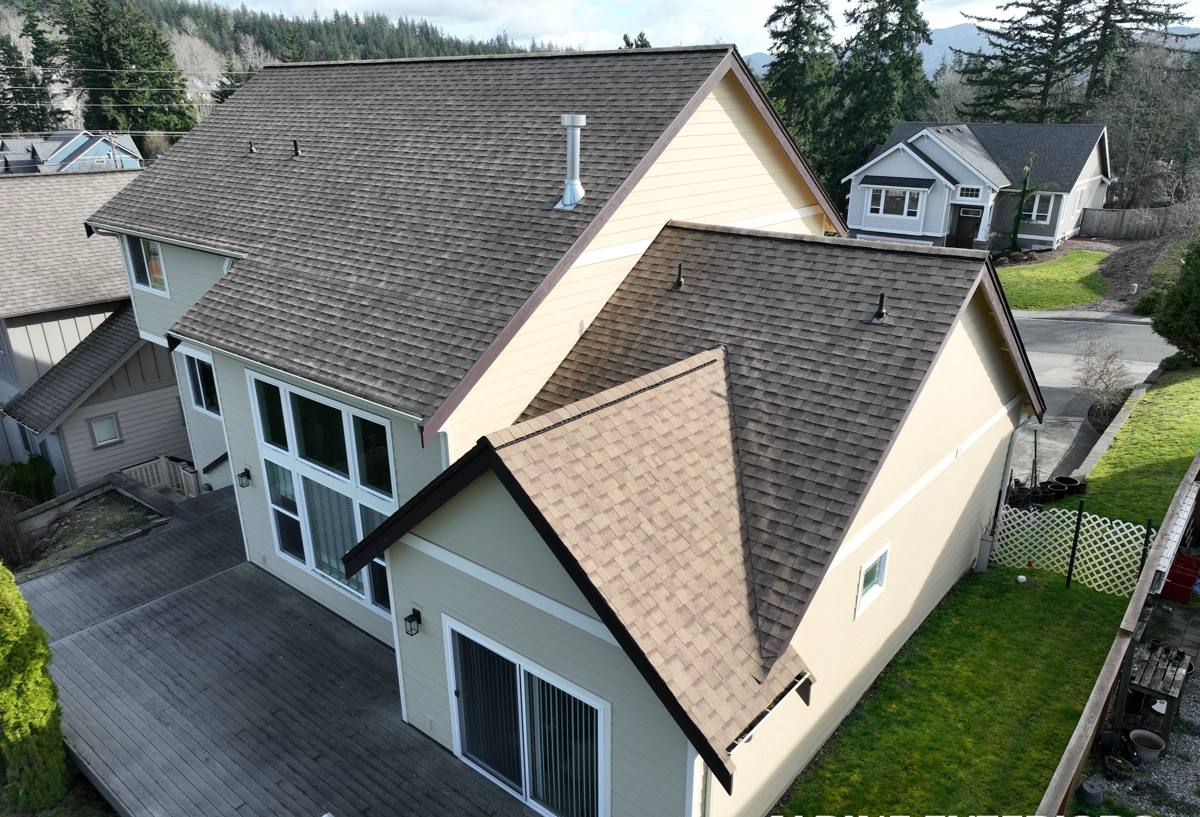
What Salt Air, Rain, and Moss Actually Do to Siding
Salt Air
Airborne salt doesn't just affect homes right on the water. It travels inland on wind and settles on exterior surfaces, where it holds moisture against the wall longer than plain rainwater would. Over years, that accelerates the breakdown of fasteners, caulk joints, and paint film on siding products that aren't dimensionally stable or that rely on a factory finish not designed for coastal exposure.
Driving Rain
Whatcom County rain rarely falls straight down. Wind-driven rain hits walls at an angle, working its way into any gap, unsealed joint, or improperly lapped seam. Siding systems are only as good as their weakest water-management detail — a single missed flashing point or a nail driven too high can let moisture behind the cladding, where it does damage you won't see until it's serious.
Moss and Sustained Dampness
Shaded, north-facing walls in Ferndale can stay damp for most of the year. That's exactly the environment moss and mildew need to establish themselves. On wood-based or wood-fiber products, sustained dampness plus organic growth is a slow path toward rot and delamination. On siding that isn't moisture-stable, that combination shortens the useful life of the product regardless of how well it was painted.
Why James Hardie Is the Right System for This Environment
James Hardie fiber cement is manufactured from cement, sand, and cellulose fiber — not wood. It doesn't absorb water the way wood-based sidings do, it won't rot, and it holds its shape and finish in freeze-thaw and wet-dry cycling far better than the wood and wood-composite products it competes with. For a town like Ferndale, that's not a marketing detail, it's the reason the product holds up.
James Hardie also builds its HZ5 product line specifically for climates like ours — the Pacific Northwest's combination of moisture, marine exposure, and moderate temperatures. The engineering accounts for the exact conditions Whatcom County throws at a wall: sustained dampness, coastal air, and heavy seasonal rain.
ColorPlus Factory Finish
Most Hardie siding we install uses the ColorPlus finish — a baked-on, factory-applied finish that's more consistent and more durable than field-applied paint, and it comes with its own finish warranty. In a climate where paint failure from moisture and salt exposure is common, starting with a finish that's cured and bonded in a controlled factory environment — rather than painted on-site in variable weather — is a meaningful advantage.
Non-Combustible Material
Fiber cement is non-combustible, which matters given wildfire smoke and ember exposure risk that has become a more regular part of Pacific Northwest summers in recent years. It's not the primary reason homeowners choose Hardie in a coastal town like Ferndale, but it's a real, added benefit.
Choosing the Right Hardie Product Line for Your Home
Not every Hardie product is the right fit for every home. Part of our job during the estimate is matching the product line to your home's style, exposure, and existing trim details.
| Product Line | Best For | Look |
|---|---|---|
| HardiePlank Lap Siding | Most Ferndale homes — the standard replacement choice | Traditional horizontal lap, multiple textures and exposures |
| HardiePanel Vertical Siding | Board-and-batten style homes, accent walls, garages | Clean vertical lines, often paired with battens |
| HardieShingle Siding | Craftsman and cottage-style homes wanting a shingle look without wood upkeep | Staggered or straight-edge shingle profiles |
| HardieTrim Boards | Corners, window and door surrounds, fascia | Smooth or textured trim that matches the field siding |
Most full siding jobs in the area combine two or three of these — lap siding on the main field, trim boards at every corner and opening, and sometimes a panel or shingle accent on a gable or entry feature.
What Correct Installation Actually Involves
James Hardie siding performs the way it's engineered to only when it's installed to the manufacturer's specifications. Most of the problems we get called out to fix on other contractors' work aren't product failures — they're installation shortcuts that matter more in a climate like ours than they would somewhere dry.
Clearances and Gaps
Hardie siding needs proper clearance from the ground, roofline, and any horizontal surface — typically a minimum gap that keeps the bottom edge of the siding from sitting in standing water or constant splash-back. In driving rain, siding installed too tight to grade or too tight to a deck or patio surface stays wet far longer than it should.
Flashing and Water Management
Every window, door, and horizontal trim transition needs correct flashing underneath it, not just caulk over the top. Caulk is a secondary seal, not a primary one — it degrades faster in salt air and UV exposure than a properly lapped and flashed water-management detail does.
Fastening
Hardie specifies fastener type, placement, and spacing for a reason — incorrect nailing (too high, too low, wrong fastener for the substrate) is one of the most common causes of siding call-backs, and it's something you can't tell from the ground once the job is finished.
Joint Treatment
Butt joints between boards need to be treated correctly — properly sealed or, where possible, hidden behind H-molding or minimized through careful panel layout — to prevent them from becoming the first point of water intrusion.
Here's a quick checklist of what should be true on any correctly installed Hardie job:
- Minimum manufacturer-specified clearance from grade, roofing, and decks
- Weather-resistant barrier installed and lapped correctly behind the siding
- Flashing installed above every window, door, and horizontal trim board
- Fasteners placed per Hardie's nailing schedule, not just "close enough"
- Joints sealed or concealed correctly, not just caulked and left
- ColorPlus touch-up used only where specified, to preserve the finish warranty
- Trim and siding from the same manufacturer system, not mixed with incompatible products
Our Process, Start to Finish
When we take on a Hardie siding job in Ferndale, the process generally looks like this:
- On-site estimate. We walk the exterior, check existing siding and sheathing condition, note trim details and problem areas (shaded walls, drainage issues, existing moisture damage), and talk through product line options.
- Detailed proposal. You get a written scope covering product lines, color, trim details, and what's included — removal of old siding, any sheathing repair, and full installation.
- Tear-off and inspection. Once old siding comes off, we inspect the sheathing and framing underneath for any hidden moisture damage before closing the wall back up — this is often where problems from a prior installation surface.
- Weather barrier and flashing. Correct house wrap or building paper, properly lapped, with flashing at every penetration and horizontal transition.
- Hardie installation. Siding, trim, and any accent products installed to manufacturer spec, with attention to the clearances and fastening details covered above.
- Final walkthrough. We go over the finished job with you before calling it complete.
Common Problems We Find on Older Ferndale Siding
When we're called out to look at an existing home — whether for a repair estimate or a full replacement — a few patterns show up often enough to be worth mentioning:
- Moss and algae buildup on north- and west-facing walls where sun exposure is limited and dampness lingers
- Caulk that's cracked, shrunk, or pulled away at joints and trim transitions, left as the only water seal
- Siding installed tight to grade, decks, or roofing with no drainage clearance
- Fastener staining or visible nail pops from incorrect nailing
- Wood-based or composite siding showing soft spots, swelling, or delamination near ground level and around window sills
Most of these trace back to installation decisions made years earlier, not to the age of the home itself. It's part of why we're particular about doing the water-management details right the first time — redoing siding work is far more disruptive and expensive than doing it correctly up front.
Maintenance in a Moss-Prone, Salt-Air Climate
James Hardie siding is low-maintenance compared to wood, vinyl, or composite alternatives, but "low-maintenance" doesn't mean "no maintenance," especially here. A few habits go a long way toward protecting the finish and the warranty:
- Rinse siding periodically, especially shaded walls where moss and algae are more likely to establish
- Keep gutters clear and downspouts directed away from the wall to reduce splash-back and sheeting water
- Trim back vegetation and tree limbs that keep siding shaded and damp longer than necessary
- Inspect caulk lines at trim and penetrations every year or two and have any failing joints resealed
- Avoid pressure washing directly into joints or at high pressure against the siding face — a gentle rinse is enough
What a Ferndale Siding Job Costs
Every home is different, but a few factors consistently move the price on a Hardie siding project in this area:
| Factor | Why It Matters |
|---|---|
| Home size and wall complexity | More square footage and more corners, gables, and trim details mean more material and labor |
| Existing sheathing condition | Hidden moisture damage found during tear-off adds repair scope before new siding goes on |
| Product line mix | Lap siding, panel, shingle, and trim combinations vary in material cost and install time |
| Color and finish choice | Standard ColorPlus colors versus custom field-painted finishes affect both cost and long-term durability |
| Access and site conditions | Tight lots, multi-story walls, and limited staging area affect labor time |
We don't quote a number without seeing the home first — anyone who does is guessing. What we can tell you is that a correctly installed Hardie system, on a home in a climate like Ferndale's, is generally the lower long-term cost option once you factor in maintenance, repainting, and the replacement cycle of lower-durability products.
Why Hiring a Crew That Already Works This Area Matters
Whatcom County's coastal microclimate isn't uniform — a wall three miles from the water behaves differently than one further inland, and shaded, moss-prone exposures need different attention than sun-facing walls. A crew that installs siding across a range of climates might know the Hardie product well but not know which details matter most in a specific setting like Ferndale's. We work in this area regularly, which means we've seen how salt air, driving rain, and long damp seasons actually affect installations here — not in general, but on homes like yours.
Because we install James Hardie exclusively, we're not splitting our attention across multiple product systems with different installation requirements, warranty terms, and failure points. Every job we do uses the same manufacturer specifications, the same fastening and flashing standards, and the same attention to the details that matter in this climate.
Ready to Talk About Your Home?
If your siding is showing moss, failing caulk, or visible wear, or if you're planning ahead for a replacement, we're happy to take a look and walk you through honest options for your home. Reach out for a free, no-pressure estimate — we'll assess your siding's condition, talk through product and color options, and give you a clear, written scope with no obligation.