 Blaine Siding
 Metal Roofing in Grandview: Built for This Coastline
Grandview sits close enough to Semiahmoo Bay and the broader Strait of Georgia shoreline that salt air isn't an occasional thing here — it's a daily condition your roof lives in. Add Whatcom County's long wet season, the driving rain that comes sideways off the water during winter storms, and months of shade-fed moss growth, and you've got a climate that's genuinely tough on roofing. Metal roofing, installed correctly, handles all three of those stresses better than most other materials. Installed poorly, it can fail faster than a basic asphalt roof would have. The difference is almost entirely in the details of the install, not the metal itself.
This page is specifically about metal roofing for homes in the Grandview area of Blaine — what the local climate demands from the material, what a correct installation actually involves, and why a crew that already works this neighborhood is worth choosing over one that doesn't.
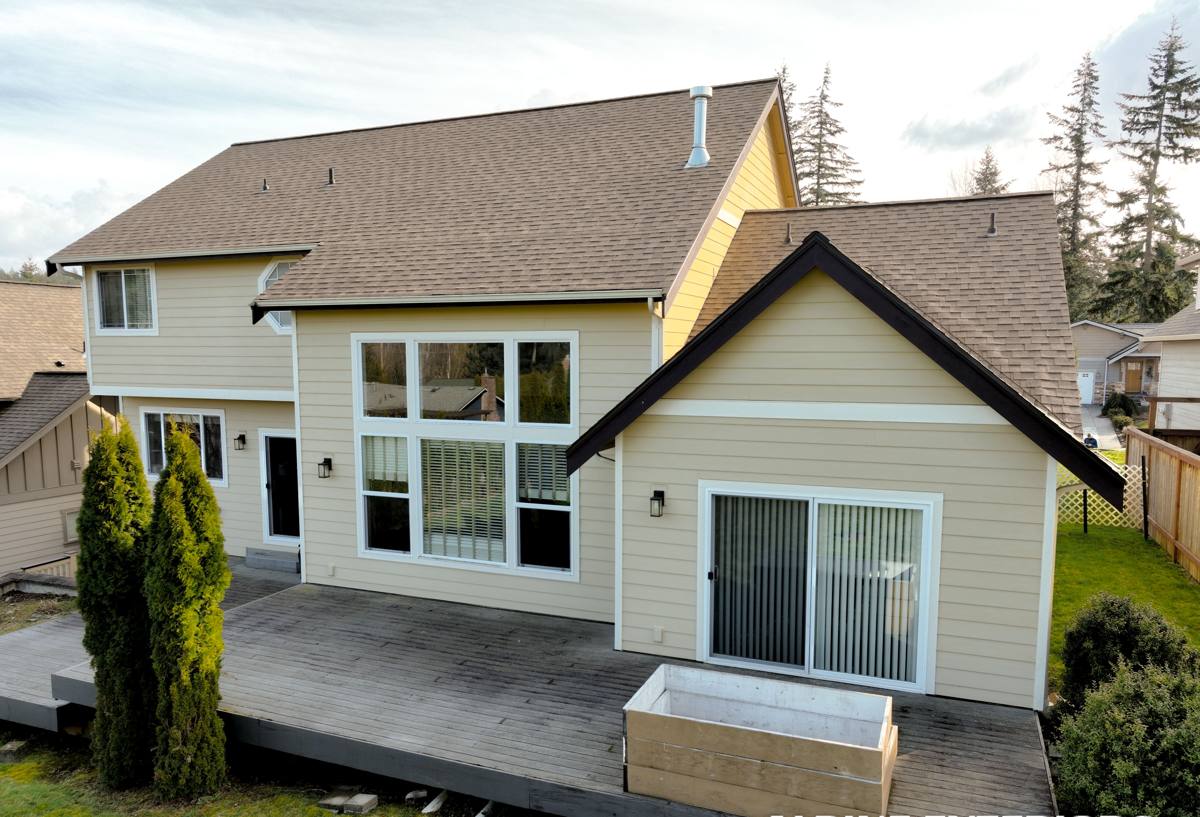
What Grandview's Climate Actually Does to a Roof
Salt Air and Corrosion
Airborne salt is corrosive to bare or poorly coated metal, and it doesn't need to be blowing hard to matter — steady low-level exposure over years is what wears down fasteners, cut edges, and any spot where a protective coating has been scratched or thinned. This is why the specific metal, coating system, and fastener hardware matter more here than they would fifty miles inland.
Driving Rain
Wind-driven rain off the water doesn't just fall straight down — it gets pushed sideways and upward under panel laps, around penetrations, and into any gap a fastener or flashing detail leaves open. A metal roof's water resistance depends almost entirely on how the panels overlap, how the flashings are integrated, and how the fastening pattern is sealed. Get those details right and metal sheds wind-driven rain better than almost anything else on the market. Get them wrong and you get leaks that are hard to trace back to their source.
Moss Season
Blaine's tree cover and long damp stretch of the year create ideal conditions for moss, especially on north-facing slopes and anywhere debris collects. Moss holds moisture against a roof surface for extended periods, and on organic materials that moisture retention accelerates decay. Metal doesn't feed moss the way wood or asphalt granules can, and its smooth, sloped surface gives moss far less to grip. That doesn't make a metal roof moss-proof — debris still needs to be kept off it — but it removes one of the biggest long-term maintenance headaches homeowners in this area deal with.
Panel and Coating Choices That Make Sense for This Area
Not every metal roofing product is the same, and for a coastal Whatcom County property, the coating system matters as much as the base metal.
| Option | Why It Fits (or Doesn't) in Grandview |
|---|---|
| Steel with a quality baked-on paint finish (Kynar/PVDF-type coatings) | Strong corrosion resistance when the coating is intact; the standard we recommend for most homes here given the salt exposure |
| Galvalume or bare galvanized steel | Solid rust resistance but more vulnerable at cut edges and fastener penetrations near salt air — needs careful edge treatment |
| Aluminum panels | Naturally corrosion-resistant and a strong option directly on the coast, though typically a higher material cost |
| Standing seam vs. exposed-fastener panels | Standing seam hides fasteners under the seam, reducing long-term leak points from fastener wear — worth the added cost on higher-exposure roofs |
We walk homeowners through these trade-offs based on the home's actual exposure — how close it sits to open water, how much tree cover it has, and what roof slopes and penetrations are involved — rather than defaulting to one product for every job.
What a Correct Metal Roof Installation Involves
Metal roofing rewards precision and punishes shortcuts. A correct install for this climate includes:
- Proper underlayment — a high-temp, self-adhering or synthetic underlayment rated for the panel type, giving a real secondary water barrier if wind-driven rain ever gets past the panels
- Correct fastening pattern and hardware — matched, corrosion-resistant fasteners with sealing washers, placed and torqued to the manufacturer's spec, not "close enough"
- Panel overlap sized for the actual roof pitch and exposure — low-slope or high-exposure sections need more overlap and tighter detailing than a steep, sheltered section
- Flashing integration at every penetration — valleys, vent pipes, chimneys, skylights, and wall transitions all need custom-formed flashing, not generic trim pressed into place
- Edge and eave detailing — drip edges and eave flashing set up to actually shed wind-driven rain away from the fascia and soffit, not just sit on top of them
- Ventilation planning — metal roofs need proper attic ventilation behind them to avoid trapped moisture and condensation issues
Any one of these done wrong can undo the natural durability of the metal itself. This is the main reason we treat metal roofing as a system to install correctly rather than a product to lay down quickly.
Our Process for a Grandview Metal Roof Project
1. On-Site Assessment
We look at the existing roof deck condition, current moss and moisture patterns, roof pitch, penetrations, and how exposed the home is to wind and salt air off the water. This tells us which panel type and coating actually make sense, rather than guessing.
2. Deck and Substrate Check
Metal only performs as well as what's underneath it. We check the decking for rot or soft spots — common on older Blaine homes that have carried years of moss and moisture — and address any repairs before panels go on.
3. Underlayment and Flashing Install
This is where most of the long-term watertightness gets decided. We set the underlayment and custom-form all flashing details before a single panel is fastened.
4. Panel Installation
Panels go on with the fastening pattern, overlap, and sealing specified for the product and the roof's exposure — not a one-size-fits-all approach.
5. Final Walkthrough
We inspect every penetration, seam, and edge detail before calling the job done, and walk the homeowner through basic care so the roof performs the way it's supposed to for decades.
Maintenance: What Grandview Homeowners Actually Need to Do
One of the appeals of metal roofing here is how little ongoing work it requires compared to organic materials — but "little" isn't "none." A simple seasonal checklist keeps a metal roof performing:
- Clear overhanging branches and debris that shade the roof and trap moisture, especially before moss season ramps up
- Check gutters and downspouts each fall so wind-driven rain has a clear path off the roof
- Look for any scratched or bare spots on painted panels after storms and have them touched up promptly — this is where salt-air corrosion gets started
- Have flashings and penetrations inspected periodically, since these are the most common source of any leak on an otherwise sound metal roof
Why a Crew That Works Grandview Already Matters
Metal roofing done right isn't a generic skill — it's specific to the conditions the roof will actually face. A crew that already works in and around Blaine understands how differently a roof exposed to open water behaves compared to one tucked back under trees a half mile away, and adjusts panel choice, flashing detail, and fastening accordingly. That local pattern recognition — knowing which roof lines in this area tend to catch wind-driven rain, which slopes hold onto moss longest, which details fail first when they're rushed — comes from doing the work here repeatedly, not from a manufacturer's install manual alone.
It also matters for accountability. A local crew is easy to reach if a question comes up after the job, and has a reputation in the community worth protecting.
Cost Factors to Expect
Metal roofing costs more upfront than asphalt shingles, and the final number depends on several factors specific to the home rather than a flat per-square-foot rate:
| Factor | How It Affects Cost |
|---|---|
| Panel type (exposed-fastener vs. standing seam) | Standing seam costs more but reduces long-term fastener-related leak risk |
| Base metal and coating | Aluminum and premium coatings cost more than basic galvanized steel but hold up better against salt air |
| Roof complexity | More valleys, penetrations, and roof planes mean more flashing work and labor time |
| Deck condition | Rot or soft decking found during tear-off adds repair cost before panels can go on |
| Tear-off vs. overlay | Full tear-off is usually the sounder choice for a long-term metal roof and affects labor cost |
We provide a clear, itemized quote after the on-site assessment so homeowners know exactly what they're paying for and why.
Get a Free Estimate for Your Grandview Roof
If you're weighing metal roofing for a home in the Grandview area, we're glad to come take a look, walk through what your specific roof needs given its exposure and condition, and give you an honest, no-pressure estimate. There's no obligation — just a straight answer on what the job involves and what it would cost. Use the form below to get started.