 Blaine Siding
 Windows Built for the Cherry Point Climate
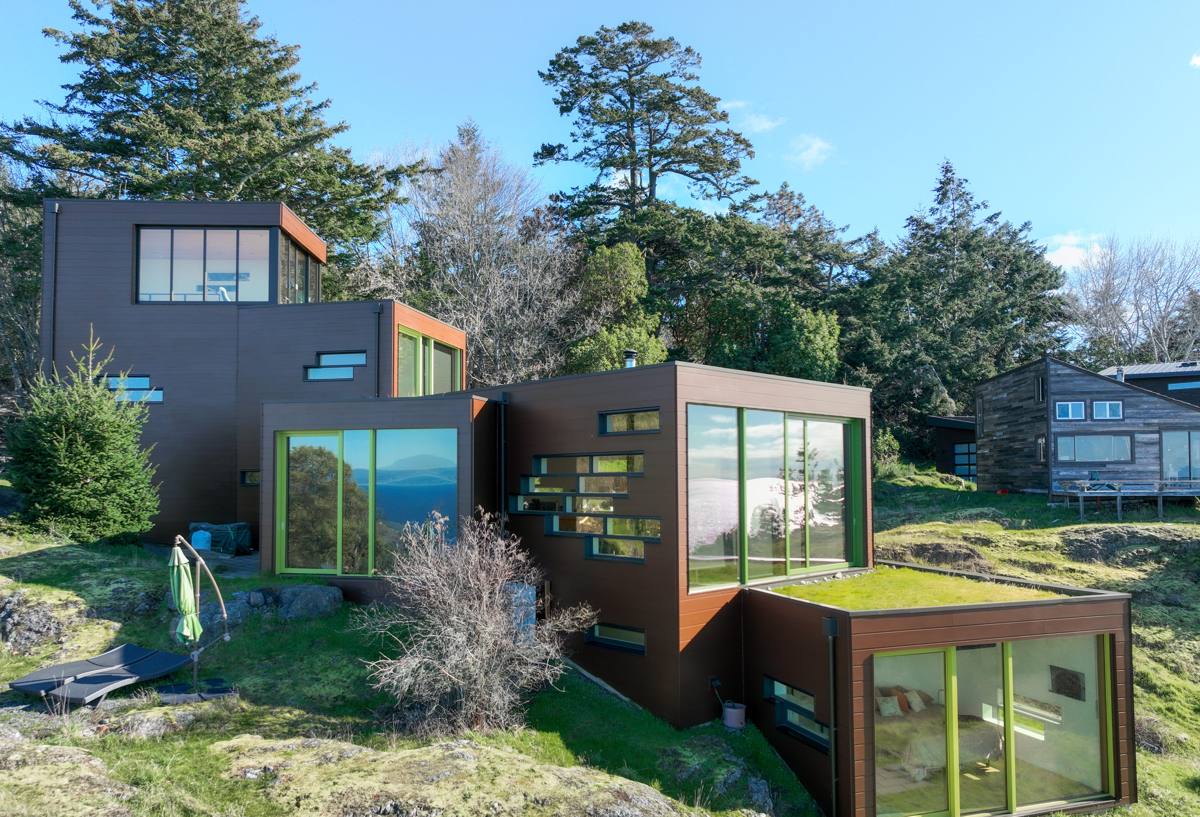
Cherry Point sits right on the water in northern Whatcom County, just south of Blaine, and that location shapes everything about how a window should be built and installed here. Homes exposed to open water get more wind-driven rain, more salt-laden air, and a longer stretch of damp, low-sun months than homes just a few miles inland. A window that performs fine in a sheltered neighborhood can fail years early on a shoreline-facing wall.
We work on homes throughout the Blaine area, and Cherry Point properties consistently show a specific pattern of wear: hardware that corrodes faster than it should, seals that fail from constant pressure changes, and frames that hold moisture longer because of shade and moss buildup. None of that is unusual for the area — it's just what this climate does to a window over time. The fix isn't a fancier-sounding product; it's the right materials, the right glass package, and installation detail that accounts for how weather actually hits this stretch of coastline.
What "Energy-Efficient" Should Mean Here — Not Just on the Label
"Energy-efficient" gets printed on nearly every window sold today, but the number that actually matters changes depending on your climate. For Whatcom County's marine environment, we're weighing a few specific factors, not just picking whatever window has the best sticker:
- U-factor — how well the window resists heat loss. Lower is better for our cool, wet winters. This matters more here than in a dry climate because homes are heated for a longer stretch of the year.
- Condensation resistance — how well the window handles the temperature and humidity swings common with marine air. Poor condensation resistance shows up as fogging or moisture pooling on interior glass and sills.
- Air infiltration rating — how tightly the window seals against wind. On exposed, water-facing walls, wind-driven air leakage is a bigger factor than it would be on a protected inland lot.
- Solar heat gain — less critical here than in sunnier regions, but still worth getting right on south- and west-facing openings.
A window with a great U-factor but poor seal quality or weak corrosion resistance on its hardware will still underperform on a Cherry Point home. Efficiency and durability have to be solved together in this climate, not separately.
The Problems We Actually See on Homes Out Here
Seal and Glass Failures
Insulated glass units rely on a sealed gap between panes filled with gas or dry air. Constant pressure and temperature cycling from marine weather stresses that seal faster than it does in a stable inland climate. Once it fails, you get fogging between the panes — a sign the unit needs replacing, not just cleaning.
Hardware Corrosion
Salt air is hard on exposed metal. Cranks, hinges, locks, and screws on lower-grade windows corrode noticeably faster on shoreline-exposed homes than on inland ones. This is one of the most overlooked details in a window purchase — the glass gets all the attention, but the hardware is what fails first.
Frame and Sill Moisture Damage
Long moss season means extended periods of shaded dampness, especially on north- and west-facing walls or under overhangs. Wood components that aren't properly sealed or flashed can hold moisture long enough to start rotting from the inside, often before it's visible from outside.
Driving Rain Intrusion
Wind-driven rain doesn't fall straight down — it hits siding and window openings at an angle and can be pushed under poorly flashed trim. This is almost always an installation issue, not a product issue. Even a premium window will leak if the flashing and sealant details around it are wrong.
What a Correct Installation Actually Involves
Most window failures we're called out to repair trace back to installation shortcuts, not the window itself. A proper job on a Cherry Point home includes:
- Removing the old unit carefully and inspecting the rough opening for hidden rot or moisture damage before anything new goes in.
- Repairing any compromised framing or sheathing found during removal — never installing a new window over a damaged opening.
- Installing a proper weather-resistive barrier and flashing sequence so water sheds outward and down, never behind the siding.
- Shimming and leveling the window correctly so it operates smoothly and seals evenly for its full lifespan.
- Sealing with the right exterior-grade sealant at the right joints — not just running a bead around the whole perimeter and calling it done.
- Insulating the gap between the frame and rough opening properly, without overpacking it in a way that bows the frame.
- Finishing interior and exterior trim so the whole assembly looks and performs like it belongs on the house.
Skipping or rushing any one of these steps is how a good window ends up with a bad reputation.
Frame Material Comparison for a Coastal Whatcom County Home
| Frame Material | Performance in Salt Air / Marine Climate | Maintenance |
|---|---|---|
| Vinyl | Good corrosion resistance since it won't rust; quality varies a lot by manufacturer | Low — occasional cleaning |
| Fiberglass | Very stable in temperature swings and resists moisture well; strong option for exposed walls | Low |
| Wood-clad | Attractive but the cladding must be detailed carefully at joints to keep moisture out of the wood core | Moderate to high depending on exposure |
| Aluminum | Strong but conducts heat and cold, and lower-grade hardware can corrode faster near salt air | Low, but efficiency trade-offs |
We don't push one material as universally "best" — we walk through which one fits your specific wall exposure, budget, and how the home is used. A shaded, water-facing wall and a sheltered south wall on the same house can reasonably call for different answers.
Our Process, Start to Finish
We keep this straightforward because homeowners deserve to know what's happening at each step:
- On-site assessment — we look at existing window condition, wall exposure, and any signs of moisture or hardware wear before recommending anything.
- Measurement and product selection — exact opening measurements, then a walk-through of frame material and glass package options based on that wall's exposure.
- Scheduling around weather — we plan installation days to minimize how long any opening sits exposed, which matters more here than in drier climates.
- Installation — removal, opening inspection and repair as needed, flashing, setting, sealing, and finishing as outlined above.
- Cleanup and walkthrough — job site cleared of debris, and we walk you through operation and care before we consider the job done.
What Drives the Cost
| Factor | Why It Matters |
|---|---|
| Window size and quantity | Larger openings and whole-house jobs change material and labor totals |
| Frame material | Vinyl, fiberglass, wood-clad, and aluminum carry different material costs |
| Glass package | Double-pane vs. triple-pane, and any specialty coatings for sun or noise control |
| Condition of the rough opening | Hidden rot or framing damage found during removal adds repair work |
| Access and removal complexity | Second-story, tight, or hard-to-access openings take more labor time |
Costs vary enough by these factors that we don't quote a number until we've actually looked at your windows. Anyone quoting a firm price sight-unseen is either guessing or padding the number to cover surprises.
What to Check Before Hiring Anyone for This Job
- Do they carry proper licensing and insurance for exterior work in Washington State?
- Will they inspect the rough opening before installing, not just swap the window and go?
- Can they explain — in plain terms — why they're recommending a specific frame material or glass package for your exposure?
- Do they provide a written scope of work, not just a total price?
- Are they familiar with coastal Whatcom County conditions, or is this their first job dealing with driving rain and salt air?
- What's the warranty structure on both the product and their labor, and who do you call if something needs adjustment later?
Why a Local Crew Matters for a Cherry Point Home
A window job in a marine climate isn't the same job as a window job in a dry inland town, even if the products look identical on paper. A crew that regularly works Blaine and the surrounding Cherry Point area already knows which wall exposures need extra flashing attention, how long moss season actually runs here, and what driving-rain patterns do to a poorly sealed joint. That's knowledge you don't get from a general contractor passing through the area once.
There's also the practical side: if a warranty issue or adjustment comes up down the road, a local crew can get back out to your home quickly instead of scheduling around a multi-hour drive. For a job that's meant to last decades, that kind of accountability matters.
If you're weighing window replacement or upgrade for a Cherry Point property, we're happy to take a look and give you a straight, no-pressure read on what your home actually needs. Use the form below to request a free estimate.