 Blaine Siding
 Building Decks That Hold Up in California Creek's Marine Climate
California Creek sits close enough to the water that its weather behaves differently than a deck built twenty miles inland. Homes here deal with a steady drift of salt air off the bay, rain that comes in sideways more often than straight down, and a long stretch of the year where shade, moisture, and mild temperatures combine to grow moss on anything that isn't cleaned or sealed. A deck built without those three factors in mind will look fine for a season or two and then start showing problems — soft spots, corroded fasteners, slick boards, and framing that stays wet long after the rain stops.
Building decks specifically for this kind of environment is different work than building one somewhere dry. It changes what materials make sense, how the frame is put together, where flashing and drainage go, and how much upkeep the finished deck actually needs. This page covers what that looks like in practice for California Creek homes near Blaine, in Whatcom County.
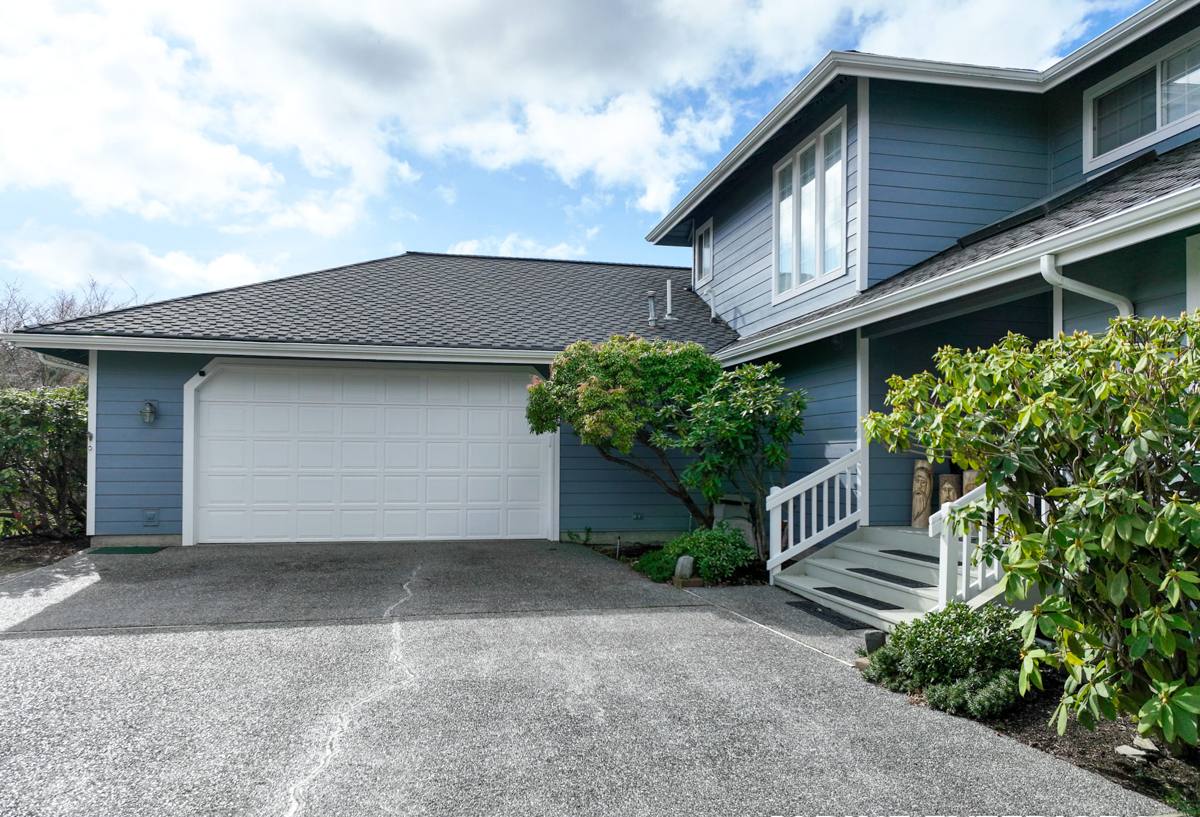
What Salt Air, Driving Rain, and Moss Season Actually Do to a Deck
Each of these factors causes a specific, predictable kind of damage, and understanding them is the first step to preventing them.
Salt Air
Airborne salt accelerates corrosion on anything metal — nails, screws, joist hangers, bolts, and railing hardware. Standard hardware can start rusting within a few years this close to the water, and once a fastener corrodes, it loses holding strength long before it looks visibly bad. This is one of the most common causes of premature deck failure in coastal Whatcom County, and it's almost entirely invisible until something moves or fails.
Driving Rain
Wind-driven rain doesn't fall straight down — it gets pushed sideways under railings, into ledger connections, and behind fascia boards. A deck design that only accounts for water falling vertically will let moisture into places it was never supposed to reach, especially where the deck meets the house.
Moss Season
Moss needs moisture, shade, and mild temperatures — California Creek offers all three for a good chunk of the year. Moss on a deck surface isn't just cosmetic. It holds water against the wood or composite surface, breaks down finishes faster, and creates a genuinely slick, dangerous walking surface, especially on stairs.
Choosing the Right Decking Material for This Neighborhood
There isn't one universally "best" decking material — there's a best material for a given budget, maintenance appetite, and exposure. In a marine climate like this one, the trade-offs matter more than they would somewhere drier.
| Material | Salt Air Resistance | Moisture Behavior | Maintenance | Typical Lifespan |
|---|---|---|---|---|
| Pressure-treated wood | Good with proper hardware | Absorbs and releases moisture; needs sealing | Annual cleaning and re-sealing | 15–25 years |
| Cedar | Good, naturally rot-resistant | Absorbs moisture but resists decay well | Regular sealing to hold color and repel moss | 15–20 years |
| Composite decking | Excellent | Doesn't absorb water; can trap surface moisture if not ventilated | Periodic washing, no sealing needed | 25–30+ years |
| PVC/vinyl decking | Excellent | Fully water-resistant | Low; occasional cleaning | 25–30+ years |
Composite and PVC boards have become popular in coastal Whatcom County precisely because they don't absorb moisture the way wood does, which matters when a deck spends months of the year damp. That said, they're not maintenance-free — moss and algae will still grow on the surface if it stays shaded and wet, so periodic washing is still part of the deal. Wood decks can absolutely work well here too, but they need a real sealing schedule, not a one-time treatment, to keep salt air and driving rain from working into the grain.
Our Standard on Hardware
Whatever decking material a homeowner chooses, we treat fastener and hardware selection as non-negotiable this close to the water. We use stainless steel or heavy hot-dip galvanized fasteners and structural connectors rated for coastal exposure, not standard hardware store hardware. It costs more up front, but replacing corroded joist hangers under a finished deck is far more expensive than specifying the right hardware the first time.
Framing and Structure: What's Underneath Matters More Than the Surface
The decking boards get all the attention, but the framing underneath is what actually determines how long a deck lasts. In a wet climate, a few structural details separate a deck that ages well from one that doesn't.
- Joists and beams sized and spaced for the actual span and load, not the minimum that happens to pass inspection
- Footings set below frost depth and sized appropriately for local soil conditions
- Corrosion-resistant structural connectors at every joist-to-beam and beam-to-post connection
- Post bases that keep wood off concrete and standing water, not buried or embedded directly
- Airflow underneath the deck so framing can dry out between rain events instead of staying damp
A deck that traps moisture against its framing — because it sits too low to the ground, lacks ventilation, or has boards installed tight against each other with no gap — will show rot in the frame long before the surface looks bad. That's a hard, expensive repair, and it's almost always preventable at the framing stage.
Drainage, Flashing, and Ledger Attachment: Where Decks Actually Fail
If we had to point to the single most common failure point on decks in this area, it would be the connection where the deck ledger board attaches to the house. This is the joint that has to keep driving rain out of the house's wall structure while also carrying real structural load — and it's a spot that's easy to get wrong and hard to inspect once the deck is built.
A correct ledger connection includes proper flashing that directs water away from the house sheathing, a water-resistant barrier behind the ledger board, and structural fasteners sized for the load — not just enough screws to hold the board up. We also pay close attention to deck drainage generally: board spacing that lets water shed rather than pool, and grading or drainage systems underneath multi-level decks so water doesn't collect against the house foundation or framing.
Our Deck Building Process for California Creek Homes
Every deck starts with a site visit, because the right approach depends on the specific lot — exposure to prevailing wind and rain, how much shade the site gets (which drives moss risk), soil conditions, and how the deck will tie into the existing structure.
- Site assessment and design — we look at sun exposure, drainage patterns, and how wind-driven rain hits the house before recommending a layout or material
- Permitting — we handle the permit application and coordinate required inspections with Whatcom County or the applicable local jurisdiction
- Footings and framing — built to span, load, and frost-depth requirements, with corrosion-resistant hardware throughout
- Flashing and ledger attachment — done to keep water out of the house structure, not just out of sight
- Decking installation — proper spacing and fastening for the chosen material, with attention to drainage and airflow underneath
- Railings and finishing details — installed to code and built to shed water rather than trap it at connection points
- Final walkthrough — we go over the finished deck and what maintenance it actually needs, honestly, based on the material installed
Living With a Deck Through Moss Season
No deck in this climate is entirely maintenance-free, no matter what material it's built from. The goal isn't to eliminate maintenance — it's to make sure the maintenance a homeowner actually has to do is simple, predictable, and not a sign that something was built wrong.
- Sweep leaves and debris off the deck surface regularly, especially in fall — trapped debris holds moisture and speeds up moss growth
- Wash the deck surface at least once a year, more often in shaded areas, to remove algae and moss before it takes hold
- Check and clear gaps between boards so water can drain rather than pool
- Reseal wood decking on a schedule appropriate to the product — don't wait until it's visibly worn
- Inspect railings and stair connections annually for movement, which can signal hardware corrosion
- Keep nearby vegetation trimmed back so the deck gets more sun and airflow, which naturally slows moss growth
A deck built with the right materials, hardware, and drainage details from the start needs far less of this than one that was built to a generic spec and left to fight the climate on its own.
Permits and Local Considerations
Most new decks and significant deck rebuilds in Whatcom County require a building permit, particularly when the deck is attached to the house or exceeds a certain height or size. Requirements can vary depending on the specific jurisdiction and site conditions, so we handle the permit process as part of the job rather than leaving homeowners to sort it out. Getting this step right up front avoids problems later — both with inspections and with resale, since unpermitted deck work can complicate a home sale down the road.
Why Hire a Crew That Already Works California Creek
A deck design that works well in a dry inland climate can fail here in a fraction of the time, not because the workmanship was sloppy, but because it wasn't built for salt air, driving rain, and a long moss season. Crews who already work regularly in this neighborhood know which hardware holds up, where water actually gets driven by local wind patterns, and how much shade a given lot really gets through the year — details that come from experience with this specific stretch of coastline, not from a generic build sheet.
We build decks the same way whether it's a straightforward ground-level platform or a multi-level structure tied into a sloped lot: with attention to the framing, flashing, and hardware decisions that determine whether the deck is still solid in fifteen years, not just good-looking on day one.
If you're planning a new deck or need to replace one that's showing its age, we're happy to take a look and talk through what makes sense for your home and site. Use the form below to request a free, no-pressure estimate.