 Blaine Siding
 Storm Damage Roof Repair Built for Dakota Creek
Dakota Creek sits close enough to the water that every roof in the area deals with the same combination of punishment: salt-laden wind off the strait, driving winter rain, and long stretches of gray, damp weather that keep moss and moisture pressure on a roof nearly year-round. When a windstorm rips through Whatcom County, homes here don't just get a few missing shingles — they get wind-driven rain forced up under lifted shingle tabs, granule loss that accelerates in salt air, and moss mats that were already holding moisture against the deck before the storm even hit. Storm damage repair in this neighborhood isn't a generic patch job. It has to account for what the roof was already fighting before the wind picked up.
We work on roofs in and around Blaine regularly, which means we already understand the exposure profile of homes near Dakota Creek: proximity to open water, tree cover that drops branches and debris in a blow, and roof systems that see more wet-dry cycling than roofs further inland. That local familiarity changes how we assess damage and what we recommend for repair.
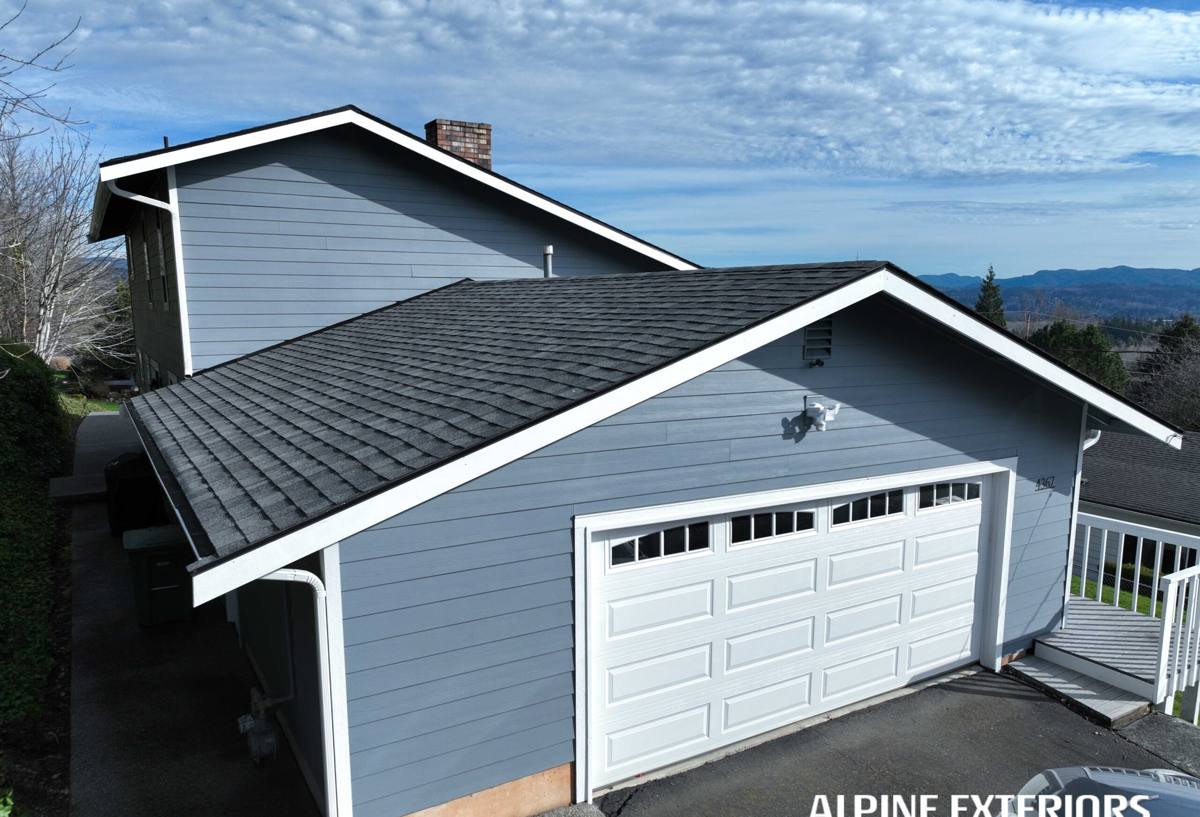
What Coastal Storms Actually Do to a Roof Here
Wind Damage
Wind off the water doesn't always peel a roof off in dramatic fashion. More often it works at the edges — lifting shingle tabs along ridges, hips, and eaves just enough to break the seal strip without fully detaching the shingle. From the ground, the roof can look intact. Underneath, wind has already opened a path for water.
Wind-Driven Rain
Once a seal is broken, rain doesn't need a hole to get in. Driving rain during a coastal storm can push water sideways and upward under shingle edges, around flashing, and through nail penetrations that were never designed to handle water moving against gravity. This is why storm damage often shows up first as an interior stain days or weeks after the wind has died down.
Moss and Debris Combined with Storm Stress
Blaine's long moss season means many roofs already carry moss mats in shaded valleys and north-facing slopes before a storm arrives. Moss holds water against shingles and decking, softening the surface underneath. When wind and rain hit a roof that's already compromised this way, damage spreads faster and repairs need to address both the storm event and the underlying moisture problem, not just the visible tear or lift.
Salt Air and Fastener Corrosion
Homes closer to the water see faster corrosion on exposed fasteners, flashing, and metal roof edges. A storm that loosens a fastener already weakened by salt exposure fails differently than the same event on an inland roof — the repair needs new, appropriately rated fasteners and flashing, not just a re-drive of the original hardware.
What a Correct Storm Damage Repair Involves
A proper repair starts with a full assessment, not just a look at the obvious damage point. We check:
- Every slope and valley, not just the side facing the storm — wind can lift shingles on the leeward side too
- Flashing around chimneys, vents, and skylights, since flashing failure is one of the most common causes of storm-related leaks
- The underlying decking wherever shingles were lifted or torn, checking for soft spots or moisture staining
- Gutters and downspouts for storm debris that can back water up under the roof edge
- Moss and organic buildup in valleys and shaded areas that may be masking or worsening damage
- Attic or interior ceiling areas below the damaged section for signs water already made it through
Only after that full picture is clear do we recommend a repair scope. Sometimes it's a targeted shingle and flashing replacement. Other times, storm damage reveals decking that was already softened by long-term moisture, and patching over that would just fail again in the next windstorm.
Our Process for Dakota Creek Homeowners
1. Prompt Assessment
After a storm, we prioritize getting eyes on the roof quickly, especially where there's any sign of interior water intrusion. Time matters — the longer wind-driven rain sits against exposed decking, the more it can compromise.
2. Clear, Honest Scope
We tell you plainly what's storm damage, what's pre-existing wear the storm exposed, and what can reasonably wait. We don't pad a repair scope with work the roof doesn't need.
3. Matching Materials Correctly
Repairs on an existing roof need to match the existing shingle profile, color, and where possible, age-weathering as closely as the market allows. We also upgrade flashing and fasteners to current corrosion-resistant standards where the original hardware was undersized or degraded, even if that wasn't the direct point of failure.
4. Insurance Documentation
When storm damage may be covered by a homeowner's policy, we document conditions with clear notes and photos of the affected areas so you have what's needed to support a claim.
5. Follow-Through
We check the repair holds through the next round of weather rather than treating the job as done the moment the last shingle is nailed down.
Repair vs. Replacement: How We Decide
| Factor | Favors Repair | Favors Replacement |
|---|---|---|
| Extent of wind damage | Isolated to one section or slope | Spread across multiple slopes or the ridge line |
| Decking condition | Solid, dry, no soft spots | Soft, stained, or spongy underneath |
| Roof age | Under roughly two-thirds of expected service life | Nearing or past typical lifespan for the material |
| Moss/moisture history | Minimal prior moss buildup | Long-standing moss mats or chronic damp valleys |
| Shingle availability | Matching shingle still produced or in stock | Discontinued profile or significant color mismatch |
None of these factors work in isolation — a roof can be young but still need replacement if decking is compromised, or older but still be a good repair candidate if the storm damage is genuinely isolated. This is a judgment call best made in person, not from a checklist alone.
Why It Matters to Hire a Crew That Already Works This Area
Storm damage repair is one of the easiest jobs to do badly and have it look fine for a season. A patch that isn't properly flashed, or a shingle that isn't correctly integrated with the surrounding courses, can hold until the next real storm and then fail again — sometimes worse than the original damage. A crew that regularly works roofs near Dakota Creek and the rest of Blaine already understands the wind exposure, the moss cycle, and the salt-air corrosion patterns specific to this stretch of Whatcom County. That's the difference between a repair that's cosmetically fine and one that's actually built to hold against the next storm off the water.
We also know that homeowners here are often dealing with more than one storm-related issue at once — a roof repair alongside siding damage, gutter issues, or trim that took wind exposure too. Because we handle exterior work broadly, we can look at the whole picture during a storm damage visit instead of narrowly focusing on the roof and missing a related problem.
What to Check After a Storm, Before You Call
- Look for shingle granules collecting in gutters or at downspout outlets — a sign of wind abrasion or impact damage
- Check ceilings and attic spaces for new stains, especially after the first heavy rain following a windstorm
- Scan the roofline from the ground for shingles that look lifted, curled, or missing entirely
- Note any large branches or debris that came down near the roof, even if you don't see obvious damage
- Check flashing around chimneys and vents for visible gaps or separation
- Avoid getting on the roof yourself after a storm — wet, wind-loosened shingles are unstable and unsafe to walk
If you notice any of these signs, it's worth having a professional look before the next weather system rolls through. Small storm damage left unaddressed through another rain event tends to get significantly more expensive to fix.
A Note on Insurance Claims
Many storm damage repairs are eligible for coverage under a standard homeowner's policy, but coverage and claim requirements vary by insurer. We're happy to document what we find during an assessment in a way that's useful for a claim, but we recommend confirming coverage specifics directly with your insurance provider before assuming a repair will be covered.
If a recent storm has left your Dakota Creek home with roof damage, or you just want a professional set of eyes on it before the next system moves through, we're glad to come take a look. Fill out the form below for a free, no-pressure estimate.