 Blaine Siding
 Decking Built for Birch Point's Coastline, Not a Catalog Photo
Birch Point sits close enough to the water that salt air, wind-driven rain, and long stretches of gray, damp weather are just part of owning a home here. A deck that looks right in a showroom in Seattle doesn't automatically hold up the same way a few hundred feet from Semiahmoo Bay. Fastener choice, framing material, drainage, and even which composite boards we recommend all shift once you factor in what Whatcom County's marine climate actually does to a structure year after year.
This page is about one job, done right, for this neighborhood: composite deck installation and replacement for Birch Point homeowners. Not a general overview of decking products — the specific decisions that matter when the deck in question is going to sit through Blaine winters for the next 20-plus years.
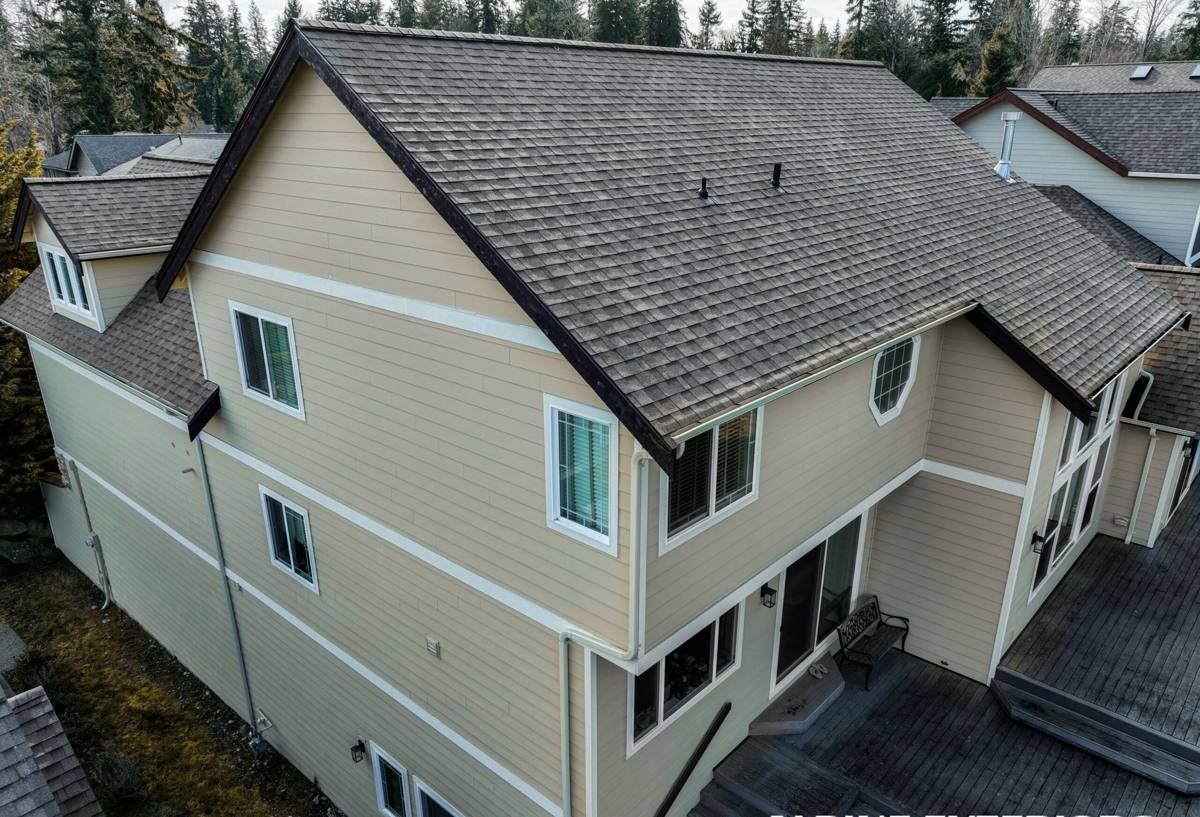
What Birch Point's Climate Actually Does to a Deck
Three things drive most of the decking problems we see out here, and none of them are exotic — they're just relentless.
Salt Air and Corrosion
Proximity to the water means airborne salt settles on everything, including fasteners, flashing, and any exposed metal hardware. Standard interior-grade screws and brackets corrode faster near the coast than they would a few miles inland. It's a slow process, so it often isn't visible until a board starts to loosen or a ledger connection weakens.
Driving Rain and Moisture Cycling
Blaine gets a lot of horizontal rain — wind pushes it under railings, into end grain, and into any gap that isn't properly flashed or sealed. Wood-based products absorb that moisture and release it repeatedly through the wet season, which is exactly the cycle that causes rot, cupping, and fastener pull-through over time. Composite boards handle this far better than wood, but only if the substructure underneath is doing its job too.
Moss, Algae, and a Long Wet Season
Whatcom County's wet season runs long, and any deck surface that stays shaded or doesn't drain well will grow moss and algae. Beyond looking bad, moss holds moisture against the board surface and can make a deck genuinely slippery — a real safety issue on stairs and landings.
Why Composite Makes Sense for This Location
We install composite decking in a lot of coastal Whatcom County properties because it addresses the specific failure points wood struggles with here. That doesn't mean every composite board is equal, or that composite is maintenance-free — it isn't. It means the material's core behavior (low water absorption, no rot, consistent dimensional stability) lines up with what a Birch Point deck needs to survive.
| Factor | Composite Decking | Traditional Wood |
|---|---|---|
| Moisture absorption | Low — capped boards resist water intrusion | High — end grain and cut edges soak up rain |
| Rot risk near saltwater exposure | Not a factor for the board itself | Elevated, especially at fastener points and board ends |
| Surface maintenance | Periodic cleaning to prevent algae/moss buildup | Annual sanding, staining, or sealing |
| Fastener corrosion exposure | Still a factor — hardware must be coastal-rated regardless of board material | Same exposure risk |
| Typical lifespan in this climate (properly installed) | 25–30+ years | 10–15 years before major repair/replacement |
| Upfront material cost | Higher | Lower |
The trade-off is upfront cost — composite material runs more than pressure-treated lumber. Where it pays off in a place like Birch Point is in avoided repair cycles: less time spent replacing rotted boards, re-sealing surfaces, or chasing down the soft spots that show up on wood decks a decade in.
What a Correct Composite Deck Build Involves Here
The composite boards themselves get most of the attention, but the framing and hardware underneath them are what actually determine whether the deck holds up to this climate. A composite deck installed over a substandard or mismatched substructure will still develop problems — they'll just show up in the framing instead of the surface.
Framing and Substructure
We build the frame to handle sustained moisture exposure, not just occasional rain — using framing lumber rated for ground contact or exterior exposure where it's called for, and detailing joist tops so water doesn't pool and sit against the wood under the boards.
Fasteners and Hardware
Given the salt air, we use fasteners and structural hardware rated for coastal or marine-grade exposure, not standard interior hardware. This is one of the most common shortcuts we see on decks that were built by crews unfamiliar with the area — it's not visible at handoff, but it's usually the first thing to fail.
Ledger Attachment and Flashing
Where the deck attaches to the house, correct flashing is what keeps wind-driven rain from working its way behind the siding and into the wall assembly. This detail matters everywhere, but it matters more in a location that gets sustained horizontal rain off the water.
Drainage and Airflow Underneath
Proper spacing, slope, and ventilation beneath the deck keep moisture from getting trapped against the framing. In a climate this wet, a deck that can't breathe underneath is a deck that stays damp for months at a time.
Railings, Stairs, and Board Layout
Board orientation and drainage gaps affect how quickly water clears the surface after a storm, which in turn affects how much moss and algae you'll deal with. Stair treads and any shaded areas get extra attention here since that's where slip risk concentrates.
Our Process for a Birch Point Composite Deck
- On-site assessment — we look at sun/shade exposure, wind direction relative to the water, existing structure condition (if this is a replacement), and drainage around the footprint.
- Material selection — board profile, color, and hardware are chosen based on exposure, not just aesthetics; we'll walk through the honest trade-offs of each option.
- Permitting — decking work often requires a permit depending on size, height, and attachment to the structure; we handle what's needed for the scope of the job.
- Demo (if replacing an existing deck) — old material removed, framing inspected, and any hidden rot or damage flagged before we build over it.
- Framing and structural work — built to coastal-exposure standards, not generic inland specs.
- Composite board and railing installation — installed to manufacturer spec for expansion gaps and fastening pattern, which matters for long-term board performance.
- Final walkthrough — we go over maintenance basics specific to this location before we consider the job done.
Maintenance: What Composite Still Needs Out Here
Composite decking cuts down on maintenance dramatically compared to wood, but "low-maintenance" isn't "no-maintenance," especially this close to the water.
- Rinse or sweep the surface periodically to keep salt residue and organic debris from building up
- Clean shaded areas and stair treads more often — these are where moss and algae take hold first
- Check railing hardware annually for early signs of corrosion, even with coastal-rated fasteners
- Keep gutters and downspouts near the deck clear so runoff isn't dumping extra water onto the surface or framing
- Clear leaves and debris from between boards so drainage gaps stay open through the wet season
Signs an Existing Deck Needs Attention
If you're evaluating a deck that's already on the property rather than starting from scratch, a few warning signs are worth checking for before problems get worse:
- Soft or springy spots when walking across the surface
- Visible rust staining around fastener heads or brackets
- Persistent moss or algae that returns quickly after cleaning
- Gaps or movement at the ledger board where the deck meets the house
- Boards that have cupped, crowned, or separated at the seams
Why a Crew That Already Works Birch Point Matters
Decking crews that mostly work inland projects don't always default to coastal-rated hardware or account for wind-driven rain patterns unless they're specifically told to. That's not a knock on their general skill — it's just a different set of habits built for a different environment. Working regularly in and around Blaine and the surrounding Whatcom County coastline means those decisions — fastener grade, flashing detail, drainage layout — are standard practice for us here, not an afterthought added after something fails.
We also know how permitting and inspection typically go for this area, which keeps the project moving without surprises partway through.
Getting Started
Every property along the water handles exposure a little differently depending on orientation, tree cover, and how sheltered or exposed the lot is. If you're planning a new composite deck or replacing one that's showing its age, we're happy to take a look, walk through material options honestly, and put together a straightforward estimate — no pressure, no upsell. Reach out using the form below to get a free estimate for your Birch Point property.