 Blaine Siding
 Why Cherry Point Roofs Wear Out Faster Than Homeowners Expect
Cherry Point sits in one of the more exposed corners of Whatcom County — close enough to the Salish Sea to catch salt-laden air and open wind, rural enough that many homes sit under mature tree cover, and squarely in the path of the wet weather systems that roll off the water through fall, winter, and spring. A roof out here does more work than a roof in a sheltered inland neighborhood, and it shows. We regularly find roofs in this area failing years before their rated lifespan, not because the shingles were bad, but because the installation didn't account for the conditions.
Salt Air and Corrosion
Homes near open water deal with airborne salt that settles on every exposed surface, including roofing. Salt accelerates corrosion on unprotected fasteners, flashing, and metal roof edges. It also breaks down cheaper sealants faster than the manufacturer's stated lifespan would suggest. On a new install, this means choosing corrosion-resistant fasteners and flashing metals as a baseline, not an upgrade.
Driving Rain and Wind-Driven Water
Blaine-area storms rarely come straight down. Wind off the water pushes rain sideways and forces it up under shingle tabs, around vents, and into any gap in the flashing that would stay dry in a calmer climate. A roof built to a minimum-code standard for wind-driven rain resistance can still leak here if the underlayment and flashing details aren't upgraded to match what Cherry Point actually sees in a typical winter.
Moss and Constant Dampness
Long stretches of overcast, damp weather combined with shaded lots mean moss isn't an occasional nuisance here — it's a near-permanent seasonal presence on north-facing slopes and anywhere tree cover blocks the sun. Moss holds moisture against the roofing material, lifts shingle edges as it grows, and shortens the life of any roof that wasn't detailed with moss growth in mind from day one.
What a Correct New Roof Installation Actually Involves
A new roof is more than laying down shingles or panels. The parts homeowners don't see are usually what determines whether the roof holds up to Cherry Point's climate for the next 25-40 years.
Tear-Off and Deck Inspection
We remove the old roofing down to the deck rather than layering over it. This lets us inspect the sheathing for soft spots, rot, or delamination — common in this area wherever a roof has been holding moisture longer than it should have. Any damaged decking gets replaced before anything new goes down; installing new roofing over a compromised deck just hides the problem for a few more years.
Underlayment and Water Barriers
Given how much wind-driven rain this area sees, we don't treat underlayment as an afterthought. Self-adhered ice-and-water barrier goes at eaves, valleys, and around every penetration — the spots most likely to see water forced backward under normal shingle coverage. Over the rest of the deck, a synthetic underlayment holds up better than old-style felt in a climate this consistently damp, since it resists moisture absorption and won't wrinkle or degrade as quickly under repeated wet-dry cycles.
Ventilation That Matches the Climate
Balanced intake and exhaust ventilation matters everywhere, but in a damp climate it's what keeps moisture from condensing inside the attic and rotting the deck from underneath — a failure mode that has nothing to do with the roofing material itself and everything to do with airflow. We calculate intake and exhaust together rather than adding a single ridge vent and calling it done.
Flashing Details
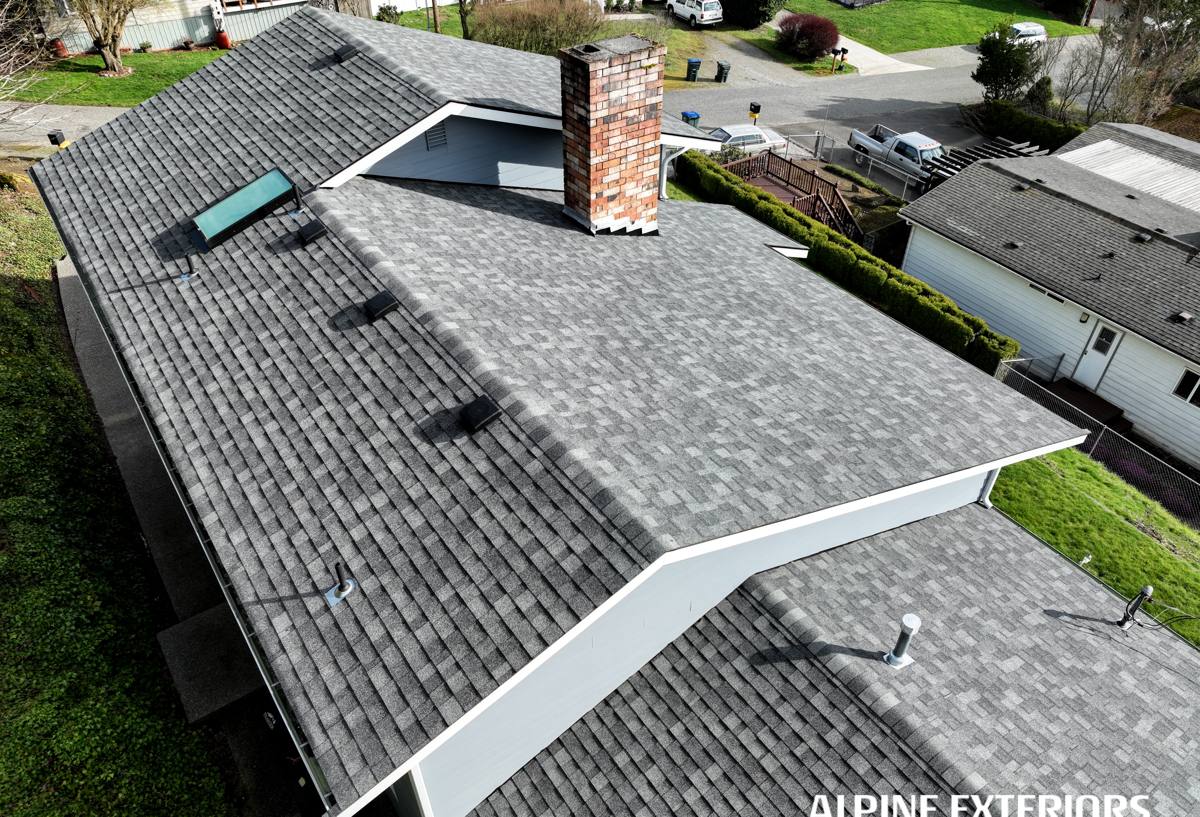
Chimneys, skylights, sidewall transitions, and valleys are where most roof leaks actually start, not in the open field of shingles. We use corrosion-resistant flashing metal sized and stepped correctly for each condition, sealed with materials rated for sustained UV and moisture exposure rather than general-purpose caulk that dries out and cracks within a couple of seasons.
Comparing Roofing Materials for a Cherry Point Home
There isn't one "best" material for every home here — it depends on your roof's slope, shade exposure, and how long you want to go between maintenance visits. Here's how the common options stack up against the specific conditions Cherry Point homes face.
| Material | Salt Air Resistance | Moss Resistance | Wind-Driven Rain Performance | Typical Maintenance |
|---|---|---|---|---|
| Architectural asphalt shingle | Good with corrosion-resistant fasteners | Moderate; benefits from zinc/copper strips | Good with proper underlayment | Periodic moss treatment on shaded slopes |
| Standing seam metal | Very good with coated/marine-grade fasteners | Very good; sheds moss more easily | Excellent | Low; occasional fastener check |
| Composite/synthetic shingle | Good | Moderate to good | Good | Low to moderate |
| Cedar shake | Fair; needs regular sealing | Poor without treatment | Fair | High; requires regular upkeep in damp climates |
We'll walk through these trade-offs honestly during your estimate rather than steering you toward whatever happens to be easiest to install. For a lot of Cherry Point homes, especially those under tree cover, the deciding factor is moss resistance and long-term maintenance tolerance more than upfront cost.
Our Installation Process
We keep the process straightforward and communicate at each stage, since a roof replacement disrupts your property for a few days and you deserve to know what's happening and when.
- On-site inspection — we assess the existing roof, attic ventilation, and any signs of moisture damage before writing an estimate.
- Material selection — we go over the options in the table above based on your roof's shade, slope, and budget.
- Tear-off and deck repair — old roofing comes off, decking gets inspected and repaired as needed.
- Underlayment and flashing installation — ice-and-water barrier, synthetic underlayment, and corrosion-resistant flashing go in before any finished roofing.
- Roofing installation — shingles, panels, or shakes installed to manufacturer spec and matched to local wind exposure requirements.
- Ventilation check and final walkthrough — we confirm intake/exhaust balance and walk the finished roof with you before calling the job done.
Signs Your Cherry Point Roof May Already Need Replacing
- Granule loss showing up in gutters after every rain
- Moss established on more than a small patch of a north-facing slope
- Curling, cracked, or lifted shingle edges near eaves and valleys
- Daylight visible through the attic roof deck
- Rusted or stained flashing around chimneys, vents, or skylights
- A roof approaching or past 20-25 years old with no major upgrades since installation
Why a Crew That Already Works Cherry Point Matters
Roofing crews that mostly work drier, more sheltered inland areas sometimes install to a generic standard that holds up fine there but underperforms here. A crew that regularly works Cherry Point and the surrounding Blaine coastline already knows which fastener grades corrode too fast in this air, which flashing details actually stop wind-driven rain in an open-exposure lot, and which slopes in this area need extra moss-resistant detailing because of tree shade. That familiarity shows up less in the sales pitch and more in the parts of the roof you never think about again — because they were done right the first time.
Permits, Timing, and Weather Windows
Whatcom County requires permits for full roof replacements, and we handle that paperwork as part of the job rather than leaving it to the homeowner. Timing matters more here than in drier parts of the state — we schedule tear-offs around forecasted dry windows so your home isn't exposed to open sky longer than necessary, and we plan around the wetter months when a shorter installation window makes scheduling tighter.
Maintenance After Installation
A correctly installed roof still benefits from a bit of upkeep in this climate. Keep gutters clear so water isn't backing up under the roof edge, keep overhanging branches trimmed back to reduce shade and debris buildup, and have the roof looked at every couple of years so small issues — a lifted shingle, a hairline gap in flashing sealant — get caught before they turn into a deck repair. Moss treatment on shaded slopes, done proactively rather than after moss has already taken hold, is one of the cheapest ways to extend a roof's life here.
Cost Factors to Expect
Costs vary based on roof size, pitch, material choice, and how much deck repair is needed once the old roofing comes off. Rather than quote a number that doesn't apply to your specific roof, we'll give you a detailed, itemized estimate after the on-site inspection so you know exactly what you're paying for and why — including any upgrades specific to Cherry Point's exposure that we'd recommend and why they're worth it.
If your Cherry Point roof is aging, losing granules, holding onto moss, or showing signs of a leak, we're happy to take a look. Reach out for a free, no-pressure estimate — the form below gets you started.