 Blaine Siding
 Board & Batten in the Nooksack Area: A Style That Has to Earn Its Keep
Board and batten has become one of the most requested looks for homes in and around Nooksack, and it's easy to see why — the strong vertical lines read as clean and modern on newer builds, and as classic farmhouse on older ones. But out here, close to Blaine and the Strait of Georgia, board and batten isn't just a style choice. The vertical seams, the batten-to-board overlap, and the exposed fastener lines all have to hold up against salt-laden wind off the water, long stretches of driving rain, and a moss season that can run most of the year in the shade of a mature Douglas fir canopy. A batten profile that looks great in a photo but wasn't engineered or installed for this climate will show it within a few winters — cupping boards, streaking battens, and moss creeping up from the base trim.
We install board and batten for homeowners throughout Whatcom County, and the Nooksack area gets its own approach because the exposure here is specific: mixed timber and open pasture, damp low ground near the river drainage, and salt air that reaches further inland than most people expect once a west wind picks up off Semiahmoo Bay and Boundary Bay. Getting board and batten right here means respecting all three at once.
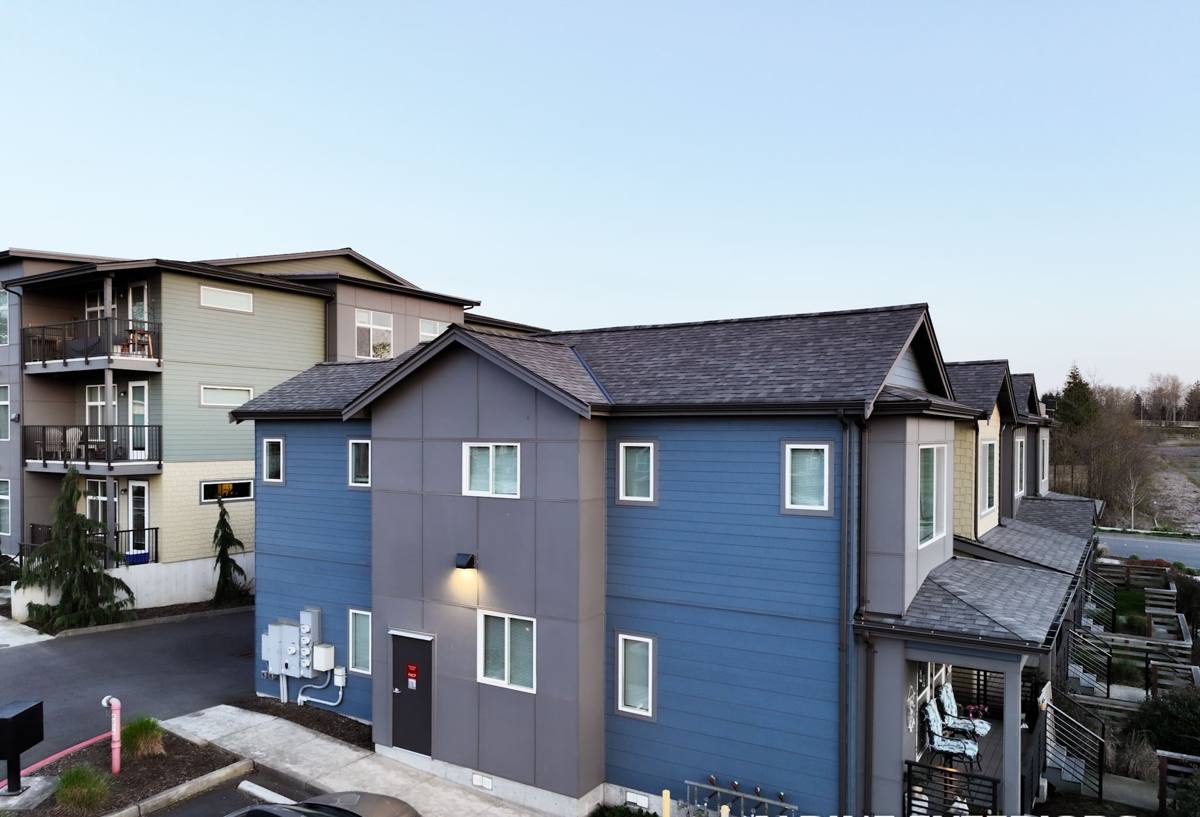
What the Local Climate Actually Does to Vertical Siding
Salt Air
Salt-laden air doesn't just affect homes directly on the water. It travels on prevailing winds and settles on any exterior surface, where it accelerates corrosion on fasteners and metal flashing and slowly breaks down finishes that aren't rated for it. On board and batten, the battens themselves — narrow, vertical, and often the first thing to catch wind-blown moisture — take the brunt of it.
Driving Rain
Rain here rarely falls straight down. Wind-driven rain hits vertical siding at an angle and works its way behind battens and into board seams if the water-resistive barrier, flashing, and batten spacing weren't detailed correctly. Board and batten has more vertical seams per square foot than lap siding, which means more opportunities for water to find a way in if the underlying assembly is wrong.
Moss and Sustained Dampness
Shaded lots near timber and low, damp ground around Nooksack hold moisture longer than open, sun-exposed sites. Moss and algae take hold on any siding material that stays damp for extended periods, and once established they hold water against the surface — which is a much bigger problem for a material that can absorb and swell than for one engineered to resist it.
Why We Only Install James Hardie for This Application
We don't install LP SmartSide, vinyl, Cemplank, Allura, primed spruce, or cedar board and batten — not because those products have no merit, but because we've standardized on one system that we can stand behind on every job, in every climate condition this region throws at it. Wood board and batten (primed spruce or cedar) is the traditional look, but it's also the material most vulnerable to the exact conditions described above: it absorbs moisture, moves with humidity swings, and needs a repaint or reseal cycle to keep ahead of moss and rot. Vinyl board and batten is low-maintenance in a dry climate but can warp or bow when exposed to sustained damp-and-dry cycling, and its seams are harder to make watertight over the long haul in wind-driven rain. Engineered wood products like LP SmartSide use resin-treated strand board with a factory coating — a real improvement over raw wood, but the core is still wood-based, and any breach in the coating (a fastener hole, a cut edge, an impact) exposes that core to the same moisture risk.
James Hardie fiber cement is cement, sand, and cellulose fiber — it doesn't absorb water the way wood-based products do, it won't rot, and it's non-combustible. The ColorPlus factory finish is baked on and warrantied against fading and peeling, which matters more here than in a drier climate, because the finish is doing constant duty against salt air and UV. Hardie's HZ5 product line is engineered specifically for cold, wet climates like Whatcom County, with moisture and freeze-thaw performance built into the spec rather than added after the fact. That's the whole reason we standardized on it: one material, correctly installed, that we don't have to caveat.
What a Correct Board & Batten Installation Actually Involves
Board and batten looks simple from the street — vertical boards, battens over the seams — but the assembly behind it is what determines whether it lasts fifteen years or fifty. On every Nooksack-area job we install:
- A continuous water-resistive barrier (house wrap) with all seams taped and integrated with window and door flashing, lapped correctly to shed water downward
- Rainscreen furring strips where the wall assembly calls for it, giving the siding a drainage gap so any moisture that does get behind the boards can dry out instead of sitting against the sheathing
- Hardie boards fastened per manufacturer spec — correct fastener type, spacing, and depth, since over-driven or corrosion-prone fasteners are one of the most common failure points on any board and batten job
- Battens set with proper spacing over the board seams and fastened into structural framing, not just into the board below
- Factory-primed cut edges field-sealed with Hardie-approved products, since a raw cut edge is the one place fiber cement can wick moisture if left untreated
- Flashing and kickout details at every roofline, deck ledger, and window head that intersects the siding field — the highest-risk spots for water intrusion on any home
Skipping any one of these doesn't show up on day one. It shows up in year three or four as staining, a soft spot at a butt joint, or moss gaining a foothold at a poorly flashed transition.
Our Process for Board & Batten Jobs in the Nooksack Area
1. On-Site Assessment
We walk the property and look specifically at exposure: which walls take direct wind-driven rain, which sides sit in shade long enough to grow moss, and where the existing siding or trim is already showing water or moisture damage. This shapes decisions on rainscreen use, flashing details, and batten spacing before a single board is ordered.
2. Tear-Off and Substrate Check
We remove the old siding down to the sheathing and check for rot, soft spots, or prior water intrusion — common on homes near the river drainage or in shaded, damp lots — and repair or replace damaged sheathing before anything new goes on.
3. Weather Barrier and Flashing
House wrap, taped seams, and flashing go in as a complete system, not a patchwork. This step is invisible once the siding is up, and it's the single biggest factor in how the wall performs against driving rain over the next few decades.
4. Board and Batten Installation
Hardie boards and battens go up to manufacturer spec, with fastener placement, cut-edge sealing, and flashing integration checked at every transition — corners, windows, rooflines, and the base trim closest to grade.
5. Final Walkthrough
We review the finished job with the homeowner, point out any maintenance items specific to their site (shade exposure, gutter runoff patterns), and make sure everything is sealed and finished to spec before we consider the job done.
What Board & Batten Costs to Do Right
| Factor | Why It Matters Here |
|---|---|
| Wall prep and sheathing repair | Damp, shaded lots near Nooksack often have hidden moisture damage under old siding that adds scope once uncovered |
| Rainscreen / furring strips | Recommended on higher-exposure walls facing prevailing wind and rain; adds labor but extends siding life significantly |
| Batten spacing and board width | Narrower reveals use more material and labor per square foot than wider board spacing |
| Flashing detail complexity | Homes with multiple rooflines, decks, or dormers need more flashing work than a simple rectangular footprint |
| Color and finish | Factory ColorPlus finish costs more upfront than field-painted but eliminates a repaint cycle for years |
We give every homeowner a written estimate that breaks out these factors so there's no guessing where the number comes from — no invented figures, just a scope-based quote for the specific house.
Living With Board & Batten in a Moss-Prone, Salt-Air Climate
Even the right material needs a little homeowner attention to perform at its best long-term. Simple habits go a long way here:
- Keep gutters and downspouts clear so runoff doesn't sheet down the siding face near the base of walls
- Trim back vegetation and tree canopy that keeps a wall shaded and damp — this is the single biggest driver of moss growth on siding in this area
- Rinse salt residue off siding on wind-exposed walls once or twice a year, especially after storm events off the water
- Watch caulked joints at windows, doors, and trim for cracking or separation and have them resealed before a gap becomes a leak path
- Have battens and board seams checked periodically for any sign of moss or algae taking hold, and address it early with a gentle wash rather than letting it establish
None of this is heavy maintenance — it's the kind of upkeep any exterior in this climate benefits from, and it's far less than what wood or vinyl board and batten typically demands out here.
Why a Crew That Already Works This Area Matters
Board and batten installed to a generic spec written for a drier climate is a different job than board and batten installed for wind off the water and a wet, shaded Whatcom County winter. A crew that already works the Nooksack and Blaine area knows which walls on a typical local lot take the worst of the wind-driven rain, where moss tends to establish first, and how far salt air actually reaches inland on this stretch of coastline. That local knowledge shows up in decisions like where to add a rainscreen gap, how tight to seal a cut edge, and which flashing details deserve extra attention — decisions that a crew unfamiliar with this specific climate might not think twice about.
If you're weighing board and batten for a home in the Nooksack area, we're happy to walk the property, look at your specific exposure, and put together a straightforward, no-pressure estimate — just fill out the form below.