 Blaine Siding
 Why Board & Batten Works So Well in Birch Bay
Board and batten is one of the most recognizable siding styles on the Pacific Northwest coast, and it's a natural fit for Birch Bay. The vertical lines read as clean and contemporary on newer builds, but the profile has been used on Northwest coastal cottages and farmhouses for well over a century, so it also sits comfortably on older homes near the water. Beyond looks, the vertical orientation has a real functional advantage in a place like Birch Bay: water sheds straight down the face of the wall instead of pooling along horizontal laps, which matters when your home is catching wind and spray directly off the bay.
That said, board and batten is not a "set it and forget it" siding style. It has more seams, more fasteners, and more exposed batten edges than standard lap siding, and every one of those details has to be handled correctly or the wall assembly behind it pays the price. In a marine environment like Birch Bay, cutting corners on any of those details shows up faster than it would on a home twenty miles inland.
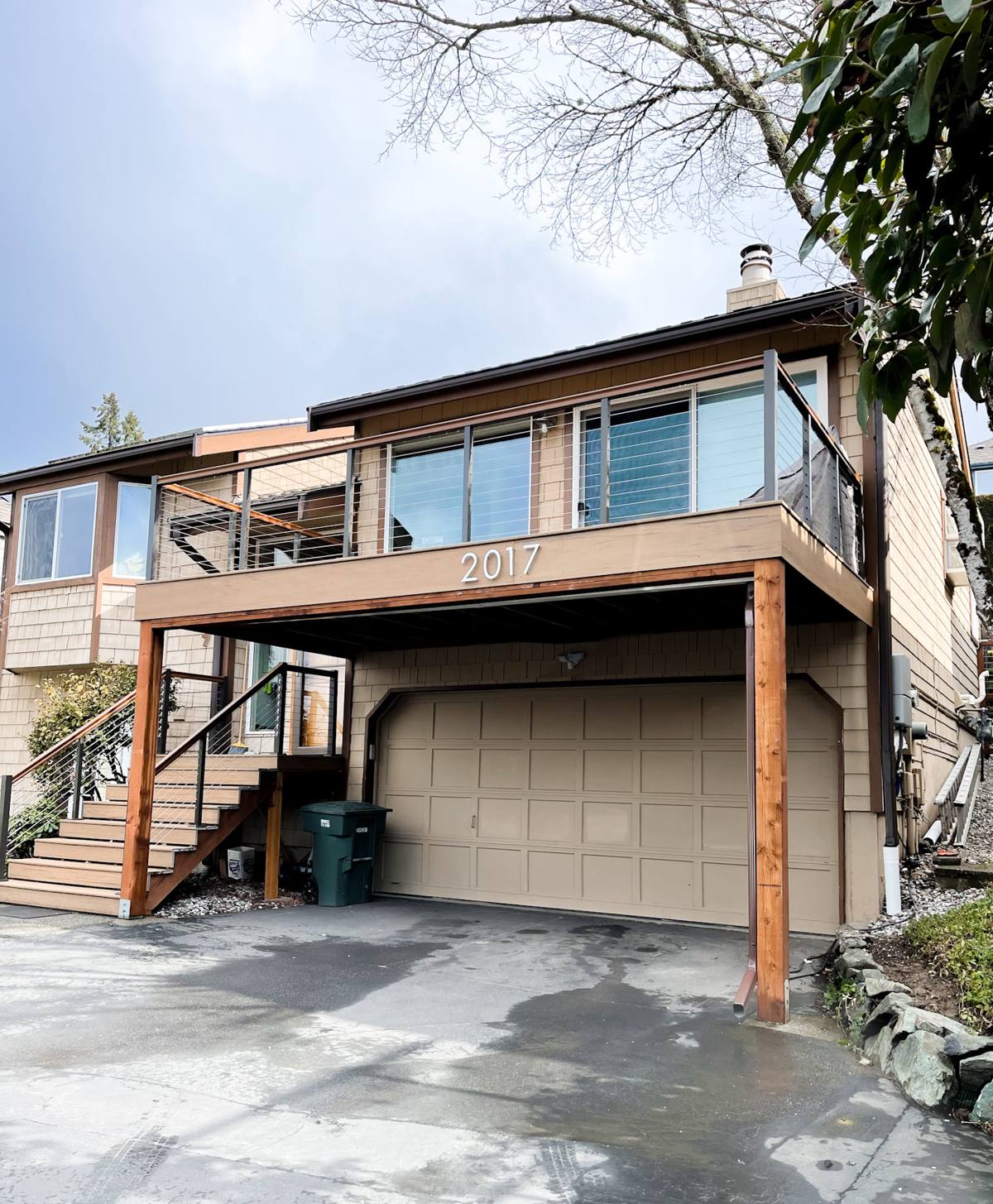
What Birch Bay's Climate Does to Vertical Siding
Birch Bay sits directly on the water, which means homes here deal with a combination of exposures that inland Whatcom County properties simply don't see to the same degree.
Salt Air and Metal Fasteners
Airborne salt from the bay accelerates corrosion on anything metal — fasteners, flashing, trim screws, even hose bibs. On board and batten siding, the battens are typically face-nailed or blind-nailed at a tighter spacing than a lap profile, so there's more exposed fastener hardware to protect. Using the wrong fastener grade near the water is a slow, invisible mistake that shows up as rust streaks and loosened battens years later.
Wind-Driven Rain
Storms coming off the Strait of Georgia don't just drop rain straight down — wind pushes it sideways and even upward against a wall. Board and batten relies on the vertical boards and the rainscreen gap behind them to manage that water. If the drainage plane, flashing, and gap aren't built correctly, wind-driven rain finds its way behind the siding instead of running off it.
Moss and Algae Season
Whatcom County's long, wet fall-through-spring stretch is prime moss and algae season, and shaded, north-facing walls near tree lines or close to the water hold moisture longer than sun-exposed walls. Vertical battens create narrow shadow lines that can trap organic growth if the siding material and finish aren't up to the job.
What a Correctly Installed Board & Batten System Involves
Board and batten looks simple from the curb — vertical panels with strips covering the seams — but the assembly behind that simple look is what determines whether it lasts fifteen years or fifty.
The Rainscreen Gap
A true rainscreen gap between the back of the siding and the weather-resistive barrier lets any water that does get past the battens drain and dry out instead of sitting against the wall sheathing. This is non-negotiable in a bay-side climate — it's the difference between a wall that dries out after a storm and one that stays damp for weeks.
Flashing and Penetrations
Every window, door, hose bib, light fixture, and vent penetrating the wall needs proper flashing integrated with the weather-resistive barrier before a single board goes up. Board and batten has more vertical seams than lap siding, so window and door flashing details matter even more — a missed step here is one of the most common causes of hidden water damage behind vertical siding.
Fastening Pattern
Battens need to be fastened into solid framing or blocking at consistent spacing, with corrosion-resistant fasteners appropriate for a marine environment. Fastener heads should be set correctly — not overdriven, which crushes the material and opens a path for water, and not underdriven, which leaves the board loose.
Comparing Board & Batten Materials for a Marine Climate
Board and batten can be built out of several materials, and the material matters more here than it would in a drier inland climate. We install exclusively in James Hardie fiber cement, but homeowners deserve to understand how the options actually compare.
| Material | Salt Air / Moisture Behavior | Maintenance Burden | Typical Longevity |
|---|---|---|---|
| James Hardie fiber cement | Non-combustible, engineered to resist moisture-driven swelling and won't rust or corrode itself | Occasional rinsing, repaint cycle on the factory finish is long | Decades when installed to spec |
| Cedar or primed wood | Absorbs moisture at end grain and cut battens; prone to swelling, cupping, and rot in wet, salty conditions | Frequent repainting, caulking, and moisture inspection | Shorter, highly dependent on upkeep |
| Vinyl board & batten | Won't rot, but can become brittle and crack with age; seams and fastener slots are a moisture entry point | Low, but limited repair options once damaged or faded | Moderate, shorter in harsh coastal exposure |
| LP SmartSide (engineered wood) | Better than raw wood but still wood-based; cut edges and panel joints need diligent sealing | Ongoing edge and joint maintenance | Moderate, sensitive to installation quality |
We made the decision years ago to install James Hardie exclusively rather than offer wood, vinyl, or engineered wood board and batten. Fiber cement handles the freeze-thaw, moisture, and salt exposure common around Birch Bay without the ongoing maintenance burden that wood-based products carry, and it comes with a factory ColorPlus finish that's built for exactly this kind of weather rather than relying on job-site paint alone.
Our Board & Batten Installation Process
The process for a correct board and batten job doesn't change because the style is trendy — every step exists for a reason.
- On-site assessment of the wall, existing siding condition, and wind/moisture exposure specific to the lot's position relative to the bay
- Removal of old siding and inspection of the sheathing and framing underneath for any hidden moisture damage
- Installation of the weather-resistive barrier and flashing at every window, door, and penetration
- Installation of vertical furring strips to create the rainscreen drainage gap
- Installation of Hardie panels, followed by battens at engineered spacing and fastener depth
- Sealing and finishing of cut edges per manufacturer specification
- Final walk-through inspection before the job is considered complete
Skipping the rainscreen step or rushing the flashing detail is the single biggest shortcut we see on board and batten jobs done wrong — and it's the one shortcut that's completely invisible until the siding comes back off.
Maintaining Board & Batten Siding in a Bay-Side Environment
Even correctly installed siding benefits from a bit of seasonal attention in a place like Birch Bay:
- Rinse salt spray and road grime off the siding a couple of times a year, especially on walls facing the water
- Keep gutters and downspouts clear so runoff isn't sheeting down the wall face
- Trim back vegetation and tree cover on shaded walls to cut down on moss and algae buildup
- Do a visual check of caulking at trim and penetrations after major storms
- Watch for any fastener heads showing rust or the batten pulling away, and address it early rather than waiting
None of this is heavy maintenance — it's the kind of light seasonal check that keeps a well-installed system performing the way it's supposed to for decades.
What to Ask Before You Hire Someone to Install It
Board and batten is easy to install poorly and look fine for the first year or two. The problems that come from a rushed rainscreen, missed flashing, or wrong fastener choice usually don't show up until water has already been getting behind the wall for a while. Before hiring anyone for a board and batten project near the water, ask:
- Do you install a proper rainscreen gap, or does the siding go directly over the weather barrier?
- How do you flash windows, doors, and penetrations before siding goes up?
- What fastener type and spacing do you use, and is it rated for a marine environment?
- Who manufactures the material, and what does the warranty actually cover?
- Can you walk me through how cut batten edges are sealed and finished?
A contractor who can answer these clearly and specifically, without vague reassurances, is one who understands what board and batten actually requires in this climate.
Why Local Experience with Birch Bay Homes Matters
Not every property in the Blaine area faces the same exposure. A home a few blocks off the water deals with less direct spray and wind than one sitting right along the bay, and the right approach to flashing, gap depth, and fastener choice can shift depending on where a house sits relative to that exposure. A crew that already works Birch Bay regularly has seen how different lots in the same small area behave over time — which walls hold moss, which corners take the brunt of winter storms, which older homes have moisture issues hiding behind their existing siding. That local pattern recognition is worth more than a generic install checklist, and it's part of why we standardized on one material system we trust rather than juggling several.
If you're weighing board and batten for a home in Birch Bay, we're happy to take a look at the property, talk through what the wall assembly actually needs given its exposure, and give you a straightforward, no-pressure estimate — just fill out the form below to get started.