 Blaine Siding
 Why Birch Bay's Shoreline Exposure Changes the Siding Equation
Birch Bay sits right on the water, and that proximity to Puget Sound and the Strait of Georgia isn't just a scenic bonus — it's a real factor in how fast siding wears out. Homes here take on a combination of stresses that inland Whatcom County properties simply don't see as intensely: salt-laden air that accelerates corrosion and finish breakdown, wind-driven rain that gets pushed sideways into seams and laps, and a long, damp moss season that keeps north- and west-facing walls shaded and wet for weeks at a time. Any one of these factors is manageable. Together, over years, they punish siding materials that aren't built for the coast.
We've replaced siding on enough Birch Bay and greater Blaine homes to know the pattern: the failures we see aren't random. They cluster on the walls facing the water and the prevailing weather, and they show up earlier on products that weren't engineered with this kind of exposure in mind. That's the lens we bring to every siding replacement estimate in this neighborhood.
What "Salt Air" Actually Does to a House
Airborne salt doesn't just sit on the surface — it's hygroscopic, meaning it pulls moisture out of the air and holds it against whatever it lands on. On siding, that means fasteners, trim, and any exposed edges stay damp longer than they would a few miles inland. Over time this speeds up corrosion on lower-grade fasteners and flashing, and it can accelerate the breakdown of paint films and factory finishes that weren't formulated to resist it.
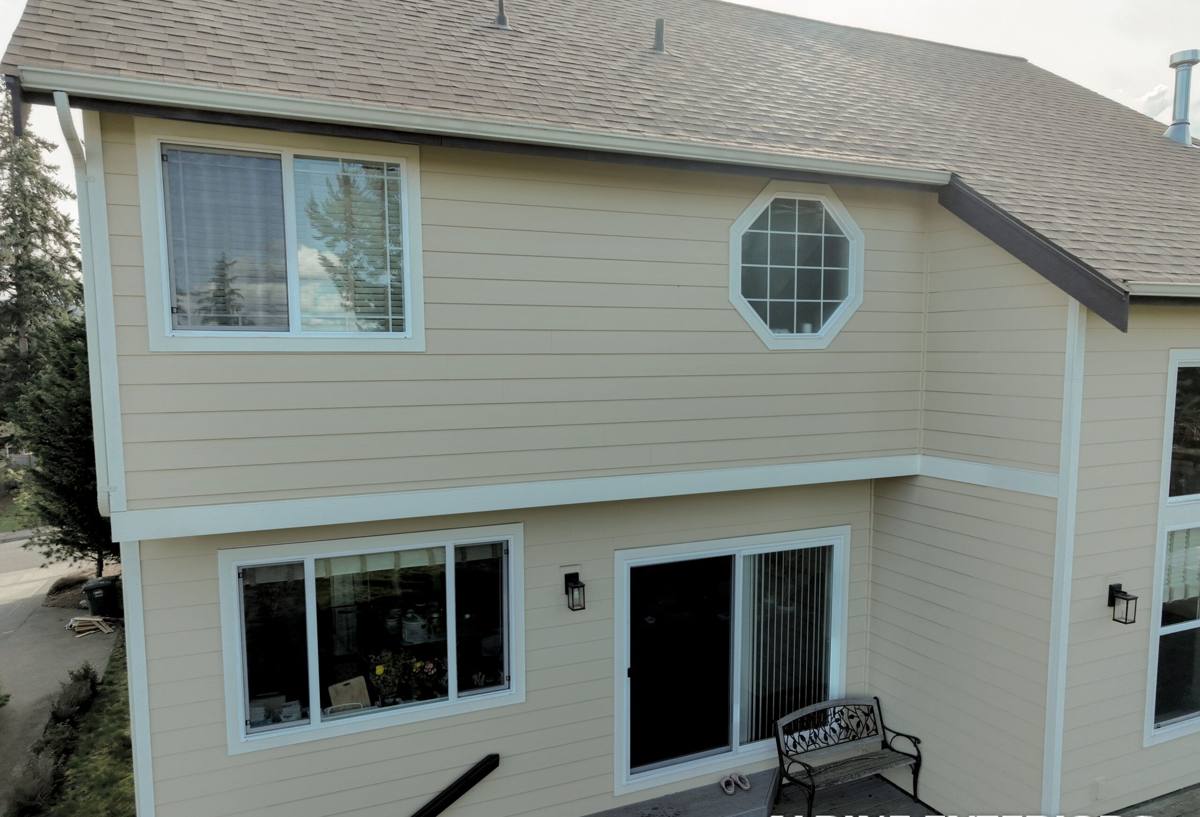
Signs a Birch Bay Home Needs Siding Replacement, Not Just Repair
Not every siding problem calls for a full tear-off. But in a coastal microclimate like Birch Bay, small issues tend to compound faster, so it's worth knowing where the line is.
- Soft, spongy, or crumbling material when pressed near the bottom courses or around window and door trim
- Persistent moss or algae growth that returns within weeks of cleaning, especially on north and west walls
- Visible cupping, warping, or delamination of panels or lap boards
- Paint that's peeling or blistering in sheets rather than just fading — a sign moisture is moving through the material, not just the finish
- Rust streaking from fasteners or corner flashing bleeding down the face of the siding
- Gaps opening up at seams, corners, or butt joints that let wind-driven rain track behind the cladding
- Rising energy bills alongside noticeably colder walls in winter, which often points to a failing water-resistive barrier behind the siding, not just the siding itself
If you're seeing two or more of these at once, that's usually a sign the wall assembly — not just the visible surface — has been compromised, and patch repairs will only buy a little time.
What a Correct Siding Replacement Actually Involves
Siding replacement is often talked about like it's just swapping old boards for new ones. On a Birch Bay property, that mindset is how homes end up with the same problems five years later. A proper replacement addresses the whole wall system, not just what's visible from the street.
Tear-Off and Sheathing Inspection
Once the old siding is off, we inspect the sheathing underneath for soft spots, water staining, or rot — especially around window openings, corners, and the lower few feet of the wall, which take the brunt of splash-back and driving rain in this area. Any damaged sheathing gets replaced before anything new goes up. Skipping this step is the single most common reason a "new" siding job fails early.
Water-Resistive Barrier and Flashing
A weather-resistant barrier (housewrap) goes over the sheathing, with all seams properly lapped and taped to shed water downward. Flashing gets installed at every window, door, and horizontal trim transition, integrated with the barrier so water is directed out and away from the wall — not trapped behind the new siding. This detailing matters more in Birch Bay than in a sheltered inland lot, because wind-driven rain actively pushes water sideways and upward at these seams during storms off the water.
Fasteners and Hardware
We use fasteners and flashing components rated for coastal, high-moisture exposure. This is a place where cutting corners on a small-dollar item causes an outsized problem — corroding fasteners eventually stain the siding face and weaken the panel's attachment.
Ventilation and Rainscreen Considerations
Depending on the wall assembly, a small air gap (rainscreen) behind the siding can help panels dry out faster after wind-driven rain events, which matters directly for moss and mildew resistance on shaded, water-facing walls.
Why We Install Only James Hardie Fiber Cement
We made a decision as a company to install James Hardie fiber cement siding exclusively — not vinyl, not LP SmartSide, not primed wood, not composite alternatives. That's not a marketing position; it's a standard we hold because of what we've seen happen to other materials on coastal Whatcom County homes over time.
Vinyl siding is affordable and easy to install, and it holds up fine in a lot of climates. But it can become brittle in sustained cold snaps, and its seams and panel laps give wind-driven rain more opportunities to work behind the cladding on an exposed site like Birch Bay. Engineered wood products like LP SmartSide perform well when the wall stays dry, but their long-term durability depends heavily on the edges and cut ends staying properly sealed — a maintenance dependency that's harder to keep up with in a place where moss and moisture are a near-constant presence. Primed wood and cedar are beautiful materials, but they require the most active maintenance of any option, and skipped maintenance in a wet, salty environment shows up fast as rot and paint failure.
James Hardie fiber cement is non-combustible, dimensionally stable, and doesn't absorb moisture the way wood-based products do, so it resists cupping, swelling, and rot in ways that matter directly in a marine climate. Its ColorPlus factory-applied finish is baked on under controlled conditions and backed by a real finish warranty, which reduces the repainting cycle that salt air otherwise accelerates. Hardie also engineers specific product lines (their HZ5 formulation) for climates with significant moisture and freeze-thaw exposure — exactly the profile Birch Bay sits in. We'd rather install one product correctly, to spec, than juggle multiple systems and their different failure points.
Comparing Common Siding Options for a Birch Bay Property
| Material | Moisture Behavior | Maintenance Burden | Coastal/Salt Air Fit |
|---|---|---|---|
| James Hardie fiber cement | Doesn't swell, warp, or rot; factory finish resists weathering | Low — occasional wash, no repainting cycle for years | Strong — engineered HZ5 line for wet climates |
| Vinyl | Doesn't absorb water, but seams/laps allow water intrusion behind panels | Low, but can become brittle and crack over time | Fair — seam count is a liability in driving rain |
| LP SmartSide / engineered wood | Wood-based; edges and cuts vulnerable if not fully sealed | Moderate to high — edge sealing and inspection required | Fair — depends heavily on maintenance discipline |
| Primed spruce / cedar | Absorbs moisture readily; prone to swelling and rot if finish fails | High — regular repainting and caulking | Weak without aggressive upkeep |
How the Replacement Process Works
We walk every Birch Bay estimate the same way, because skipping steps is where problems start:
- On-site assessment. We inspect current siding condition, check for hidden moisture or sheathing damage where accessible, and evaluate exposure on each elevation — the water-facing and shaded walls typically need the most attention.
- Written estimate. You get a clear scope of work and pricing before anything is scheduled, including which Hardie product and color line fits the home.
- Tear-off and sheathing repair. Old material comes off, sheathing is inspected and repaired as needed, and we document anything unexpected before covering it back up.
- Barrier, flashing, and rainscreen detailing. Water management gets installed correctly at every penetration and transition.
- Hardie installation to manufacturer spec. Proper fastener spacing, clearances, and caulking per James Hardie's installation guidelines — this is what keeps the warranty valid and the assembly performing as designed.
- Final walkthrough. We review the finished work with you before calling the job complete.
What Affects the Cost of a Siding Replacement Here
| Factor | Why It Matters in Birch Bay |
|---|---|
| Sheathing condition under old siding | Water-facing homes often need more sheathing repair, which isn't visible until tear-off |
| Home size and wall complexity | More corners, trim, and window openings mean more flashing and detail work |
| Hardie product line and profile | Lap siding, panel siding, and shingle-style products vary in material and labor cost |
| Color and finish selection | ColorPlus factory finishes vs. field-painted options affect both cost and long-term upkeep |
| Access and site conditions | Waterfront lots and tighter setbacks can affect staging and scaffolding needs |
Every home is different, which is why we price off an actual site visit rather than a phone estimate — especially on wall assemblies where hidden moisture damage is a real possibility.
Why Local Experience in Birch Bay Matters
A contractor who mostly works dry, inland neighborhoods can do competent work and still miss the details that matter on a shoreline lot. Knowing which elevations in Birch Bay take the worst of the wind-driven rain, how aggressively moss establishes itself on shaded coastal walls, and how salt air affects fastener and flashing choices isn't generic industry knowledge — it's specific to working this stretch of Whatcom County repeatedly. When you're vetting a siding contractor for a Birch Bay home, ask directly about their experience with waterfront or near-waterfront properties, not just general siding volume.
After the Job: Keeping Hardie Siding Performing in a Coastal Climate
James Hardie siding is low-maintenance, not zero-maintenance. A periodic rinse to keep salt residue and moss spores from building up, prompt attention to any caulking that separates at trim joints, and keeping gutters and downspouts clear so water isn't dumping directly onto walls will keep a Birch Bay installation performing for decades. None of this compares to the upkeep wood or engineered-wood siding demands in this climate, but it's still worth doing.
If your Birch Bay home is showing signs of siding failure — or you just want an honest read on whether repair or replacement makes sense — we're happy to take a look. Reach out for a free, no-pressure estimate using the form below.