 Blaine Siding
 Birch Bay's Shoreline Climate Is Tough on Siding
Birch Bay sits right on the water, and that changes what siding has to deal with compared to a home a few miles inland in Blaine or elsewhere in Whatcom County. Homes along this shoreline take more direct salt-laden air, more wind-driven rain, and more of the region's long, wet moss season than properties tucked back from the water. None of that means Birch Bay siding is doomed to fail early — it means the repair work has to account for exposure that a generic patch job usually ignores.
We've worked on enough homes along this stretch of coastline to know the difference between a repair that holds up through another wet Whatcom County winter and one that opens back up in eighteen months. This page covers what's actually happening to siding out here, what a correct repair looks like, and how our process works.
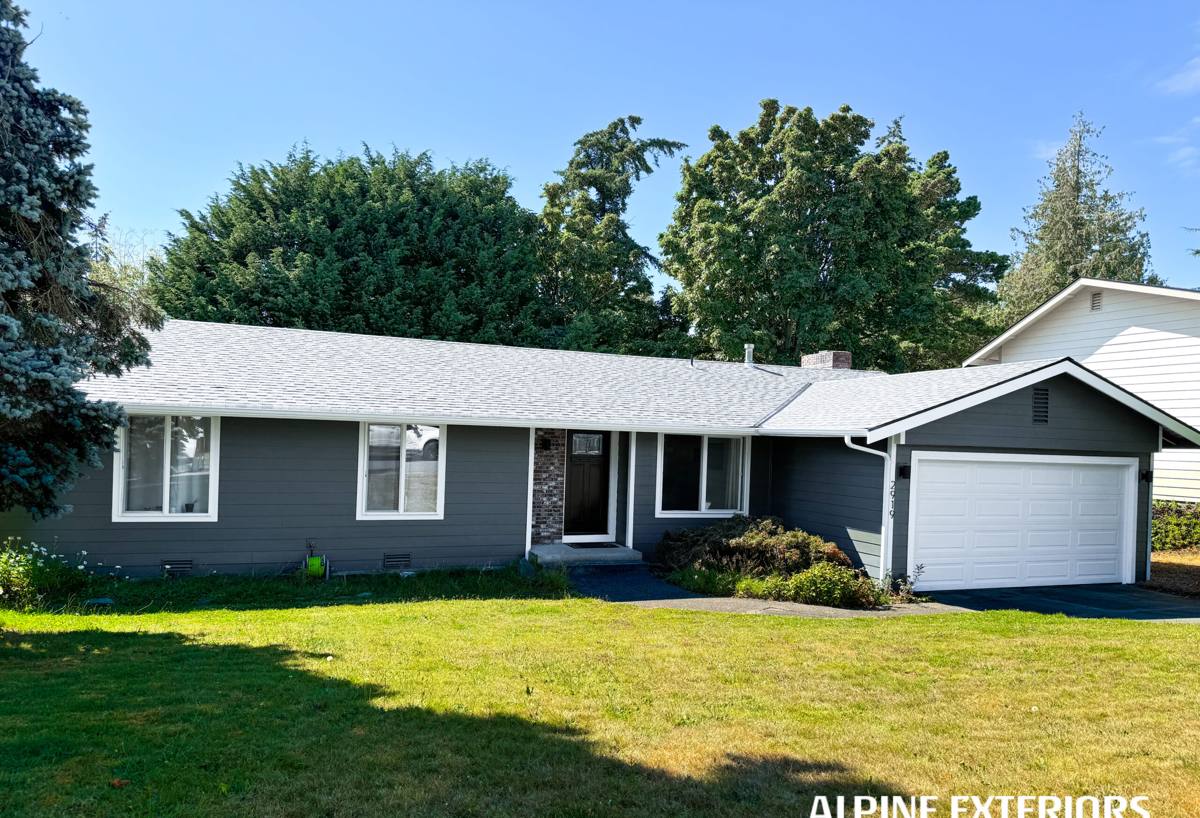
How Salt Air, Rain, and Moss Actually Damage Siding
Salt air and fasteners
Salt in the air off the bay settles on every exterior surface, including the nails, screws, and metal trim behind and around your siding. Over years, that accelerates corrosion in fasteners and flashing that weren't rated for a marine-influenced environment. Once a fastener corrodes and loosens, the siding panel it's holding starts to move, and movement is what lets water in.
Wind-driven rain at laps and joints
Birch Bay gets more sideways rain than a sheltered inland lot. Siding systems are designed to shed water downward, not to resist rain being pushed sideways and upward at laps, corners, and butt joints. When those details weren't installed with tight, correct overlaps to begin with, wind-driven rain finds the gap and works moisture behind the cladding, where it can sit against the wall sheathing.
Moss and prolonged moisture contact
Whatcom County's moss season isn't just a roof problem. On siding, moss and algae take hold anywhere shade, moisture, and poor airflow overlap — often on north-facing walls, under eaves, or behind landscaping. Moss holds water against the siding surface far longer than open air would, which is exactly the condition that causes swelling, delamination, or rot in materials that aren't built to handle sustained dampness.
Signs Your Birch Bay Home Needs Siding Repair Now
- Soft or spongy spots when you press on the siding, especially near the bottom courses or around windows
- Visible cracking, buckling, or panels that have pulled away from the wall
- Persistent moss or dark staining that keeps coming back after cleaning
- Paint or finish that's bubbling, peeling, or chalking unevenly in patches
- Rust streaks below fasteners or trim, which usually points to corroding hardware underneath
- Gaps opening up at corners, butt joints, or where siding meets trim, windows, or doors
- A musty smell or visible staining on interior walls that back up to exterior siding
- Higher-than-usual heating bills, which can point to moisture-compromised insulation behind the wall
What a Correct Siding Repair Actually Involves
A repair that's done right starts with more than looking at the damaged board. We check how far the problem actually extends, because visible damage is often just the part you can see — the real question is whether the sheathing, framing, or house wrap behind it has also been compromised.
Assessment beyond the surface
That means probing suspect areas, checking moisture content with a meter where rot is suspected, and pulling adjacent boards if there's any sign the damage extends past what's visible from the ground. Patching over hidden rot doesn't fix anything — it just hides it until it's worse and more expensive.
Matching material and finish
Once we know the real scope, replacement pieces need to match the existing siding in profile, exposure, and finish as closely as possible. A mismatched patch is the fastest way to make a repair look like exactly what it is.
Flashing and water management, not just caulk
The single biggest difference between a repair that lasts and one that doesn't is whether water management was corrected at the source. Caulk has a place, but it's not a substitute for proper flashing, correct lap sequencing, and adequate clearance at grade and hard surfaces. We rebuild the water path first, then finish the surface.
Repair or Replace? How We Make the Call
Not every siding problem in Birch Bay means a full replacement, and not every visible crack is minor. Here's generally how we sort it out during an inspection.
| What We Find | What It Usually Means | Typical Recommendation |
|---|---|---|
| One or two cracked or impact-damaged boards, substrate is dry | Isolated, localized damage | Targeted repair with matched material |
| Moss and staining, but siding is sound underneath | Surface-level growth, no rot yet | Clean, repair minor spots, adjust maintenance habits |
| Soft spots or rot showing up on more than one wall | Widespread moisture intrusion | Full or partial section replacement |
| Siding is original, 20+ years old, and repairs keep recurring | Material at or past its service life | Full replacement rather than repeated patching |
When damage is limited and the substrate behind it is dry, repair is the right call and the honest one. When we find the same failure pattern spreading across a wall — or the siding is old enough that we're just buying a year or two — we'll tell you that plainly instead of running up repair costs on a system that's on its way out.
Why We Rebuild Birch Bay Homes With James Hardie Fiber Cement
When a repair does turn into a full section — or full wall — replacement, we install James Hardie fiber cement siding exclusively. We don't install vinyl, LP SmartSide, cedar, or primed spruce, and in a shoreline environment like Birch Bay, that standard matters more than it does further inland.
| Material | Behavior in Salt Air & Wet Climate | Long-Term Fit for Birch Bay |
|---|---|---|
| James Hardie fiber cement | Non-combustible, engineered moisture resistance, factory ColorPlus finish holds color | Built for exactly this exposure |
| Vinyl | Won't rot, but can warp, fade, and gap at seams under sustained wind and UV | Lower upfront cost, shorter realistic lifespan here |
| Cedar or primed spruce | Natural material but requires ongoing sealing and repainting to resist moisture and moss | High maintenance burden in a wet, salt-exposed setting |
James Hardie's HZ5 product line is engineered for wetter, more variable climates like the Pacific Northwest, and the ColorPlus factory finish is baked on rather than field-applied, which holds up better against salt air and UV than most site-applied paint. It's also backed by a strong transferable warranty when installed to Hardie's specifications — which is a real installation standard, not a formality, and one reason we install it exclusively rather than mixing in cheaper alternatives on repair work.
Our Birch Bay Siding Repair Process
- Inspection and moisture check — we look at the full wall system, not just the visible complaint, and check moisture where rot is suspected
- Diagnosis — we tell you plainly what's damaged, what's causing it, and whether it's isolated or spreading
- Written scope and estimate — clear about what's being repaired, what material is used, and why
- Material matching or ordering — sourcing matched Hardie product where replacement sections are needed
- Removal and substrate repair — any compromised sheathing, framing, or house wrap gets addressed before new siding goes on
- Reinstallation — correct flashing, lap sequencing, and fastening, not caulk-and-cover
- Cleanup and walkthrough — we go over the finished work with you before we consider the job done
Why Local Experience in Birch Bay Matters
A crew that already works this part of Whatcom County knows what a Birch Bay repair actually needs versus a generic inland job. That includes recognizing how homes here are typically oriented relative to prevailing wind and water exposure, expecting the specific failure patterns salt air and driving rain cause, and being familiar with the permitting and inspection norms in the county so a repair doesn't stall on paperwork. It also means understanding that homeowners here often care about keeping the look of a beach community intact, not just patching a wall — color and finish decisions matter as much as the underlying repair.
Keeping Repaired Siding Looking Good in Birch Bay's Climate
A good repair holds up longer with a little ongoing attention, especially this close to the water.
- Rinse siding periodically to remove salt residue and moss spores before they take hold
- Trim back vegetation near walls to improve airflow and reduce shaded, damp areas
- Check caulking and trim joints once a year, particularly after the wet season
- Keep gutters and downspouts clear so water isn't running down or pooling against siding
- Address small cracks or gaps promptly — they're far cheaper to fix before water gets behind them
If you're seeing any of these signs on a Birch Bay home, we're happy to take a look and give you an honest read on what's actually going on — no pressure, no upsell. Use the form below to request a free estimate.