 Blaine Siding
 Bellingham sits right on the water, and that location shapes what a window has to survive here. Salt-laden air off Bellingham Bay, wind-driven rain that comes in sideways off the Strait, and a moss season that can stretch from October through May all put steady pressure on window frames, sills, and seals. A window that works fine in a drier inland climate can start failing in Bellingham within a few years if it wasn't chosen or installed with this environment in mind. This page covers what custom windows for Bellingham homes actually need to hold up, what a correct installation involves, and how our process works for homeowners in this part of Whatcom County.
Why Bellingham's Climate Is Harder on Windows Than It Looks
Most homeowners think of window wear as a slow, even process. On the water side of Whatcom County, it isn't. Three things compound on each other here:
- Salt air corrosion — airborne salt from Bellingham Bay accelerates corrosion on aluminum hardware, screws, and cheaper cladding. It's slower than direct ocean spray but it's constant, and it doesn't stop in winter.
- Driving, wind-pushed rain — Bellingham doesn't just get a lot of rain, it gets rain pushed sideways by wind off the water. That means water pressure against the window face and sill, not just water falling on top of it. Flashing and sill pan details matter more here than in a calm, dry climate.
- Extended moss and mildew season — the long damp stretch keeps wood trim, sills, and even vinyl tracks wet longer than they'd be inland. Anywhere water sits instead of shedding becomes a spot for rot or mildew to start.
None of this means Bellingham homes need exotic materials. It means the details — flashing, sealant choice, drainage paths, and hardware grade — have to be right, because there's less margin for error than in a milder climate.
What "Custom" Actually Means for a Window Job
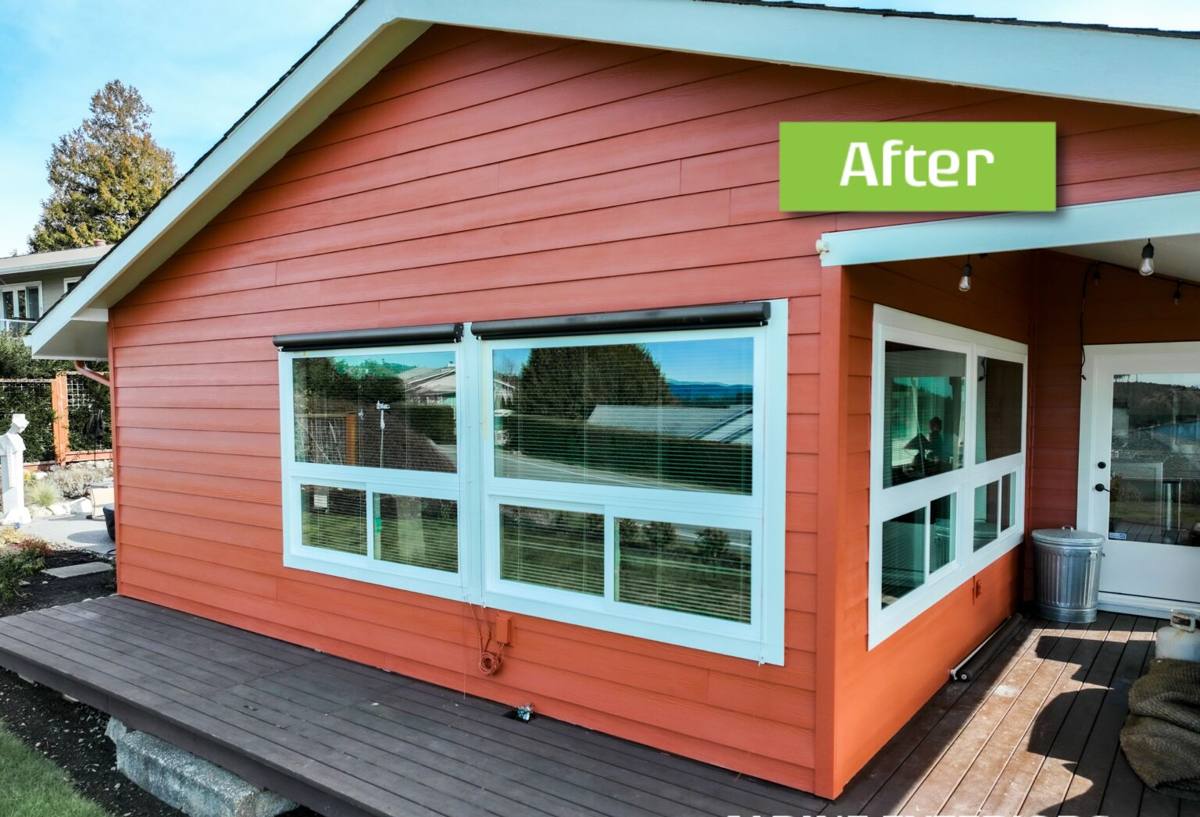
"Custom windows" doesn't have to mean unusual shapes or high-end architectural glass, though it can. For most Bellingham homes it means the window is built and fitted to your actual opening, your home's age and construction, and your exposure to weather — not pulled off a generic size chart and packed with shims to make it fit.
Custom Sizing and Fit
Older Bellingham homes, especially anything built before the 1980s, rarely have perfectly square or standard-size openings. Decades of settling, moisture cycling, and prior remodels shift things. A custom-sized window is measured and built to the actual opening, which means a tighter seal and less reliance on foam or caulk to make up the difference. A stock window forced into an out-of-square opening is one of the most common causes of early leaks.
Material Matched to Exposure
A window on the water-facing or wind-facing side of a Bellingham home is doing more work than one tucked under an eave on the leeward side. Custom work means we can spec different hardware, cladding, or glass packages by exposure instead of using one window type for the whole house.
Glass Built for a Marine Climate
Condensation and thermal performance matter more here because of the humidity swings between wet winters and drier summer stretches. Low-E coatings and the right gas fill reduce condensation on the interior pane, which is often the first sign homeowners notice that a window isn't performing.
Signs Your Current Windows Are Already Failing
By the time a window is visibly leaking, the damage is usually well underway behind the trim. Catching problems earlier saves money and avoids rot repair on top of window replacement. Watch for:
| Sign | What It Usually Means |
|---|---|
| Fogging between panes | Seal failure — the insulated glass unit has lost its gas fill and can't be repaired, only replaced |
| Soft or spongy sill wood | Water is getting behind the frame; left alone this becomes a rot repair, not just a window swap |
| Visible mildew or dark staining on trim | Persistent moisture, often from wind-driven rain finding a path around the frame |
| Drafts even with the window latched shut | Failed weatherstripping or a frame that's racked out of square |
| Corroded or stiff hardware | Salt air exposure on lower-grade hardware — common on homes closer to the water |
| Paint bubbling or peeling near the frame | Moisture trapped between the window and the wall assembly |
Frame Material Options for This Climate
There's no single "best" window material for every Bellingham home — it depends on exposure, budget, and the look you want. Here's how the common options actually perform in this climate specifically.
| Material | How It Handles Bellingham's Climate | Trade-offs |
|---|---|---|
| Vinyl | Doesn't corrode from salt air, low maintenance, good moisture resistance | Fewer custom color options, can look less premium on higher-end homes |
| Fiberglass | Very stable in temperature and humidity swings, strong long-term performance near the water | Higher upfront cost than vinyl |
| Wood (clad exterior) | Warmest interior look, exterior cladding protects against direct weather exposure | Needs the cladding and seals maintained; unclad wood struggles in this climate |
| Aluminum | Strong and slim sightlines | We're cautious recommending bare aluminum on water-facing exposures — it's more prone to corrosion and thermal transfer here without added coatings |
For most Bellingham homes we lean toward vinyl or fiberglass on wind- and water-facing walls, and reserve wood-clad options for sheltered elevations where the maintenance is manageable. That's a professional judgment call based on exposure and upkeep, not a claim that any one material is universally better.
How We Approach a Bellingham Window Job
- On-site assessment. We look at exposure by wall, not just the house as a whole — a window facing the water gets evaluated differently than one on a sheltered side.
- Check for existing moisture damage. Before any new window goes in, we check the sill and framing for soft wood or hidden rot. Installing a new window over damaged framing just hides the problem.
- Custom measurement. Each opening is measured individually rather than assumed to match a standard size.
- Flashing and drainage detail. This is the step that matters most in a driving-rain climate — proper sill pan flashing and a clear drainage path so any water that gets past the outer seal has somewhere to go besides your wall cavity.
- Install and seal. Hardware and sealant selected for exterior, weather-facing use, not general-purpose product.
- Final check. We confirm the window operates smoothly, seals fully, and the exterior trim is weather-tight before we call the job done.
What This Should Cost
Every home is different, but the main cost drivers on a Bellingham custom window job are worth knowing going in:
| Factor | Why It Moves the Price |
|---|---|
| Frame material | Vinyl is generally the most budget-friendly; fiberglass and clad wood cost more upfront |
| Number of window openings | More units typically lowers the per-window cost slightly through shared labor |
| Existing rot or framing damage | Repair work behind the opening adds cost beyond the window itself |
| Exposure and access | Water-facing or hard-to-access openings (second story, tight setbacks) take more time to flash and seal correctly |
| Glass package | Upgraded Low-E coatings or gas fills add cost but reduce condensation and energy loss |
We give straightforward, itemized estimates so you know what you're paying for and why — not a flat per-window number that hides whether flashing and rot repair are actually included.
Maintaining Custom Windows in a Marine Climate
Even a well-installed window needs some upkeep in Bellingham's climate to get its full lifespan. A simple seasonal routine goes a long way:
- Rinse salt residue off exterior frames and hardware a few times a year, especially on water-facing sides
- Clear moss and debris from sills and tracks before it holds moisture against the frame
- Check exterior caulking annually for cracking or gaps, particularly after a hard winter
- Test operation each season — stiff hardware is often the first sign of corrosion starting
- Watch interior trim and sills for soft spots or discoloration, which can signal a slow leak before it becomes visible from outside
Why a Crew That Already Works Bellingham Matters
Window installation looks straightforward until it isn't — and the details that go wrong are almost always climate-specific. A crew that installs windows mainly in dry inland regions may not think twice about sill pan flashing or hardware grade, because in that climate it rarely matters enough to cause a fast failure. In Bellingham, those same shortcuts show up as leaks and rot within a few wet seasons.
Working out of Blaine, we're in this same weather system year-round — the same salt air, the same wind-driven rain, the same long moss season. That's not a sales pitch, it's just practical: the installation choices that hold up here are ones we make on every job in this part of Whatcom County, not something we're guessing at for a one-off project.
Get a Straightforward Estimate
If you're dealing with drafty, foggy, or failing windows on a Bellingham home, or planning ahead for a remodel, we're happy to take a look and give you an honest read on what's needed — no pressure, no inflated scope. Use the form below to request a free estimate.